


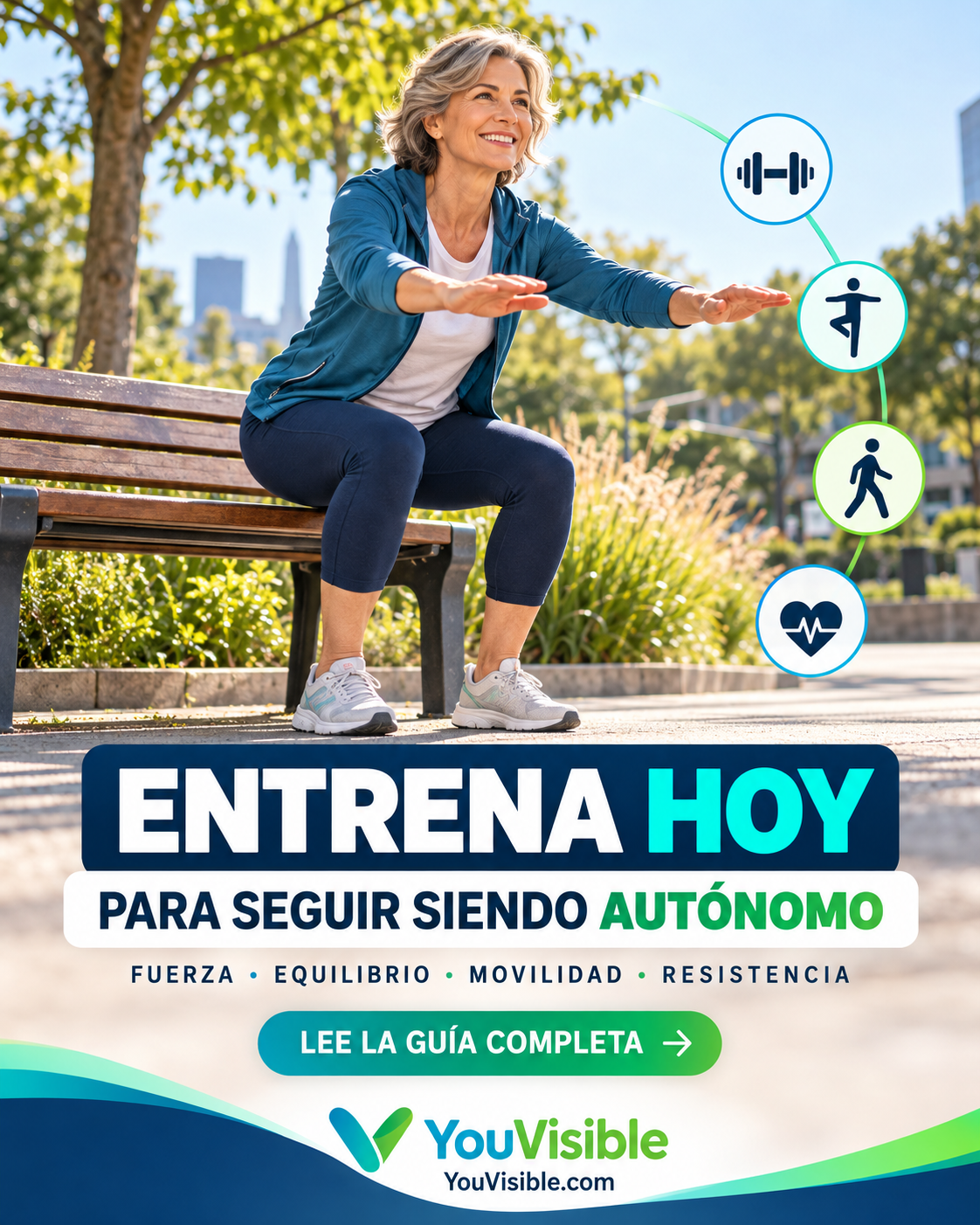
Training for longevity is not only about trying to live longer or chasing sporting records. It also means preserving the abilities that help you get out of a chair, climb stairs, walk at a purposeful pace, carry objects, keep your balance and react to a small stumble. It is preparation for continuing to enjoy sport, travel and ordinary daily activities with as much independence as possible.
Ageing is not an illness, and there is no single way to experience it. Age, health, sporting background, surroundings and opportunities to move create very different starting points. A useful approach therefore does not promise to stop time. It offers adaptable ways to train abilities that can be maintained or improved.
Guidance from the World Health Organization and the Physical Activity Guidelines for Americans recommends combining different types of activity. When these documents refer specifically to adults aged 65 and over, they add multicomponent activity involving balance, aerobic work and muscle strengthening. This is public-health guidance, not a guarantee against disease or falls, and it must be adjusted to the individual.
Four abilities worth training
Muscular strength lets you produce and control force: standing up, pushing a door, lifting a bag or slowing your body as you step down. Resistance can come from body weight, bands, machines or external loads. The American College of Sports Medicine's 2026 update emphasises that, for healthy adults, consistency and appropriate effort matter more than creating an unnecessarily complex programme.
Balance and coordination help organise posture and respond when your support changes. Practise them in safe conditions by changing foot position, shifting weight or combining movements, always with a wall, worktop or sturdy chair close by. The ankle-care routine provides more sport-specific examples.
Cardiovascular fitness supports efforts such as walking, cycling, swimming or climbing a hill. It does not require going all out. A comfortable but purposeful pace, managed with the talk test and perceived exertion, can be a practical starting point.
Useful mobility means having the movement you need for usual tasks: reaching a shelf, turning, taking a stride or moving ankles, hips and shoulders with control. It is not the same as stretching every joint as far as possible. The mobility worth practising depends on what each person needs to do.
Walking is valuable and accessible. It provides cardiovascular work, gets you from place to place and keeps you connected with your surroundings. However, it does not necessarily replace every strength stimulus or balance task. A rounded plan can keep walking and add small doses of the missing components.
| Ability | Everyday use | Training example | Simple way to progress |
|---|---|---|---|
| Muscular strength | Standing up, carrying objects and controlling stairs | Sitting down on and rising from a chair | Use less assistance or add light resistance |
| Balance and coordination | Changing direction and responding to a loss of balance | Standing with one foot in front of the other near a support | Narrow the base of support slightly |
| Cardiovascular fitness | Walking distances, climbing hills and sustaining activity | Walking at a comfortable but purposeful pace | Add a little time or distance |
| Useful mobility | Reaching, turning, bending and stepping comfortably | Controlled ankle, hip and shoulder movements | Gradually increase pain-free range |
A practical 12–15 minute multicomponent routine
This session is an adaptable example, not treatment, rehabilitation or an individual prescription. Use a chair that cannot slide, suitable footwear and a clear area. The first circuit introduces the movements; two circuits will usually bring the session closer to the suggested time. If one circuit is enough today, the shorter session still counts.
- Warm up for two minutes. Walk gently or move your ankles, hips, shoulders and arms through a comfortable range.
- Sit to stand. For a short interval, complete controlled repetitions without dropping onto the seat. Easier option: use a higher chair or your hands. More demanding option: use less arm assistance or hold a light load you already know how to handle.
- Calf raises. Rise and lower slowly on both feet with a support close by. Reduce the range if you lose control. A steady base matters more than reaching a universal number.
- Safe balance work. Place one foot in front of the other, as though standing on a wide line, beside a wall or worktop. Hold the position or shift your weight calmly. Widen your stance if you need more stability; never remove the nearby support simply to prove difficulty.
- Purposeful walking. Walk for a few minutes at a comfortable, active pace that still allows you to talk. Use a hallway, a safe outdoor route or march on the spot.
- One or two circuits. Repeat according to your experience, ability and response. Rest whenever you need to.
- Cool down for two minutes. Walk gently and notice how your breathing recovers.
There is no universal repetition target here. The same number can be too little for one person and too much for another, particularly where a health condition or functional limitation is involved.
How to progress
Change one variable at a time: repetitions, duration, resistance, movement range, balance difficulty or number of circuits. This makes it easier to identify which change explains an improvement or a problem. Keep the new version for several sessions before increasing the demand again.
Technique, control and regular practice take priority over speed. Progress may also mean completing the same exercise with less help, greater stability or a clearer sense of effort. If movement quality repeatedly deteriorates, return to the previous version.
Mistakes to avoid
- Training cardiovascular endurance alone while neglecting strength or balance.
- Waiting until an ability has declined before beginning to work on it.
- Increasing several variables at the same time.
- Doing balance exercises without a safe space and stable support nearby.
- Ignoring pain, dizziness or unusual symptoms during exercise.
- Comparing yourself with people of another age, experience level or physical condition.
- Confusing mobility with indiscriminate stretching or forcing ranges you do not need.
- Turning a general session into an obligation that ignores your circumstances.
Today's YouVisible challenge
Complete a first adapted session and record the exercises, chosen difficulty, perceived effort, stability and sensations. Note which exercise felt easiest, which needs more work and the single variable you might change next time.
You do not have to save only kilometres, times or competitions in YouVisible. You can also record the work you do today to preserve your abilities for tomorrow and see how your strength, balance and sensations develop. Add the activity, your wellbeing and what you learnt; our guide to recording sporting wellbeing can help provide context. If you wish, share the experience in Comunidad Visibles.
Find YouVisible on Android, iPhone and the web.
Train today to preserve tomorrow's choices
Sporting longevity is built through sustainable practice: every adapted session can help you preserve more options to move, participate and make independent choices tomorrow.
Notice: This article provides general educational information and does not replace assessment by a qualified healthcare or exercise professional. If you have a medical condition, significant balance problems, functional limitations, pain, dizziness or symptoms during exercise, seek professional assessment before continuing.
Sources
- World Health Organization — WHO Guidelines on Physical Activity and Sedentary Behaviour.
- U.S. Department of Health and Human Services — Physical Activity Guidelines for Americans, second edition.
- American College of Sports Medicine — Resistance Training Guidelines 2026.
- Currier et al. — Resistance Training Prescription for Muscle Function, Hypertrophy, and Physical Performance in Healthy Adults.
Save your sporting story. Share it. Make it visible.