


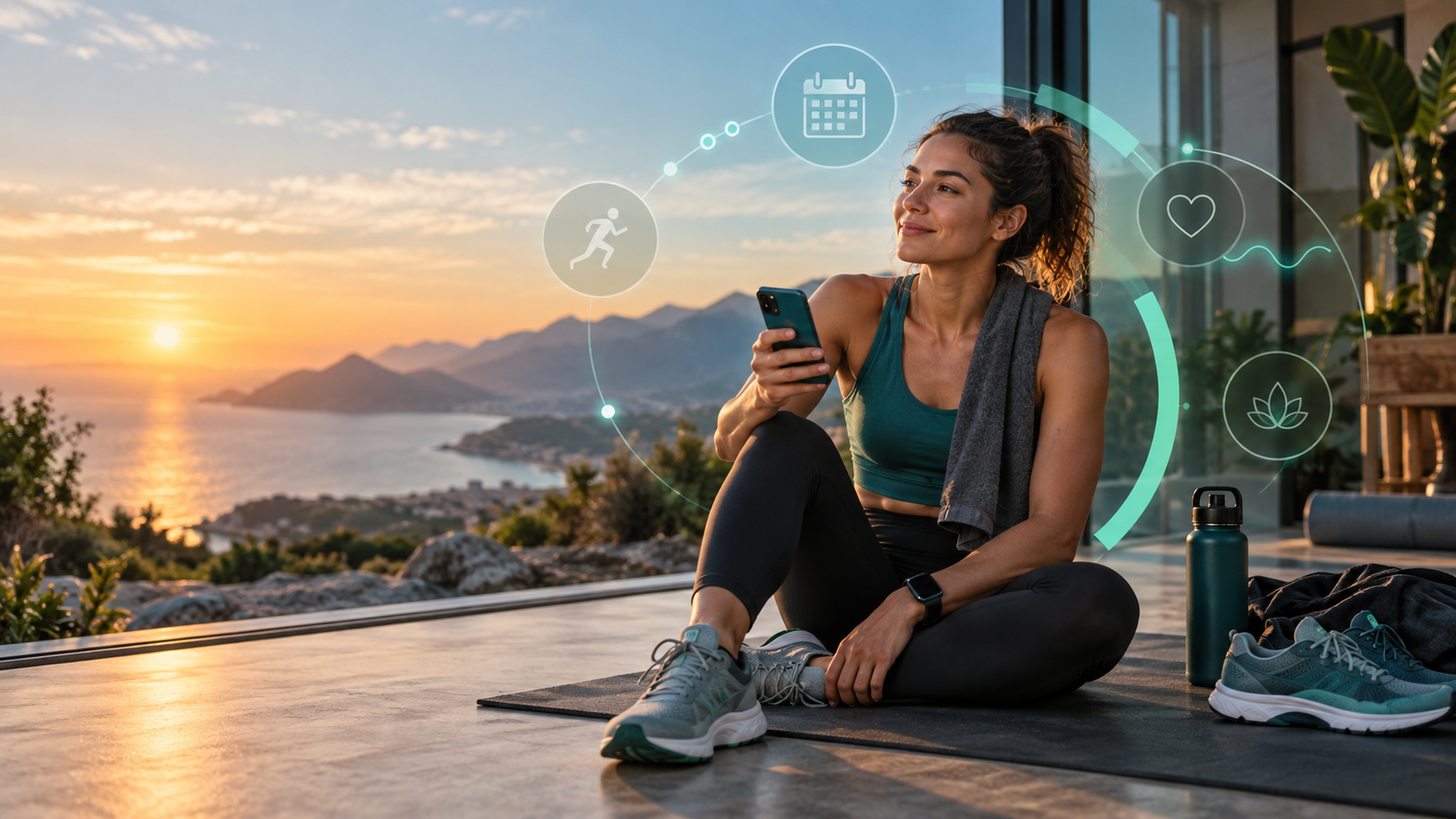
Distance, duration, pace, calories and results describe part of an activity, but not how you experienced it. A short workout can feel rewarding; an impressive session can happen on a difficult day. Sports wellbeing supplies the personal context that numbers leave out.
YouVisible lets you record how an activity went and how you felt, complete a daily check-in even without training, review activity and wellbeing in one calendar, and start and follow fasting periods. These private records support memory and organization; they are not a diagnosis.
Why sports data is not the whole story
Two five-kilometre runs can have similar figures and opposite meanings. One may be an easy recovery outing; the other may feel demanding in a tiring week. The same is true of a match, ride or gym session.
Metrics answer how far, how long and where. Personal context answers different questions: how did I arrive, how did I finish, what was the purpose and what will I want to remember later? The aim is not to replace metrics, but to prevent them becoming the only memory.
Record how the activity went
After a workout, match, route or session, add a personal assessment. A slower pace may be intentional recovery. A lost match may still contain technical progress. A short workout may mark a meaningful return after a break.
A brief honest note—“hard to start, comfortable by the finish”—is often more useful than a perfect report.
Record how you felt
Feeling is not the same as result. You may be satisfied after losing, disappointed after reaching a target or calm after a mobility day. Saving that perception creates a reference for future review.
Across several weeks, you can revisit which sessions felt enjoyable or heavy. This does not prove medical causes. It simply preserves what you reported at the time.
Daily check-ins, including rest days
Days without training still belong in a sports history. A daily check-in can capture how the day feels even when there is no activity, so rest is not shown as an empty gap.
Record only what is useful—perhaps general mood or perceived tiredness. There is no need to fill every day or turn reflection into another performance target.
One calendar for activity and wellbeing
When workouts and feelings live in separate apps, dates must be reconstructed from memory. A shared calendar lets you return to a day and see the activity and personal record together.
It does not interpret the relationship or tell you why something happened. It supplies a clear timeline. If you still need to choose an activity method, read how to record with or without GPS.
Review feelings over time
Several entries can prompt useful personal questions: do certain routes feel more enjoyable, how did the weeks before a competition feel, or what do I remember about rest days?
The key action is observe, not diagnose. A coincidence does not establish a cause. The record may help you have a better-informed conversation with a coach or healthcare professional, but it cannot replace their assessment.
A practical recording guide
| What to record | When | Context it preserves |
|---|---|---|
| How the activity went | At the finish | Perceived difficulty, goal and incidents |
| How you felt | After training or competition | Mood, satisfaction and perceived tiredness |
| Daily check-in | Training and rest days | The wider experience of the day |
| Note or moment | During or afterwards | Terrain, people, technique or a memory |
| Fasting period | At start and during tracking | Start, progress and end of the recorded period |
| Calendar review | Weekly or when useful | Timing between activities and personal entries |
You do not need every row after every session. Keep only the context that matters to you.
Personal context builds a richer history
A sports history includes more than personal bests. It contains returns after breaks, new disciplines, family stages, difficult sessions and ordinary days. Context prevents you judging an old activity with incomplete information.
This approach is part of YouVisible's broader multisport chapter and the idea of an organized sports history.
Integrated fasting-period tracking
Within Wellbeing, you can start and follow a fasting period and view its progress. The function records a period a person has chosen; it does not recommend fasting or assign benefits to it.
YouVisible does not claim fasting improves performance, causes weight loss or produces medical benefits. Suitability depends on individual circumstances and may require professional guidance, particularly for minors, pregnancy, illness, medication, eating disorders or demanding training.
Health notice: YouVisible records and organizes personal information. It does not replace advice, diagnosis or treatment from doctors, dietitians or other healthcare professionals. Seek qualified help for symptoms or decisions about nutrition, recovery and health.
Privacy matters
Feelings and habits can be more sensitive than sports photos. Wellbeing entries are personal and do not need to be published or used for visibility. When managing a child's profile, keep only relevant information, avoid unnecessary exposure and respect the young person's privacy.
Examples across sport
Running and cycling
Add how the route felt, alongside terrain, wind or purpose. Similar distances can then retain very different meanings.
Gym and team sports
Note whether a gym session was strength, mobility or a gradual return. After a match, separate the team result from your personal experience.
Competition preparation
Review the sequence of sessions and check-ins as a diary. Do not use it as a tool that prescribes load or predicts performance.
Rest days
A check-in can preserve the day without inventing an activity. Rest is part of the timeline, not missing data.
Frequently asked questions
Must I log wellbeing after every activity?
No. Use it when preserving a feeling has personal value.
Can I check in without training?
Yes. Daily check-ins also cover non-training days.
Are feelings shared automatically?
No. They are personal records and do not need to be published.
Does fasting tracking provide nutritional advice?
No. It follows the recorded period without recommending fasting or promising outcomes.
Can the app diagnose overtraining or illness?
No. It stores your information. Healthcare interpretation belongs to qualified professionals.
Build a more human sports record
Start with one activity or one simple check-in and see how it fits into your calendar. Explore sports storage for any sport, visit the athlete page, or begin at YouVisible. Download for Android or iPhone.