Nutrition and superfoods
Whole grains: how to choose them and fit them into meals
A familiar, understood and repeatable choice can begin a review of grain foods.
In this article
- The essentials in a minute
- Look beyond breakfast cereal
- What research says and cannot promise
- Compare two labels without rushing
- Four possible changes in familiar meals
- Plan shopping to reduce waste
- Fibre, tolerance and gradual changes
- A change you can review
- Frequently asked questions
- Sources consulted
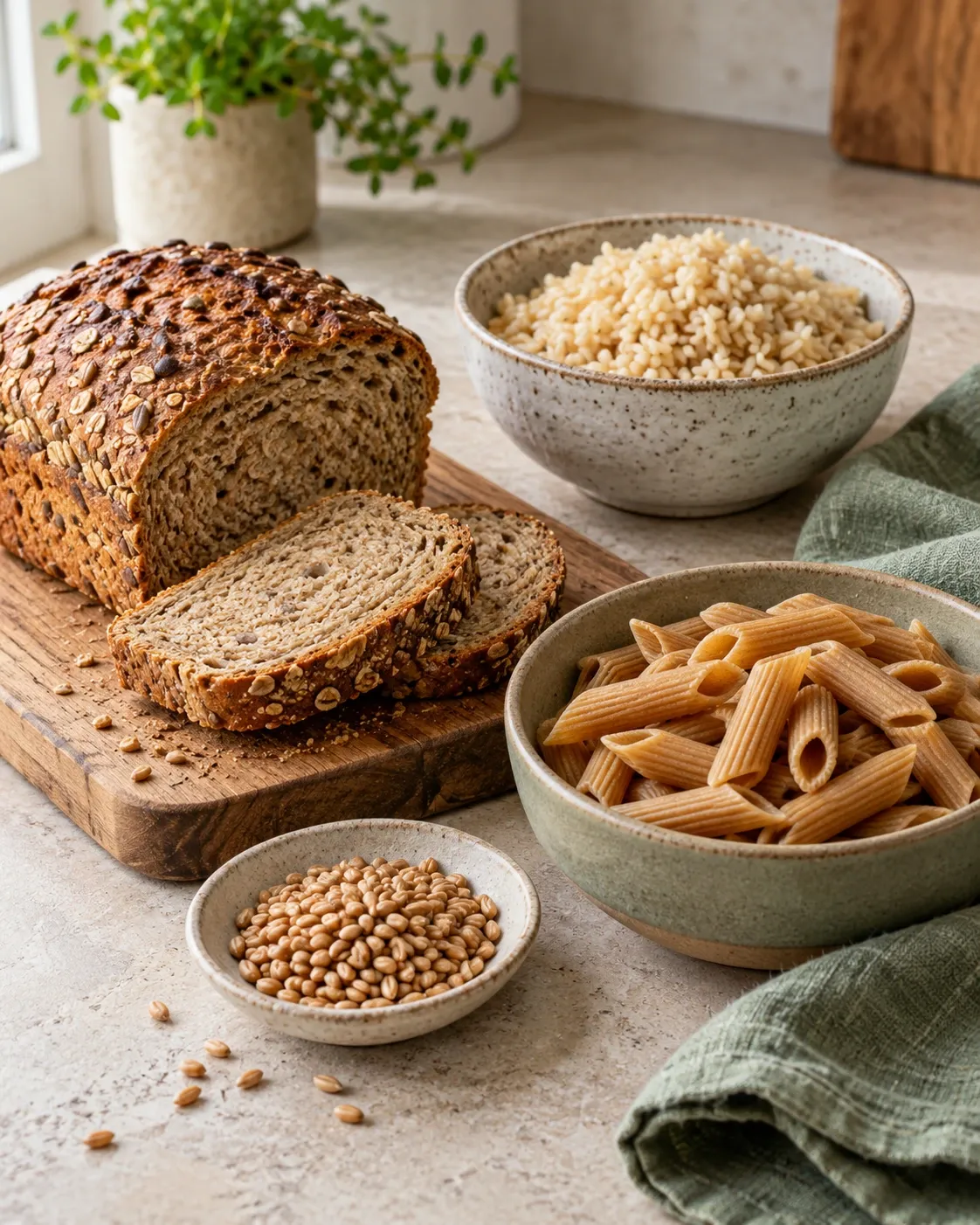
Choosing whole grains can begin with toast, rice for a meal or pasta you already cook. A new recipe every day is unnecessary. Understand what you buy, its role in the meal and a change you can repeat, without assuming a dark colour or highlighted word describes the complete product.
The essentials in a minute
- WHO recommends obtaining carbohydrates primarily from whole grains, vegetables, fruit and pulses. 1
- An association between intake and health does not guarantee an individual result from changing a packet. 2
- “Multigrain,” seeds or dark colour do not replace checking the product description and ingredients.
- Begin with a familiar preparation and adapt to preference, tolerance and needs.
Look beyond breakfast cereal
Bread, rice, pasta and other grain-based foods can be part of this decision. AESAN recommends prioritising wholegrain versions within a healthy, sustainable eating pattern. 3
The approach is broader than finding an exceptional ingredient. Changing the pasta in a familiar recipe may be easy, while finding bread you enjoy takes longer. You do not need to resolve both at once.
Start with something you already buy and ask: “Which wholegrain option is available, and how would I use it?” Thinking about the actual meal helps avoid buying a product that remains unused because you do not know how to prepare it. A clear intended use is a useful starting point before comparing more options.
What research says and cannot promise
A meta-analysis of prospective studies published in BMJ found associations between greater wholegrain consumption and lower risk of several outcomes, including cardiovascular disease and all-cause mortality. 2
This is observational evidence. It did not randomly allocate pasta packets to calculate each participant’s extra years of life. Other habits, dietary measurement and group characteristics can affect findings.
The practical conclusion does not need a longevity promise per serving. Research supports considering the eating pattern, while the household decision involves a workable choice. This article does not turn studied amounts into an individual regimen or guarantee weight loss. A useful food choice remains useful without being presented as a treatment or a measurable change within days.
Compare two labels without rushing
The NHS advises choosing wholegrain or higher-fibre versions of starchy foods. 4 Use the full label rather than relying only on the front image.
Check the product description, listed grains or flours and nutrition information on the same basis. Fibre per 100 grams in one product cannot simply be compared with fibre per serving in another. Establish what each figure refers to before deciding what the difference means.
A product may highlight several grains without that claim establishing whether they are whole grains. Visible seeds can accompany a different base from the one you assumed. These observations support label reading rather than certifying brands or interpreting legal requirements from a photograph.
Checks for allergies, coeliac disease or another condition remain necessary when relevant. “Wholegrain” does not mean gluten-free or make every product interchangeable. Follow the requirements of your own plan alongside any general preference for a particular food format.
Four possible changes in familiar meals
| A usual meal | Something to try and review |
|---|---|
| Pasta with vegetables | A wholewheat version and its cooking instructions |
| Rice for several meals | A brown-rice preparation you can store appropriately |
| Toast or a sandwich | Bread with checked ingredients that you enjoy |
| A side dish | A grain option fitting the rest of the plate |
These are editorial examples rather than a prescribed menu. Choose the least complicated option. If one texture is unappealing, try another preparation or variety instead of assuming all will behave alike. Cooking instructions can also differ from the product you previously used.
Review accompanying foods too. Changing pasta alone does not address total amount, sauce, vegetables or the person’s needs. An ingredient can improve a choice within the whole pattern without becoming an approval label for every dish. Keep the actual meal in view rather than judging it by one word on the packet.
Plan shopping to reduce waste
Before choosing the largest pack, consider how often you will use it and whether you know its taste. Begin with an amount assigned to a meal and keep the product instructions.
Write down a familiar recipe in which to try it and what needs to be available. When cooking for others, ask about preferences and adapt. Buying an alternative but never using it does not provide the information needed to decide whether to repeat it.
Compare prices for the same amount too. You do not need the most eye-catching packet or expensive additions for a meal to be worthwhile. Budget and access belong in a realistic proposal. You can start with what is available rather than postponing every change until an ideal product appears.
Fibre, tolerance and gradual changes
The NHS links wholegrain options with fibre intake. 4 If you are changing several things, introducing them gradually and observing tolerance may help you understand the experience.
Do not interpret persistent discomfort as proof that a choice is healthier. Describe changes, approximate amounts and symptoms when seeking help if needed. You do not have to force a preparation that is difficult to tolerate. A general recommendation does not establish the explanation for every symptom.
If a clinical plan adjusts fibre or texture, follow that guidance. General advice for adults does not replace individual adaptation. Avoid automatically applying the same amount or presentation to everyone at home. The practical question is how the choice fits each person’s needs, rather than making one purchase serve as a universal rule.
A change you can review
Choose a simple action: “This week I will try the wholewheat version in the pasta recipe I already make.” Afterwards, review taste, convenience, cost and waste.
You do not need to measure health outcomes within days or attribute a weight fluctuation to that purchase. The review establishes whether the change fits. Keep it, adapt it or choose another preparation without turning meals into a competition to accumulate different products.
Frequently asked questions
Is dark bread necessarily wholegrain?
Appearance alone does not establish composition. Read the product description and ingredients before deciding what you are buying.
Must I change every grain food at once?
Start with a familiar choice and review whether it works. A repeatable change provides more information than several purchases without planned uses.
Does choosing wholegrain guarantee weight loss or a longer life?
No. Recommendations concern an eating pattern, and the cited evidence cannot guarantee those individual outcomes. [1,2]
Sources consulted
General information: this article does not replace individual medical advice.