Nutrition and superfoods
Unsalted nuts: making them a useful everyday habit
Shopping, preparation and context: an ordinary choice without turning one food into a promise.
In this article
- The essentials in one minute
- What to buy when the bags look alike
- What PREDIMED teaches without becoming a promise
- Cholesterol, disease and survival are different outcomes
- Four ways to give nuts a particular place
- Serving first helps clarify the choice
- Fitting them around training
- Allergies and particular needs
- Frequently asked questions
- Sources consulted
A bag of nuts can become a useful purchase or another food you eat without thinking while working. Calling them a superfood does not settle the difference. It is more practical to decide which product to choose, which meal it will help with and how it will fit into your usual eating pattern.
The essentials in one minute
- Spain’s food safety and nutrition agency, AESAN, includes nuts in healthy dietary guidance and prioritises options without added salt, fats or sugars. 1
- Well-known cardiovascular research studies dietary patterns, rather than the isolated power of a walnut. 2
- A two-year walnut trial in older adults assessed cholesterol and lipoprotein changes. These markers are different from demonstrating additional years of life. 3
- Choose a preparation you enjoy and a particular occasion for using it, considering allergies and individual needs.
What to buy when the bags look alike
Start with the ingredients list. Plain or dry-roasted nuts without additions are a different choice from nuts coated with salt, honey or chocolate. AESAN’s guide points towards options without those additions; it does not require a specialist brand or product. 1
Compare similar products on the same information basis. Check whether values refer to one hundred grams or a serving. A serving declared by the manufacturer is not automatically the amount you will actually serve.
You do not need to inspect every shelf. Choose two simple options you like that fit your budget. A familiar, repeatable purchase can solve an ordinary week better than a mixture chosen only for a healthy-sounding phrase on the packet.
What PREDIMED teaches without becoming a promise
The 2018 republication of PREDIMED analysed a Mediterranean dietary intervention with extra-virgin olive oil or nuts compared with a control diet in people at high cardiovascular risk. Major cardiovascular events were less frequent in the intervention groups. 2
It is important to use that republished version and recognise the allocation irregularities described in the study. It also does not attribute the whole effect to an isolated ingredient or promise the same outcome to every healthy thirty-year-old.
The practical lesson is to consider the whole eating pattern. Adding walnuts while reviewing nothing else does not reproduce the intervention. Evidence can guide choices without becoming an individual guarantee.
Cholesterol, disease and survival are different outcomes
The WAHA trial studied walnut consumption for two years in older adults and observed reductions in LDL cholesterol and changes in certain lipoprotein particles. Its question concerned these markers in that population. 3
It does not demonstrate that everyone should eat a particular amount or that doing so extends their life. To interpret a finding, distinguish the food studied, participants, comparison and outcome.
This distinction also helps avoid extremes. A food does not have to be rejected because a trial did not measure survival. You can include it because of its place in recommended eating patterns, its taste and its practical usefulness, while keeping realistic expectations about research.
Four ways to give nuts a particular place
These are editorial cooking ideas, not therapeutic menus or doses reproduced from trials:
| Occasion | Simple idea | A decision it makes easier |
|---|---|---|
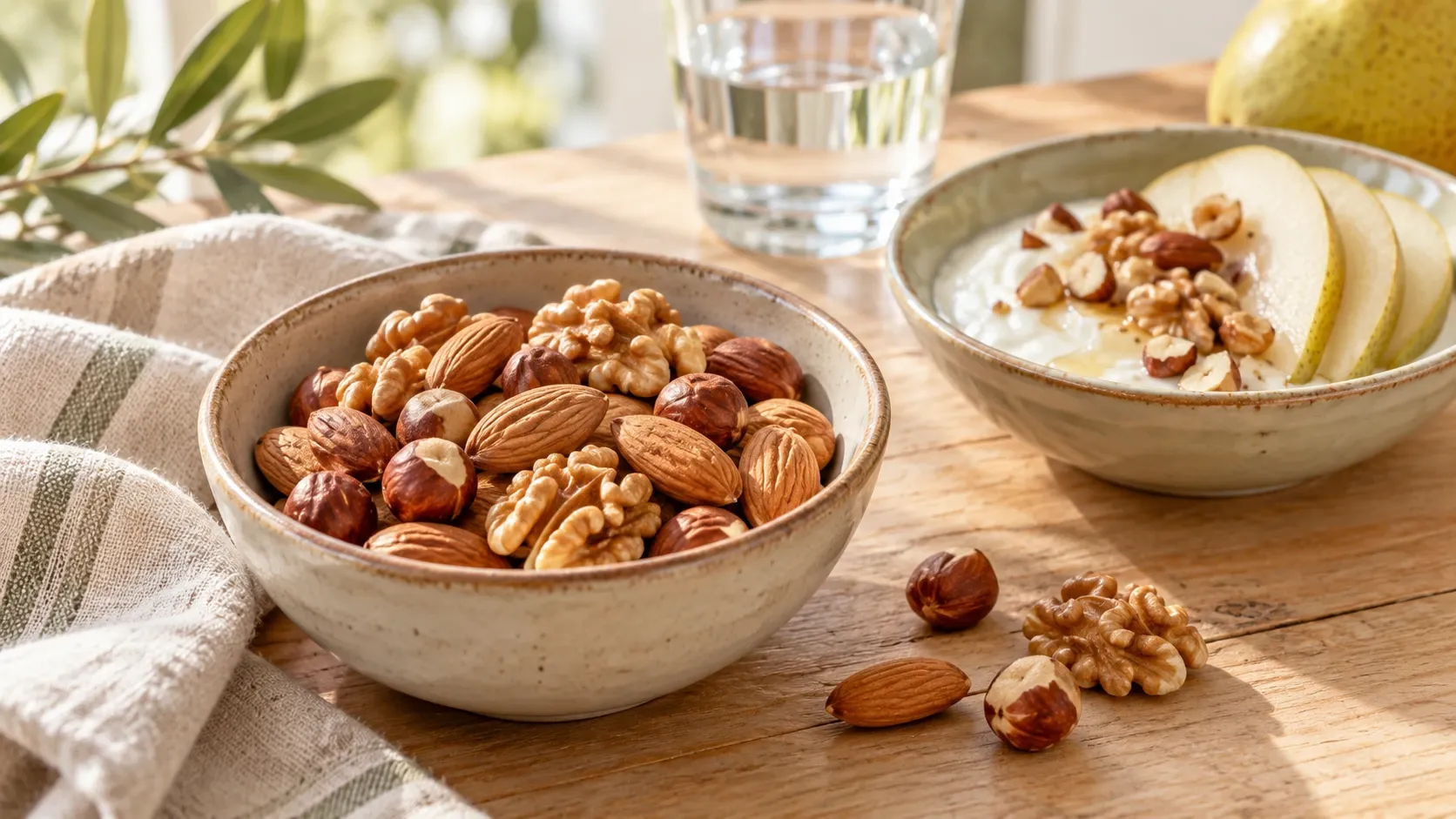
| Breakfast | Plain yogurt, fruit and chopped walnuts | Have the ingredients ready |
| Lunch | Chopped almonds in a salad | Change texture without cooking another dish |
| Afternoon snack | A container of nuts and a piece of fruit | Choose before leaving home |
| Dinner | Chopped hazelnuts over vegetable soup | Use a meal base already prepared |
If you dislike one combination, change the preparation. Chop the nuts or choose another variety suitable for you. The point is not to tolerate a recipe for supposed benefits, but to find something you would like to repeat.
Serving first helps clarify the choice
Decide the amount you intend to use before sitting down to work or watch a programme. Put it in a bowl or add it directly to the recipe. This suggestion helps you observe a choice; it does not set a mandatory portion or a universal weight-loss strategy.
If you have a nutritional plan, use the amount agreed within it. Otherwise, start by reviewing what role the food plays: part of a meal, an accompaniment or an option to take away from home.
Consider what changes from your previous routine. Replacing an ingredient and adding one on top of everything else are different decisions. Neither needs to be labelled perfect or a failure. Knowing which you have chosen helps you adjust the routine.
Fitting them around training
You do not need to introduce them immediately before a demanding session if you do not know how they suit you. Choose a quieter occasion and observe the preparation you prefer. This is a planning suggestion, rather than a claim that one sporting timetable is superior for everyone.
For example, David prepares a snack before leaving home while Sara uses nuts at breakfast. Neither needs to copy the other if their schedules and preferences differ. The goal is to organise a meal within a whole week.
In YouVisible, you can retain activities and how you felt. That context does not measure cholesterol or establish that a food improved performance. Use it to remember your practice, rather than as a nutritional blood test.
Allergies and particular needs
If you have a known allergy, do not try a variety because of general advice. Review what to avoid with your professional and check labels and possible traces. Difficulties with chewing or swallowing, or a therapeutic diet, also call for individual adaptation of the food and its form.
The usefulness of a suggestion depends on it being appropriate for the person eating it. A familiar meal may need different adjustments for different people without making the general recommendation wrong.
Frequently asked questions
Must I choose walnuts?
You do not have to restrict every purchase to one food. General recommendations and specific trials answer different questions. Findings for walnuts cannot automatically be assigned to every variety. 1 3
Do nuts prevent heart attacks by themselves?
That claim is not justified. PREDIMED assessed a whole dietary intervention in high-risk people, with methodological limitations that need recognition. 2
What is a useful first step?
Choose an option without additions that you like and decide which recipe or meal it will help with this week. Then review whether it suits your circumstances and needs.
Sources consulted
Sources checked: 27 October 2026. Authorship: YouVisible Editorial Team. No professional clinical review of this article is claimed.
- AESAN. Healthy and sustainable dietary recommendations, 2022, nuts section. Spanish-language guide.
- Estruch and colleagues. Primary Prevention of Cardiovascular Disease with a Mediterranean Diet Supplemented with Extra-Virgin Olive Oil or Nuts, republished version. NEJM, 2018. DOI: 10.1056/NEJMoa1800389.
- Rajaram and colleagues. Effects of Walnut Consumption for 2 Years on Lipoprotein Subclasses Among Healthy Elders: WAHA. Circulation, 2021. DOI: 10.1161/CIRCULATIONAHA.121.054051.
General information: this article does not replace individual medical advice.