Nutrition and superfoods
Pulses four times a week: practical meals to support your health
Simple shopping and four different preparations bring dietary guidance into an ordinary week.
In this article
Pulses can help answer a very ordinary question: what can you prepare when you want varied meals without spending an hour on each one? Chickpeas, lentils and beans work in stews, salads and soups with familiar ingredients. Their value does not depend on calling them a superfood. It lies in how they fit into an eating pattern you can maintain.
The essentials in one minute
- Spain’s food safety and nutrition agency, AESAN, recommends at least four servings of pulses weekly, increasing gradually according to tolerance. This is population guidance, not an individual clinical requirement. 1
- Studies support improvements in some risk factors, rather than guaranteed protection against disease. 2 3
- Canned pulses can be a practical option: check salt and drained weight when comparing products. 1
- Start by deciding which meals they will help you prepare and how you want to cook them.
What does a serving actually mean?
AESAN’s guide uses 50–60 grams dry or approximately 170 grams prepared as reference servings. These figures help interpret its recommendation. They are not a mandatory amount for each person or exact equivalents for every variety and cooking method. 1
This matters when shopping. A container may list both total weight and drained weight. If you are dividing its contents, use the figure relevant to the food you will actually serve. Do not compare a dry quantity with a cooked quantity as if they were the same.
For planning, think about people and dishes first. “I am taking chickpea salad on Tuesday” is easier to act on than “I will eat better this week.” Then adjust the amount to your appetite, the rest of the meal and any professional plan that applies to you.
What research has observed
A meta-analysis brought together 26 trials with 1,037 participants and found an average reduction in LDL cholesterol in diets incorporating pulses compared with control diets. The studies were relatively short and heterogeneous. Measuring a risk marker does not itself demonstrate fewer heart attacks. 2
A separate three-month trial involving 121 people with type 2 diabetes compared a low-glycaemic-index diet focused on pulses with a diet increasing wheat fibre. The first group had a greater improvement in HbA1c. This was a dietary intervention in a specific population, not a cure or a replacement for medication. 3
The practical conclusion is measured: pulses have a reasonable place in a healthy diet and provide useful ways to vary meals. You do not need to attribute the effect of a whole dietary strategy to one salad or expect clinical changes after introducing it for a few days.
Four different meals for an ordinary week
These combinations are editorial cooking suggestions, not therapeutic menus or a reproduction of the trials:
| Meal | Simple preparation | What you can prepare ahead |
|---|---|---|
| Monday | Lentils with vegetables and rice | Chopped vegetables and cooked lentils |
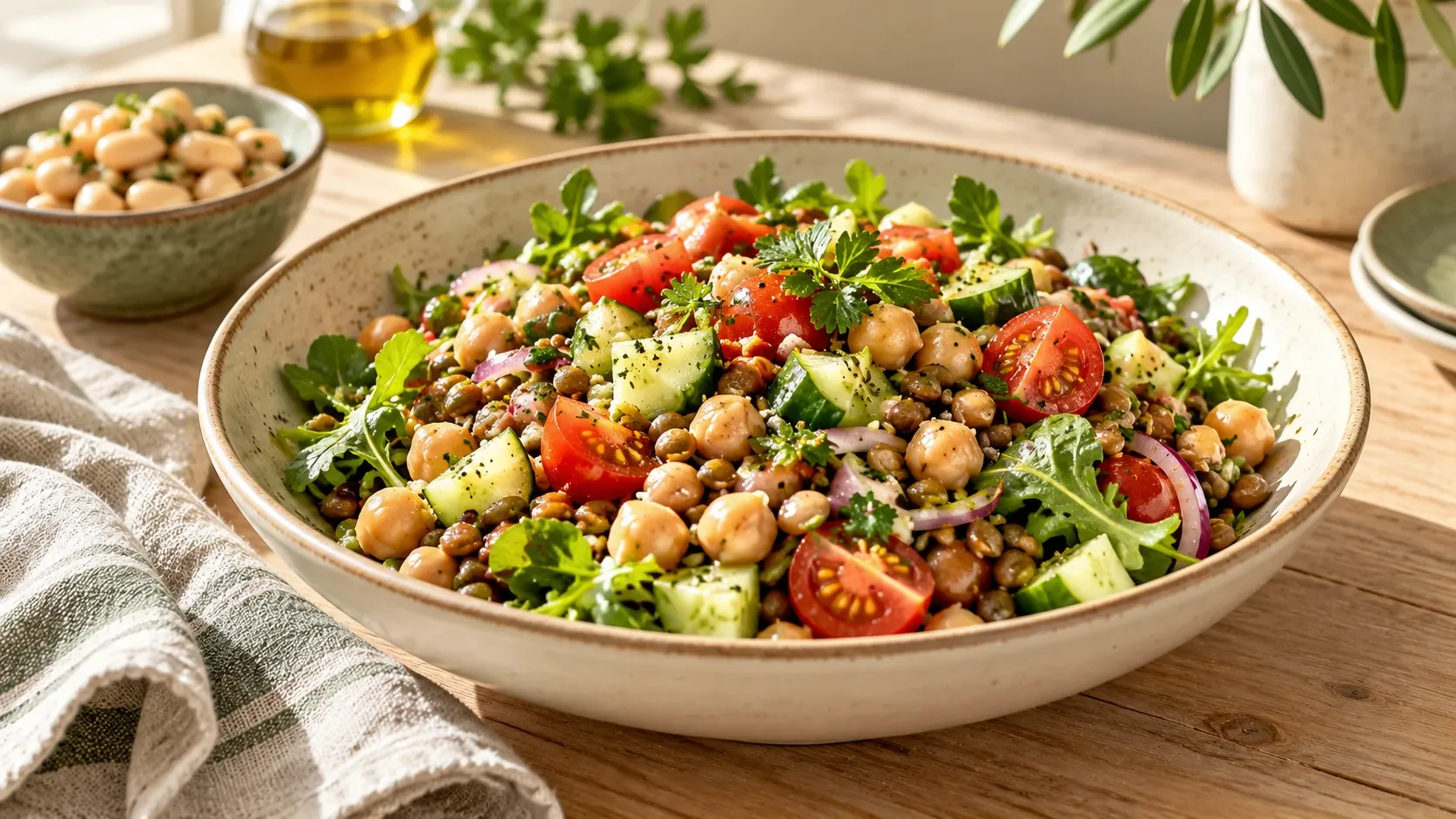
| Wednesday | Chickpeas with tomato, cucumber and olive oil | Drained chickpeas and a container for taking lunch |
| Friday | Beans with sautéed vegetables | A vegetable base you already have ready |
| Sunday | Lentil and carrot soup | Cooked ingredients to blend before serving |
You can swap the days. If you eat out on Wednesday, move that meal to Thursday. If you dislike a recipe, try another preparation before dismissing an entire food group. Taste, time and the people you eat with all matter to continuity.
Four occasions do not have to mean four identical stews. Varying temperature and texture lets you solve different needs: a meal at home, a packed lunch and a dinner using ingredients already available.
Shop and cook with fewer decisions
Choose two formats that fit your week. For example, dried pulses for a dish you enjoy cooking and canned pulses for busier days. Neither requires buying specialist products.
For canned options, compare ingredients and salt content on the same basis. With dried pulses, follow the soaking and cooking instructions on the packet. AESAN advises increasing intake gradually and choosing lower-salt canned options. 1
Make a short list: one pulse, two or three vegetables, your intended accompaniment and a dressing. Avoid buying ingredients for several recipes without knowing when you will make them. One repeatable meal can be more useful than a pantry full of intentions.
If you cook for several people, agree which parts to serve together and which to keep separate. Keeping a dressing aside or adding a vegetable at the end allows a shared base without preparing an entirely different menu for each person.
Fitting pulses around sport
Look at meals and training as parts of the same timetable. If a substantial dish feels uncomfortable before running, you do not have to force it into that slot. Choose another time and observe which combination feels manageable.
For example, Elena runs after work and does not want to try a large unfamiliar stew immediately beforehand. She takes her usual meal and saves the new recipe for a quieter day. She is choosing a convenient setting for discovering her tolerance, rather than ruling out pulses.
If you want to understand what suits you, avoid introducing an unfamiliar meal, a new supplement and a demanding workout all at once. This is an organisational suggestion, not a physiological rule or a way of diagnosing symptoms.
When the recommendation needs adapting
If digestive discomfort keeps recurring, you have a known allergy or you follow a therapeutic diet, ask for individual advice. You do not need to persist with a quantity that causes problems just to meet general guidance.
Bring concrete information to an appointment: the food, preparation, approximate amount and when discomfort occurred. An orderly description helps the conversation. One experience is not a reason to conclude independently that every food in the group is unsuitable.
Frequently asked questions
Are canned pulses a reasonable place to start?
Yes, they can make planning easier. Check the label and lower-salt options; you do not always have to start with dried pulses. 1
Will eating pulses definitely lower my cholesterol?
No. An average reduction in trials cannot predict your individual response or replace recommended monitoring or treatment. 2
What can I note down to repeat what works?
Keep the recipe and preparation that suited your routine. In YouVisible, you can retain the context of your activities and how you felt; that record does not measure cholesterol or prove the effects of a meal.
Sources consulted
Sources checked: 26 October 2026. Editorial authorship: YouVisible Editorial Team. No professional clinical review of this article is claimed.
- AESAN. Healthy and sustainable dietary recommendations, 2022, section on pulses. Spanish-language guide.
- Ha and colleagues. Effect of dietary pulse intake on established therapeutic lipid targets: meta-analysis of trials. CMAJ, 2014. DOI: 10.1503/cmaj.131727.
- Jenkins and colleagues. Legumes in a low-glycaemic-index diet in type 2 diabetes: randomised trial. Archives of Internal Medicine, 2012. DOI: 10.1001/2013.jamainternmed.70.
General information: this article does not replace individual medical advice.