Nutrition and superfoods
Oats and beta-glucan: a useful breakfast without the myths
What the cholesterol evidence means, and how to bring it into an ordinary shop and breakfast.
In this article
Oats can be part of a simple, affordable breakfast that is easy to repeat. You do not need a twenty-ingredient recipe or extraordinary health claims to make use of them. The useful question is what your chosen product contains and how it fits your overall eating pattern.
The essentials in a minute
- Oats are among the whole grains included by the WHO in healthy eating guidance. 1
- Evidence supports a specific effect of oat beta-glucan on LDL cholesterol under defined conditions. 2
- Grams of oats, total fibre and beta-glucan measure different things.
- A practical breakfast can combine oats, a protein source and fruit, with amounts adapted to your needs and preferences.
“Superfood” does not explain what is on your plate
We use the term in this section because many people search for food information that way. When choosing what to eat, it helps to replace the label with concrete questions: what are the ingredients, do I enjoy it, can I afford it, is it convenient to prepare, and which other foods am I including?
The WHO places whole grains alongside vegetables, fruit and pulses as preferred sources of carbohydrates and fibre. The framework is a varied diet, rather than one food expected to compensate for everything else. 1
This can take pressure off breakfast. If you dislike oats, you do not have to force yourself to eat them to “get it right”. If you enjoy them, you can use them without chasing the most expensive or photogenic option.
Beta-glucan and cholesterol: a claim with conditions
EFSA concluded that a cause-and-effect relationship exists between consuming oat beta-glucan and lowering LDL cholesterol. Its 2010 opinion specifies at least 3 grams of oat beta-glucan daily for the evaluated claim, as part of a balanced diet. 2
That does not mean “three grams of oats”. Nor does an arbitrary serving of an oat-containing cereal necessarily meet that condition. If a label lists only total fibre, it does not tell you the beta-glucan amount.
Here is a hypothetical calculation: a product declaring 4 grams of beta-glucan per 100 grams would provide 2 grams in a 50-gram serving. The calculation is 4 × 50 ÷ 100. These are not the values of a specific brand or a recommended serving; the example simply explains label arithmetic.
Lower LDL also does not guarantee that an individual will avoid disease. If you have high cholesterol, use the information to discuss your diet. Do not replace prescribed medication with a breakfast recipe.
How to compare two packets
You can make a brief comparison in the supermarket:
- Read the ingredients. Distinguish plain flakes from a mixture containing other components.
- Use the same basis. Compare values per 100 grams before comparing different serving sizes.
- Check the price per kilogram. A smaller packet is not always the cheaper option.
- Look for beta-glucan if that is your specific interest. Do not infer its amount from total fibre.
- Choose something you would prepare again. A forgotten packet does little for your meal planning.
You do not need to analyse every breakfast as if it were a test. This comparison is a tool for an occasional purchase, not a daily obligation.
Three breakfasts to adapt
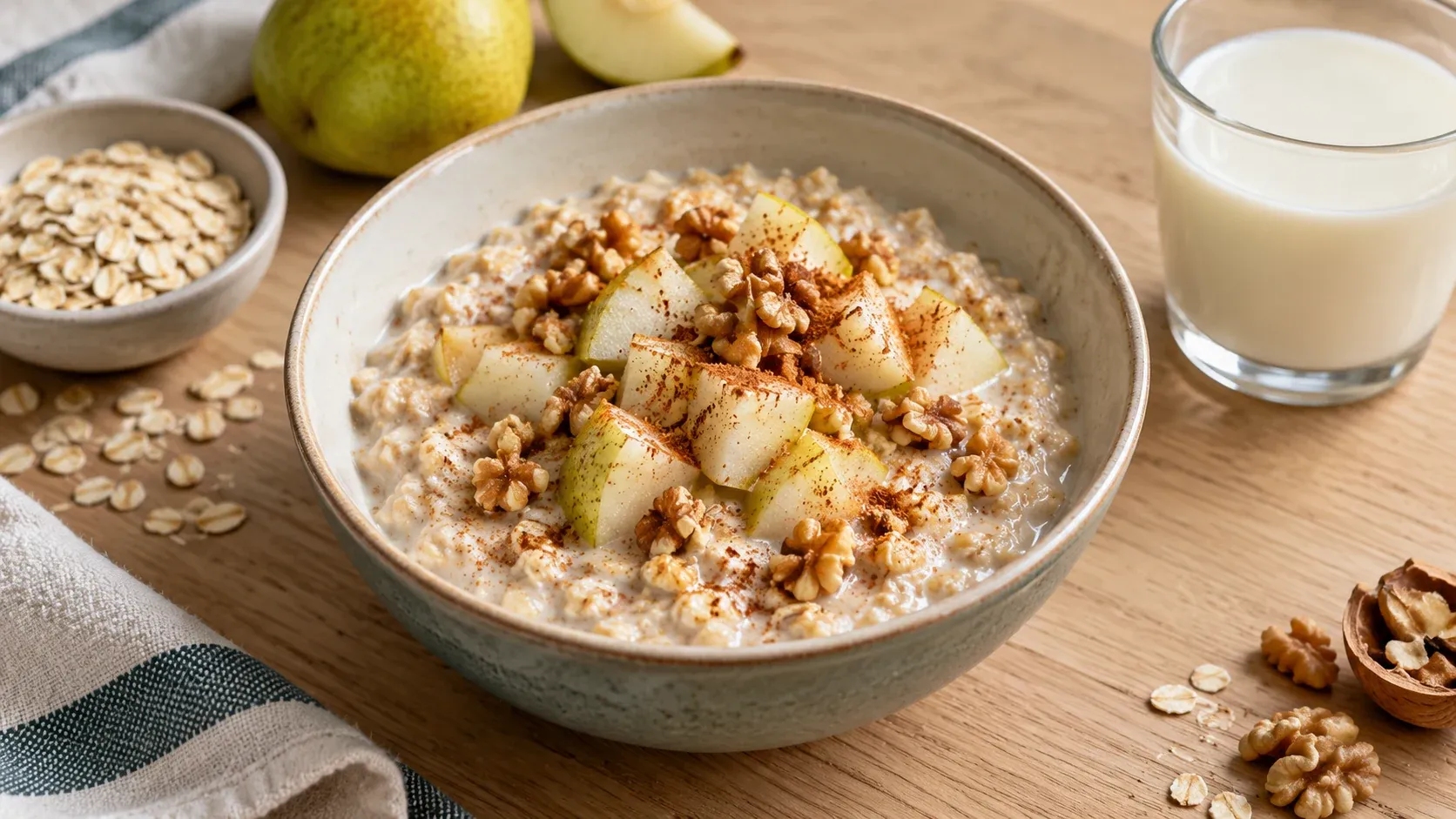
Warm bowl: cook flakes with water or milk according to the packet instructions. Add chopped pear and cinnamon. You could serve it with plain yoghurt or another option that suits your diet.
Cold bowl: mix flakes with plain yoghurt or a soya alternative and let them soften in the fridge. Add fruit when serving. Check the ingredients and allergens of your chosen alternative.
Savoury version: prepare an oat base and serve it with egg or tofu and vegetables. There is no culinary rule that every oat breakfast has to taste sweet.
These are cooking ideas, not calculated menus or cholesterol treatments. You can change the format, amount and accompaniments. A specific clinical or sporting goal requires more context than a generic recipe provides.
If you will train afterwards
Try breakfasts on ordinary days before using them for a competition or an important outing. Note what you ate, how much time passed before exercise and how you felt. This guide does not prescribe a fixed interval between your bowl and your session.
For example, if a breakfast you enjoy feels uncomfortable before an early class, you could discuss alternatives or reorganise the meal time. You do not need to conclude that oats are “bad”, or insist on the same preparation because it has a healthy reputation.
Coeliac disease: the label matters
The NIDDK advises people with coeliac disease to discuss whether to include oats and in what amount. If oats are used, they need to be gluten-free because contact with gluten-containing grains is common. Individual tolerance also needs consideration. 3
Do not assume “100% oats” replaces the appropriate indication for a gluten-free diet. If uncertain, check the product with your healthcare professional.
Frequently asked questions
Do oats cause weight loss by themselves?
The cited sources do not support guaranteed weight loss from a single food. Food choices need to be considered as a whole.
Is an oat drink equivalent to a bowl of flakes?
Do not assume products have the same composition because both names mention oats. Compare their labels and how you intend to use them.
Do I need to eat oats every day?
You can alternate breakfasts. The practical aim is to find options you enjoy that fit a varied diet.
After exercise, YouVisible lets you keep a record of the session and how you felt. That helps preserve the context of what you do and enjoy in your active life.
Sources consulted
Sources checked: 25 October 2026. Editorial author: YouVisible Editorial Team.
General information: if you have a medical condition or follow a therapeutic diet, seek individual advice.