Nutrition and superfoods
Extra virgin olive oil: its place in everyday meals
Begin with the meal, label and a workable use within your overall eating pattern.
In this article
- The essentials in a minute
- Start with an ordinary meal
- What PREDIMED actually studied
- Replacing a choice and adding one are different changes
- What the category on the bottle tells you
- Four uses that keep the whole plate in view
- Amount, budget and consistency
- Precautions and expectations
- Frequently asked questions
- Sources consulted
Extra virgin olive oil has a familiar place in Mediterranean cooking. An informed choice goes beyond the bottle: what you are buying, how you use it and which foods accompany it all matter. An ingredient can belong in a healthy eating pattern without becoming a medicinal dose or justifying unlimited additions to any menu.
The essentials in a minute
- Spain’s AESAN places olive oil within an eating pattern and recommends adapting the amount to individual needs. 1
- PREDIMED studied a Mediterranean dietary intervention rather than the isolated effect of drinking oil. 2
- Extra virgin, virgin and other categories are not interchangeable product names. 3
- The practical question is which role it plays in your meal and which choice you are changing.
Start with an ordinary meal
Think about breakfast, a salad or the vegetables you prepare for dinner. Which fat do you use? How do you decide the amount? Does the oil help you enjoy a preparation you will repeat?
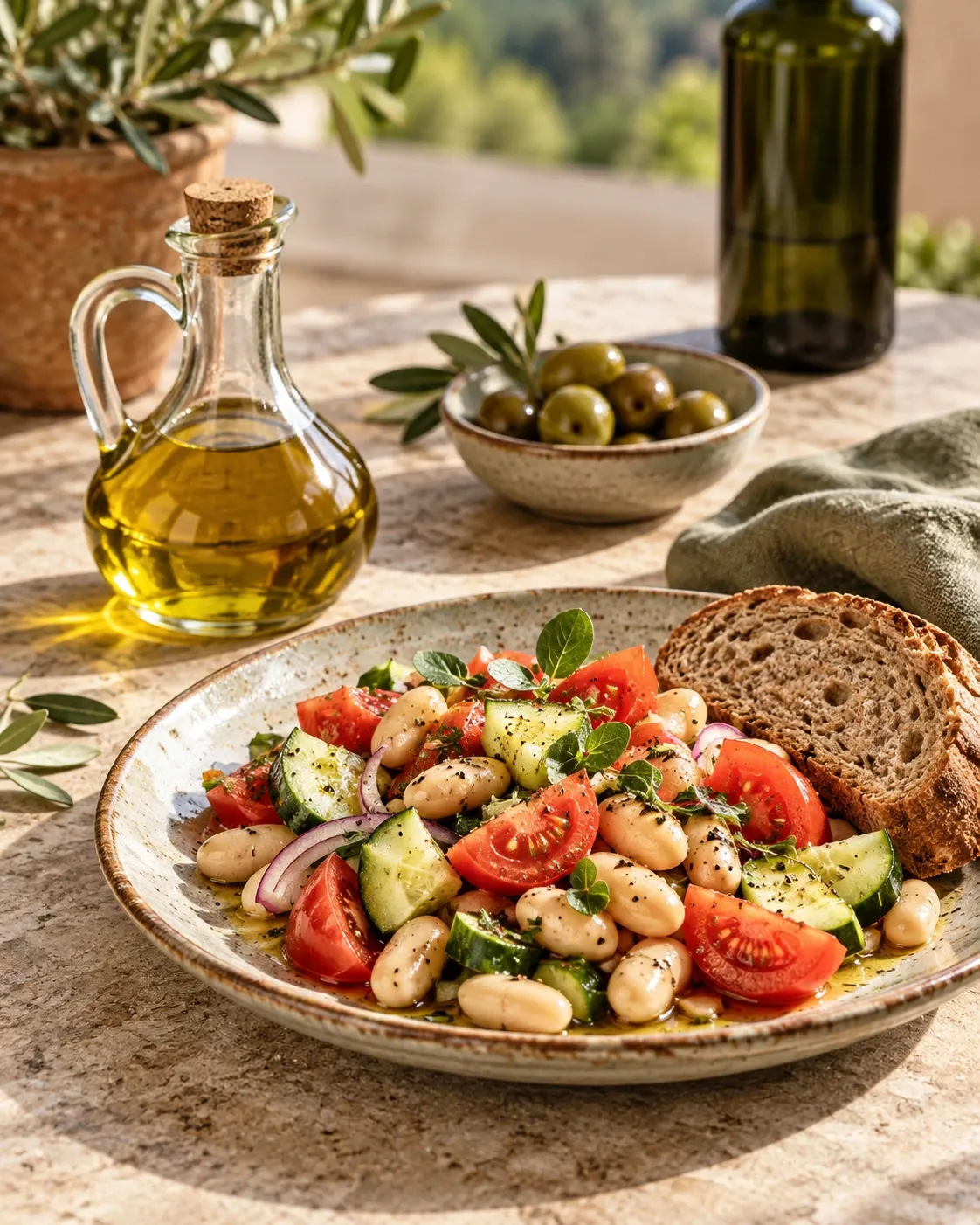
These questions make one habit easier to review. You might choose olive oil to dress a bean salad or prepare vegetables. The example organises a meal; it does not reproduce a clinical trial or promise a measurable change within a week.
You do not need to transform the kitchen at once. Describe the meal you want to maintain, check what you have and decide whether a purchase helps. The most expensive option is not automatically best for your budget or intended use. A useful decision begins with the food you plan to prepare, rather than the status of the bottle.
What PREDIMED actually studied
PREDIMED’s corrected 2018 publication included 7,447 people aged 55–80 at high cardiovascular risk. Mediterranean interventions supplemented with extra virgin olive oil or nuts recorded fewer major cardiovascular events than the comparison group. 2
The republication addressed problems with the allocation procedure. Acknowledge that history and use the corrected version rather than repeating the first publication without context. Participants also received dietary guidance and an eating pattern, rather than just a bottle.
The conclusion is not that adding oil to any diet reproduces the outcome. Nor does it calculate an individual benefit for someone aged 35. It informs a complete intervention in a particular population; it does not turn one ingredient into insurance against disease. Keep the comparison and setting in mind when reading a short claim on a product page.
Replacing a choice and adding one are different changes
WHO guidance prioritises unsaturated over saturated fats within a balanced diet. 4 To apply that idea, look at the whole change rather than only the ingredient added at the end.
Choosing olive oil in a preparation previously made with another fat involves a substitution. Keeping every ingredient and adding more oil is a different modification. Both may look similar in a photograph but represent different recipes.
You do not need to turn every meal into a calculation. Observe how you prepare a familiar amount and avoid pouring repeatedly out of habit. If you follow a clinical eating plan or individual goal, fit the oil within that plan rather than copying spoonfuls from an advertisement. Understanding the recipe is more informative than treating any addition as automatically helpful.
What the category on the bottle tells you
The European Commission distinguishes categories using physicochemical and sensory characteristics. Extra virgin is the highest quality category; olive oil composed of refined and virgin oils is a different category. 3
Read the complete product name before comparing. A word such as “mild” or a photograph of olive trees does not replace that information. Nor should a technical characteristic be treated as a scale of medical benefit for your body.
Use this simple shopping check:
- Identify the category stated on the label.
- Compare prices for the same amount of product.
- Review pack size, date and storage instructions.
- Consider how much you will use and whether the container is practical.
The list supports an informed purchase. It does not certify a product, score brands or infer health effects from bottle design. You can use it to narrow a choice without needing to interpret every technical parameter yourself.
Four uses that keep the whole plate in view
| Preparation | What to review alongside the oil |
|---|---|
| Bean salad | Available vegetables, dressing and the amount prepared |
| Cooked vegetables | Cooking method, ingredients and accompanying foods |
| Toast | Bread, toppings and its place in breakfast |
| A packed meal | Container, storage and ease of repeating it |
These are editorial suggestions rather than prescribed menus. Adapt them to preferences, allergies and needs. One shared ingredient does not make every dish equivalent or automatically compensate for other aspects of your diet.
Ask which preparations people at home enjoy and which remain uneaten. A purchase that supports cooking may be more useful than a bottle reserved for months for a perfect occasion. The practical aim is a recognisable, workable use. That may be a familiar weekday meal rather than a new recipe chosen mainly to display the ingredient.
Amount, budget and consistency
AESAN notes that oil supplies a substantial amount of energy and should be used according to individual circumstances. 1 “Healthy” does not mean quantity stops mattering.
To understand a recipe, start with how many people it serves and how much oil goes into the whole dish. Do not confuse an amount added to a shared bowl with an individual amount. Nor should a variable household measure become a universal intake instruction.
A smaller container may fit your consumption better, or you may compare options within your budget. Looking after your diet does not require demonstrating purchasing power. Repeating simple meals with accessible ingredients can be a more sustainable decision than pursuing exceptional products. Consider what is useful over the week rather than judging the entire diet by one purchase.
Precautions and expectations
Do not use oil instead of treatment or to “cleanse” the body. The studies cited do not validate those promises. If you have a condition requiring adjustments to fat intake, energy or digestion, follow guidance appropriate to your case.
If advice leads you to drink it reluctantly or add amounts you do not enjoy, revisit the goal. It can be part of cooking without becoming a ritual. Assessing health changes needs context and follow-up rather than a supermarket choice alone. A useful food does not have to be presented as a remedy to deserve its place in your kitchen.
Frequently asked questions
Are extra virgin and olive oil exactly the same product name?
No. Check the full category to understand what you are comparing. 3
Is adding more always better?
The recommendation is not unlimited addition. Amount and function within your overall meals still matter. 1
Does PREDIMED establish that one bottle prevents heart attacks?
It did not study an isolated bottle: it evaluated complete dietary interventions in people at high cardiovascular risk. 2
Sources consulted
General information: this article does not replace individual medical advice.