


On an indoor rower, it is tempting to think that a better stroke means pulling the handle harder. It does not. A powerful-looking stroke loses continuity when the arms take over too early or the seat rushes forward on the return. Technique first gives every part of the body a clear job.
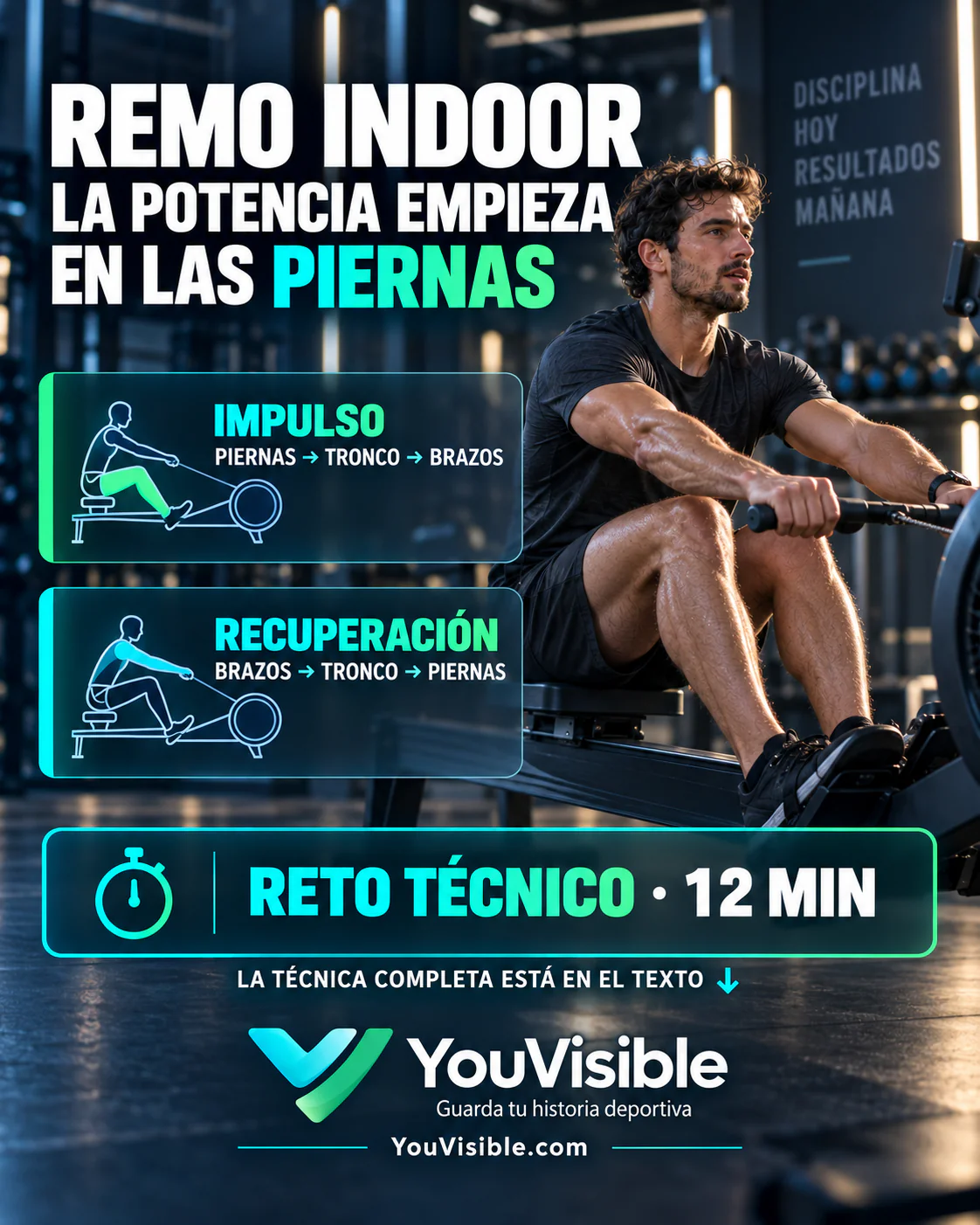
The key sequence is consistent in the guidance from Concept2 and British Rowing: the drive is legs, body, arms; the recovery reverses it to arms, body, legs. Seek coordination before speed, watts, or metres.
The catch: arrive ready, not compressed
At the catch, keep your arms straight and relaxed, tip the body slightly forward from the hips, and keep the spine long and stable. Let the shoulders stay low. Your shins should be roughly vertical, or as close as is comfortable—do not force a deeper, cramped position. Hold the handle lightly enough that wrists and shoulders can remain relaxed.
The drive: legs, body, arms
Start by pressing with your legs while the arms remain extended and the body stays stable. When the legs are nearly straight, swing the body slightly back from the hips. Only then draw the handle smoothly to the lower ribs. Finish with straight wrists, a relaxed grip, and low shoulders. Pulling with the arms first or opening the back early makes the sequence harder to repeat.
The recovery: arms, body, legs
The recovery prepares the next stroke; it is not empty time. First straighten the arms away from the body. With legs still straight, tip the body forward from the hips. Bend the knees only after the hands have passed them, then slide calmly back to the catch. This avoids having to lift the handle over the knees and helps prevent a rushed seat.
For this technical drill, try a brisk 1 on the drive and a controlled 2–3–4 on the recovery. This is a practical reference, not a compulsory universal stroke rate. It simply creates enough time to return arms, body, and legs in order.
A 12-minute technical session
Keep the resistance and intensity comfortable. The purpose is continuity, not a performance score.
- Row easily for three minutes.
- Row arms and body only for one minute, with legs straight.
- Practise the leg drive for one minute, keeping arms extended and body stable.
- Row full strokes for one minute, focusing on the correct order.
- Repeat only the technical block: one minute arms and body, one minute legs, one minute full stroke.
- Finish with three very easy minutes.
That is 3 minutes of warm-up + 6 minutes of technical work + 3 easy minutes = 12 minutes. Do not repeat the warm-up; repeat only the three technical exercises.
Mistakes to avoid
- Pulling with the arms too early.
- Leaning the body back before the leg drive is nearly finished.
- Bending the knees before the hands have cleared them.
- Recovering too quickly and rushing the seat.
- Raising the shoulders or gripping the handle too tightly.
- Excessively rounding the back.
- Over-compressing the starting position.
- Adding resistance or speed before controlling the sequence.
Today’s YouVisible challenge
Complete the 12 minutes and record your metres, time, and overall feeling. Also note which part of the stroke is hardest to coordinate, the technical adjustment you worked on, your main lesson, and how you felt before and after.
With YouVisible, you can record more than metres and time: you can also save the technical adjustment you practised, your feelings, and what you learned. Record your activity with or without GPS and share it in Comunidad Visibles so other athletes can add their advice and experience.
Which part of the stroke makes you lose coordination most easily? Record and share this workout in YouVisible.
Save your sports history. Share it. Make it visible.
Find YouVisible on Android, iPhone, and the web.
Sources
Notice: This is general educational information and does not replace an assessment by a qualified coach or healthcare professional.