Train at your own pace
Find exercises, workouts and plans that suit your level and the equipment you have.
Community workout
Gentle Flow and Balance
Objective Link simple transitions and balance with stable supports and natural breathing. Equipment Mat, wall and comfortable cushion or block for support. Organisation Follow the sequence with pauses between attempts; use organisation windows for slow links between poses and recovery. Practice times are comfortable upper limits, without any requirement to fill the window. Do not impose a breathing rhythm or hold your breath. These are planned references and contain no performed results from the author.
By YouVisible Sport
Activity measurements
- performed duration seconds
- 2,400
- Sport
- yoga
- Specialty
- vinyasa yoga
- Level
- beginner
- Equipment
- Bodyweight
- Title
- Gentle Flow and Balance
- Description
- Objective Link simple transitions and balance with stable supports and natural breathing. Equipment Mat, wall and comfortable cushion or block for support. Organisation Follow the sequence with pauses between attempts; use organisation windows for slow links between poses and recovery. Practice times are comfortable upper limits, without any requirement to fill the window. Do not impose a breathing rhythm or hold your breath. These are planned references and contain no performed results from the author.
- Objective
- WELLBEING
- Block
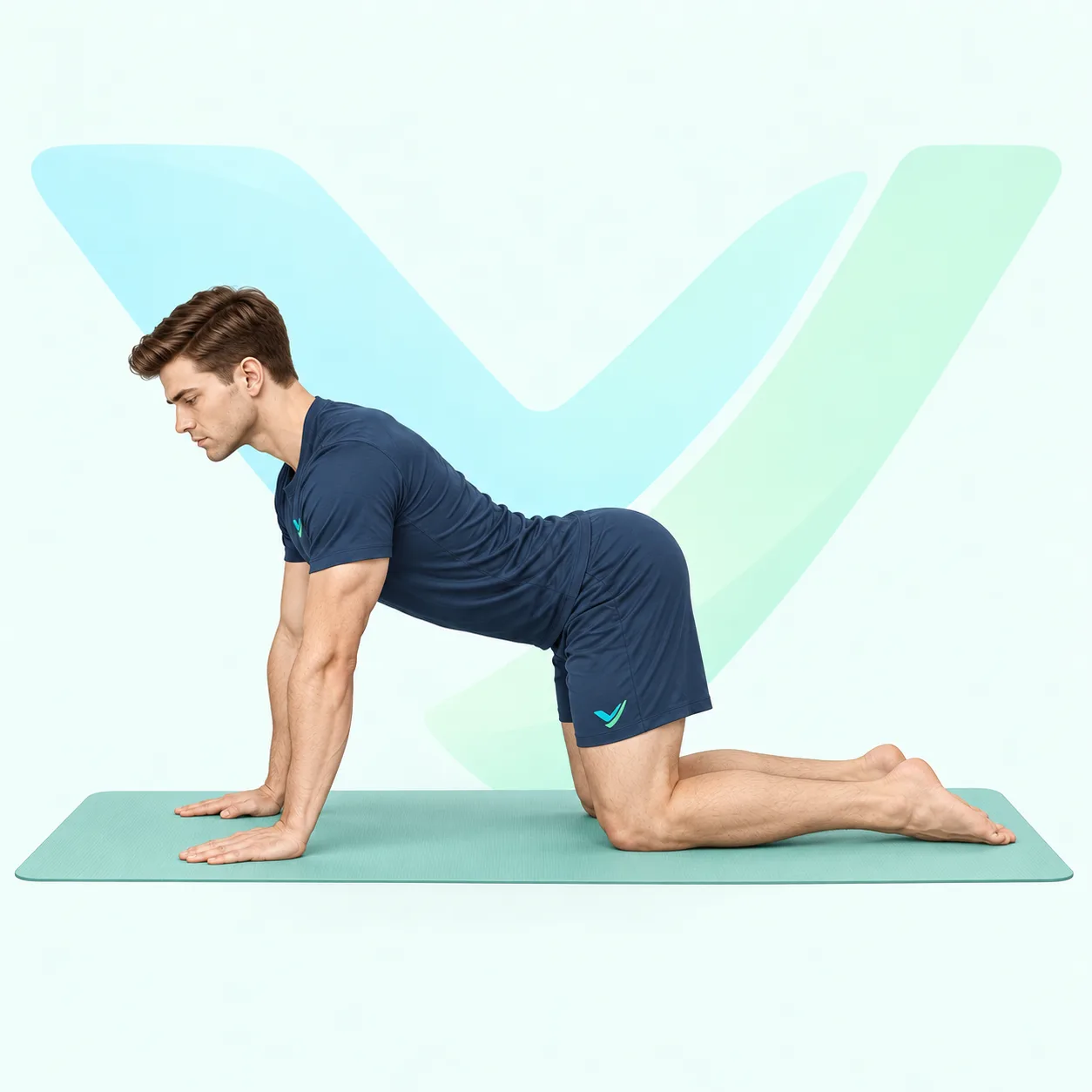
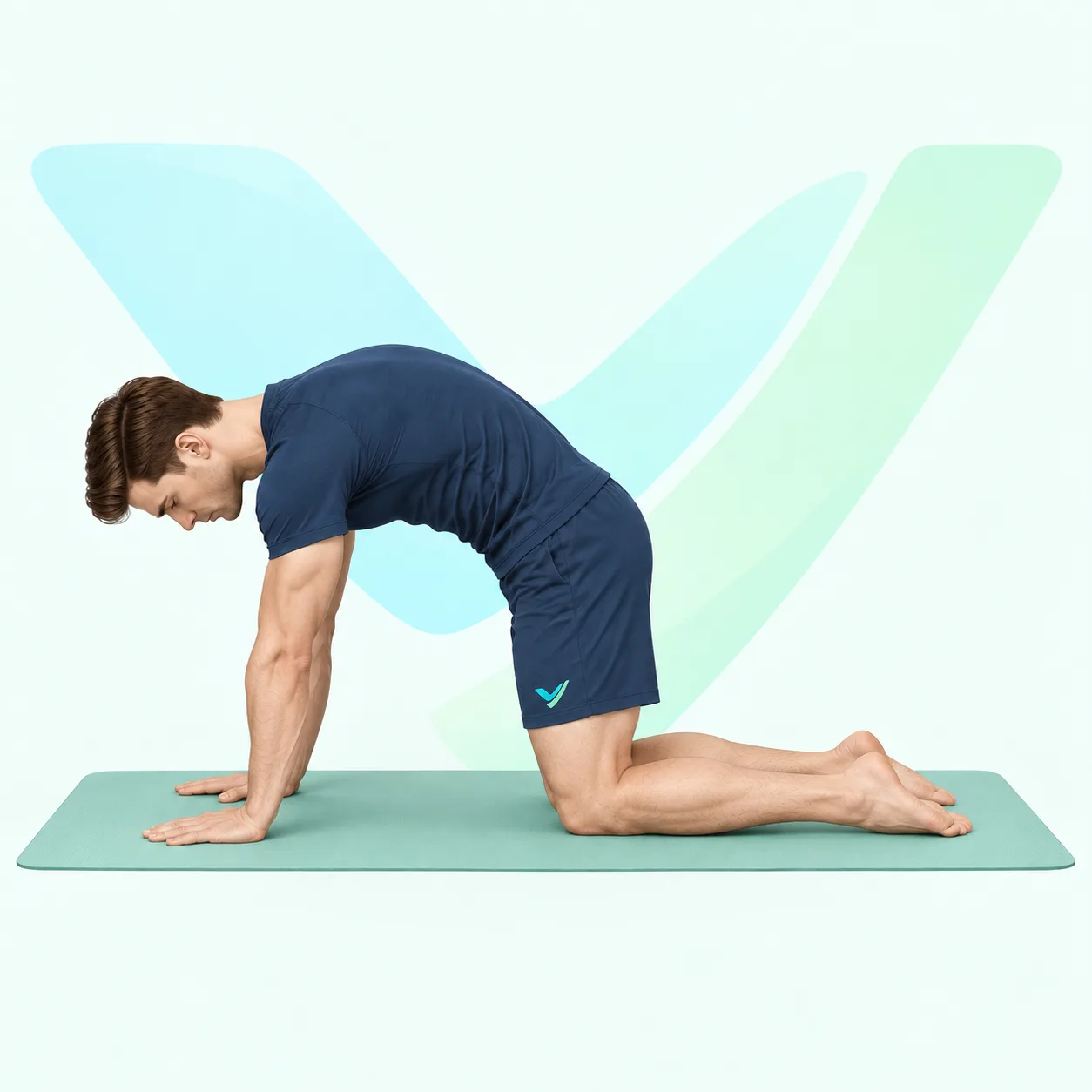
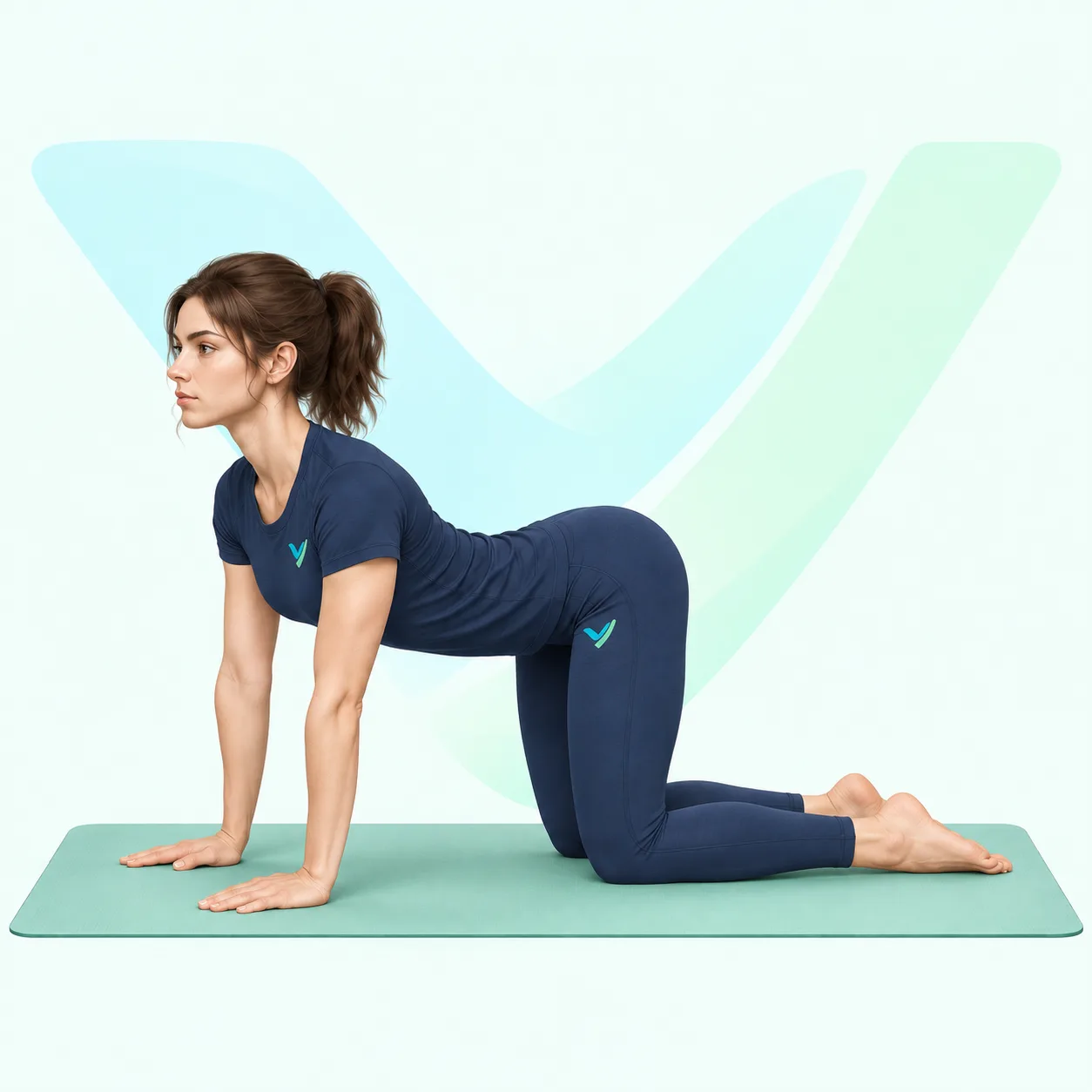
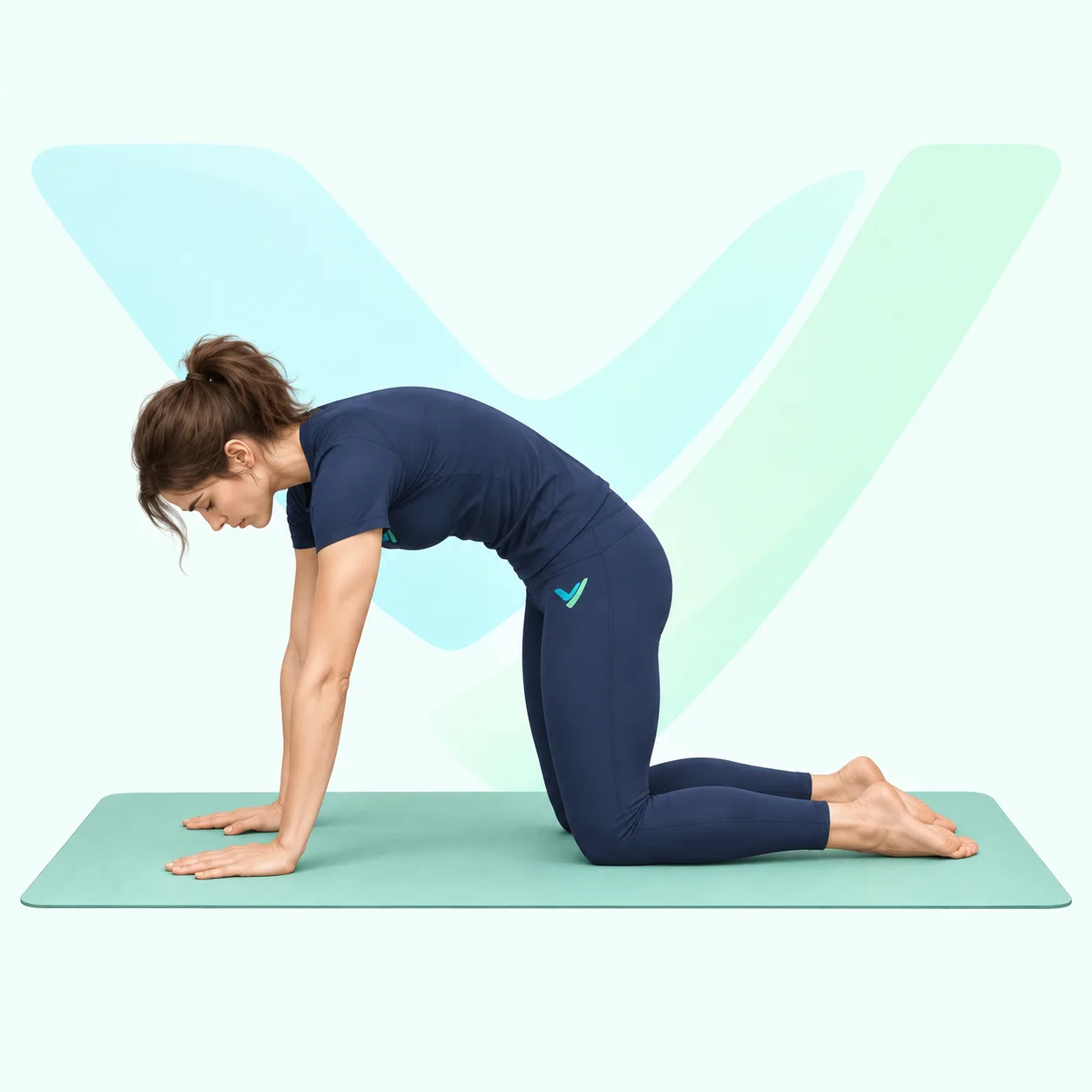
- Cat–cow
- Instructions
- This opening prepares spinal mobility with stable supports. Keep breathing naturally and use a gentle range that feels comfortable.
- Title
- Cat-Cow
- Description
- A gentle quadruped movement alternating moderate spinal extension with a rounded flexion. Keep the hands and knees grounded throughout the cycle.
- Instructions
- Start on hands and knees with palms under shoulders, knees under hips and tops of feet on the mat.
- Instructions
- Distribute weight between hands and knees and begin with the back comfortable.
- Instructions
- As you breathe in naturally, gently lift the breastbone and sitting bones, allowing only a small spinal curve.
- Instructions
- As you breathe out, press the floor away, slightly tuck the pelvis and round the back while letting the head lower.
- Instructions
- Alternate slowly through a comfortable range without locking the elbows or straining the neck.
- Instructions
- Return to a neutral back and rest. Record total cycle time rather than counting each phase as a separate repetition.
- Tips
- Move the spine gently without collapsing the lower back.
- Tips
- Keep hands and knees in the same places.
- Tips
- Let the gaze follow the movement without throwing the head back.
- Equipment
- Yoga mat.
- Level
- Beginner, for the variation described.
- Block
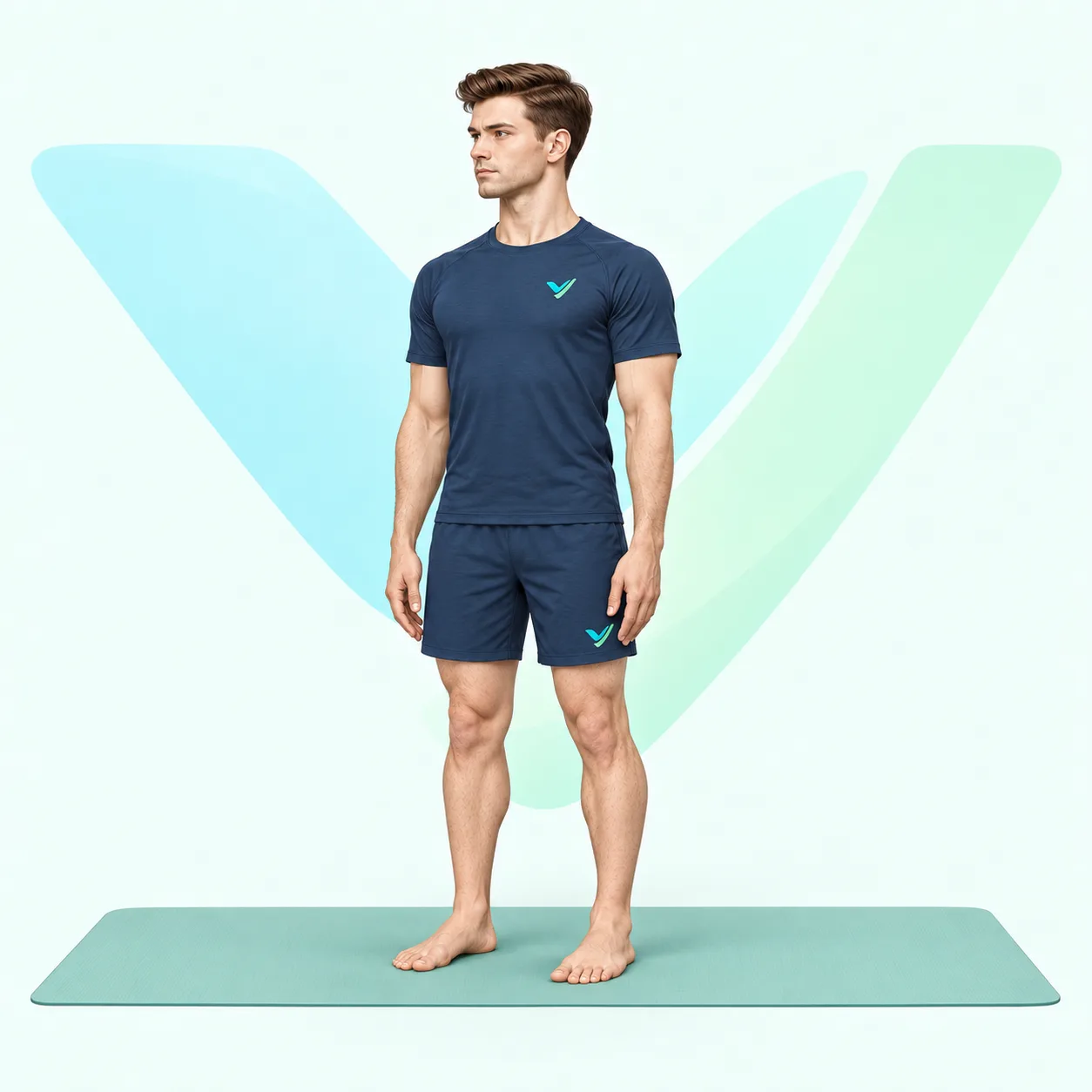
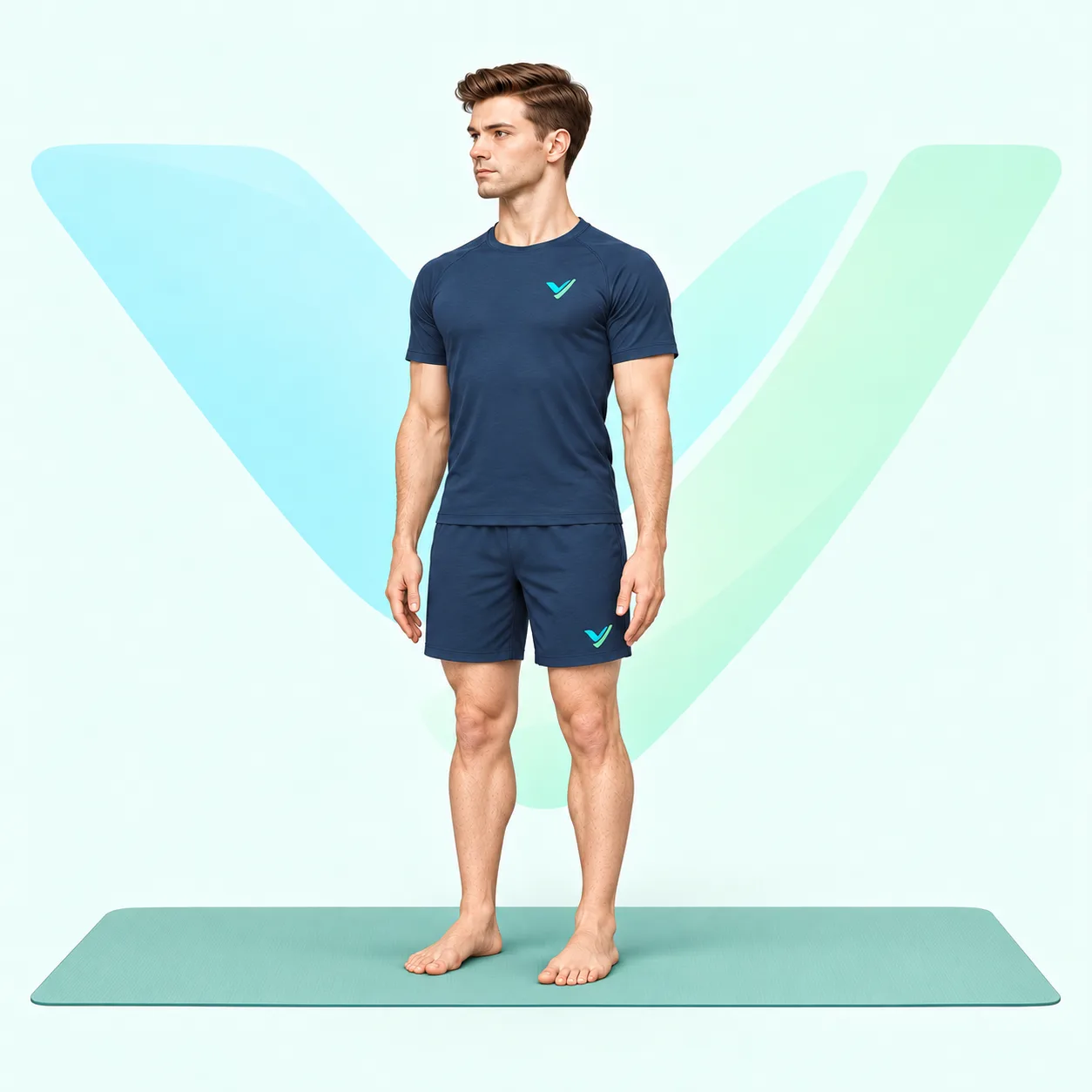
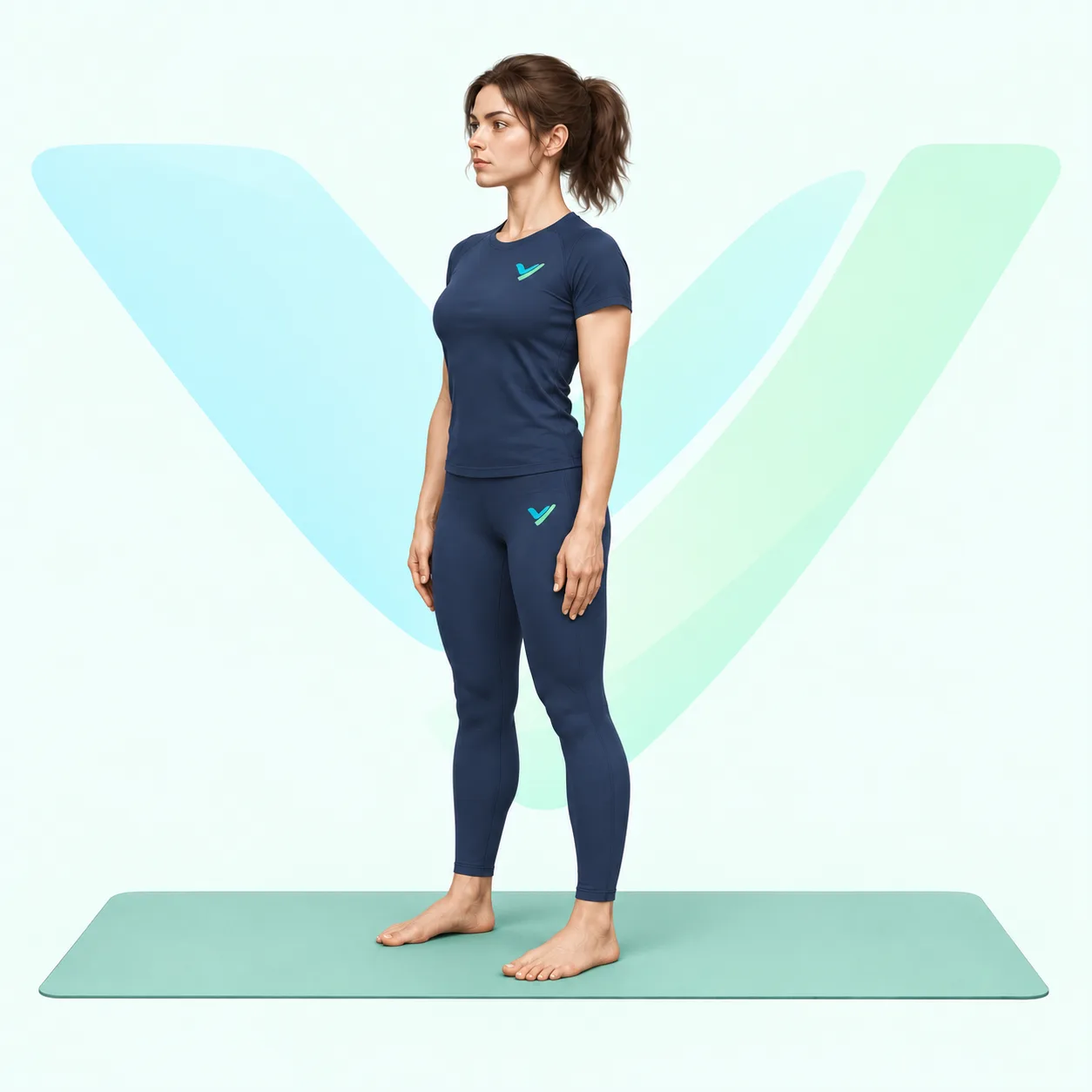
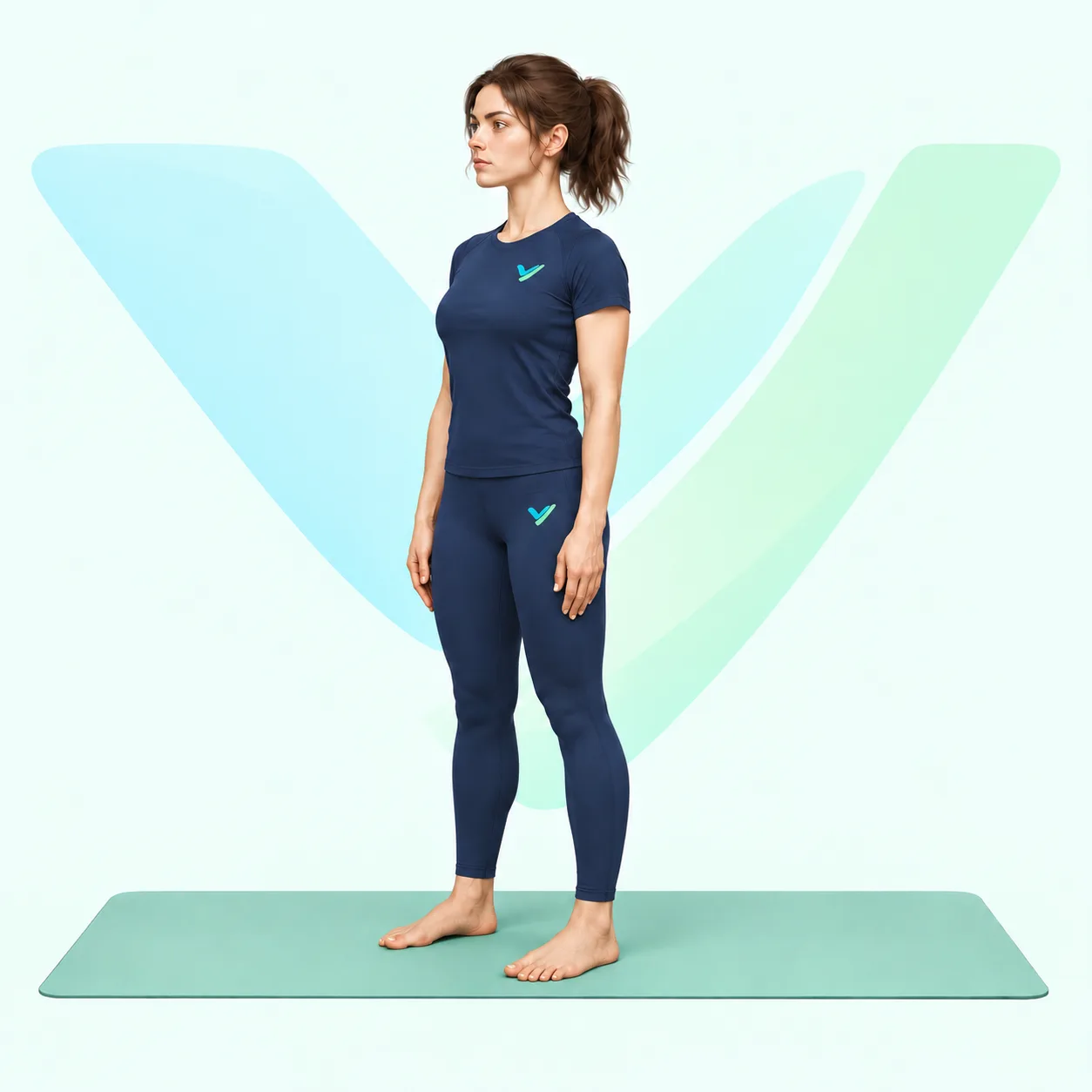
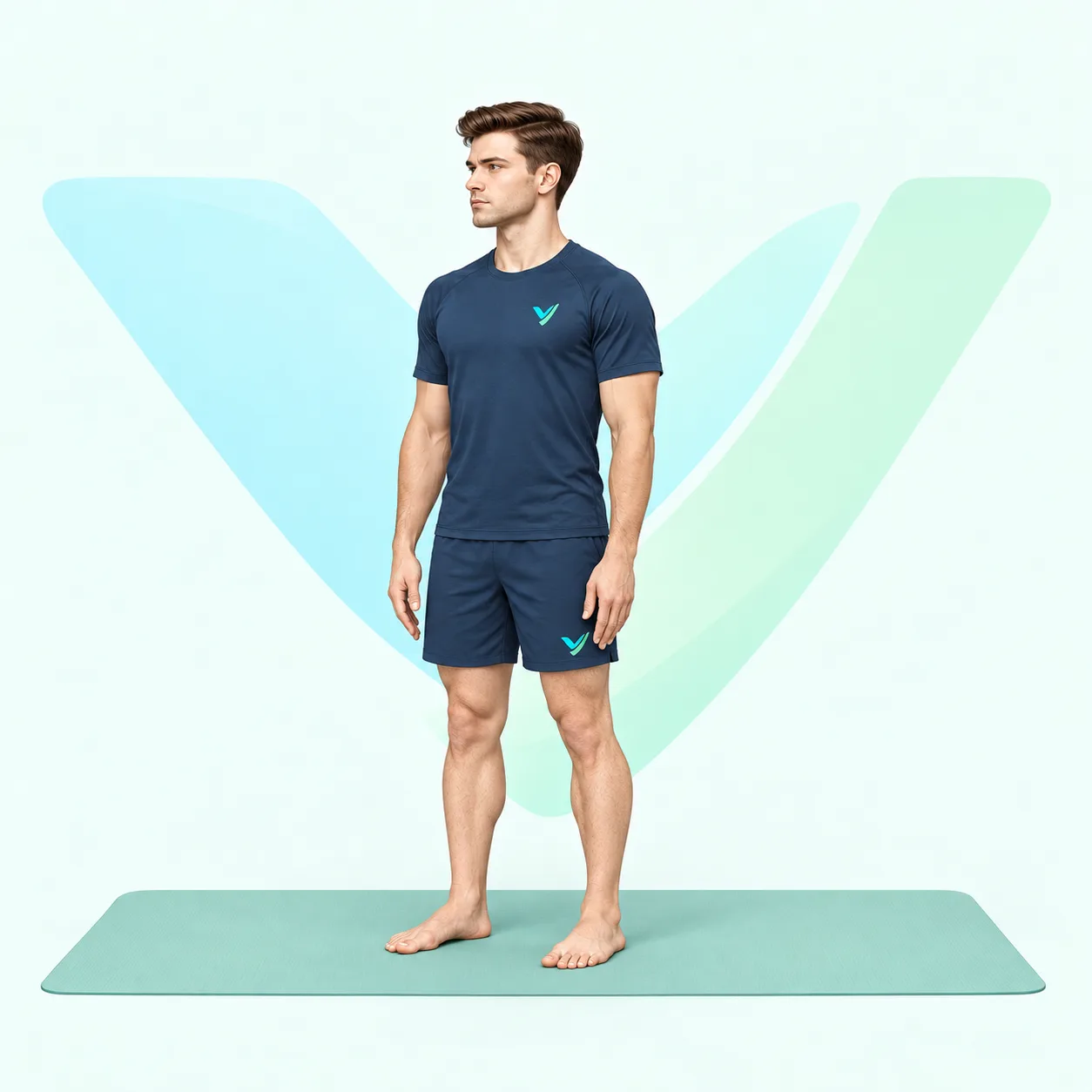
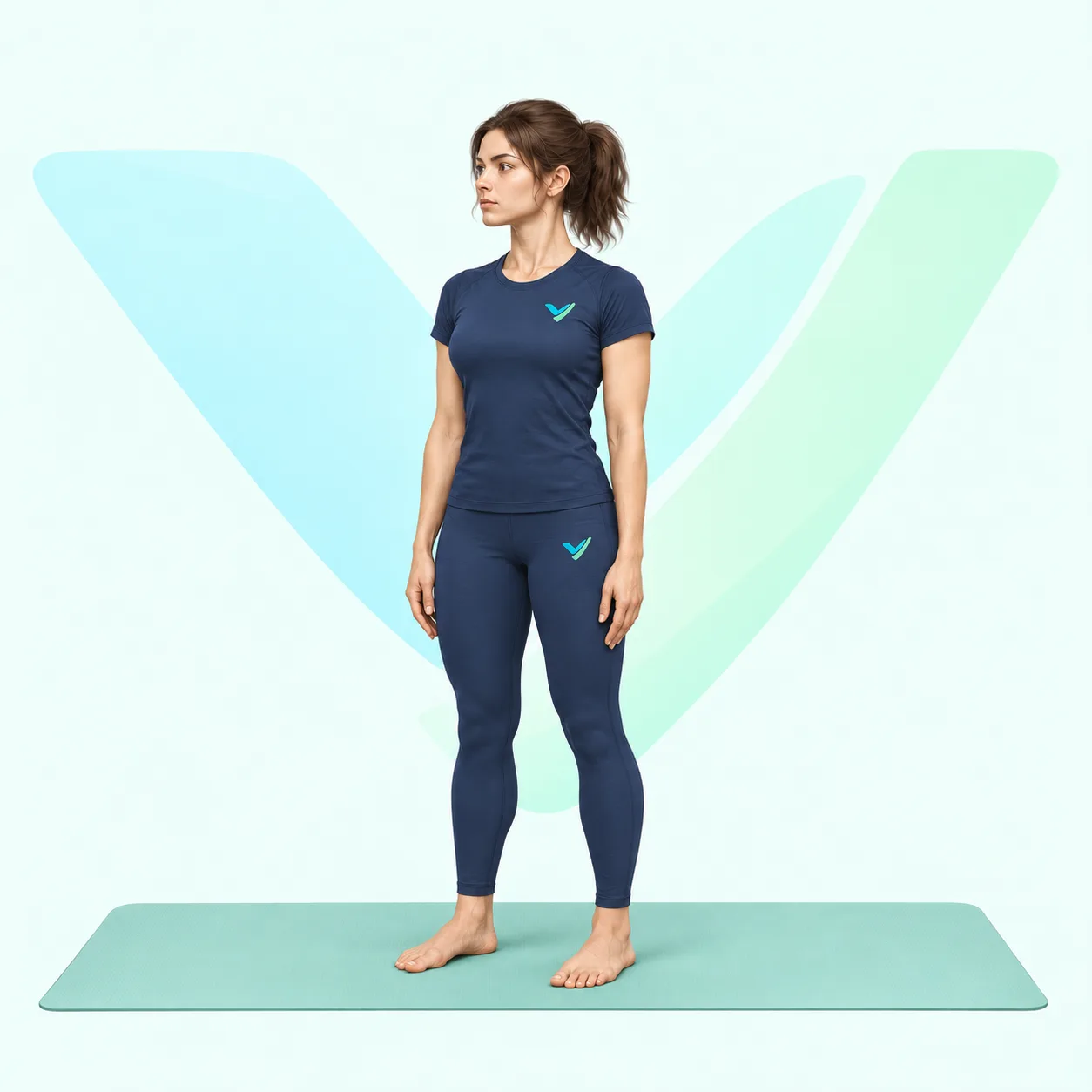
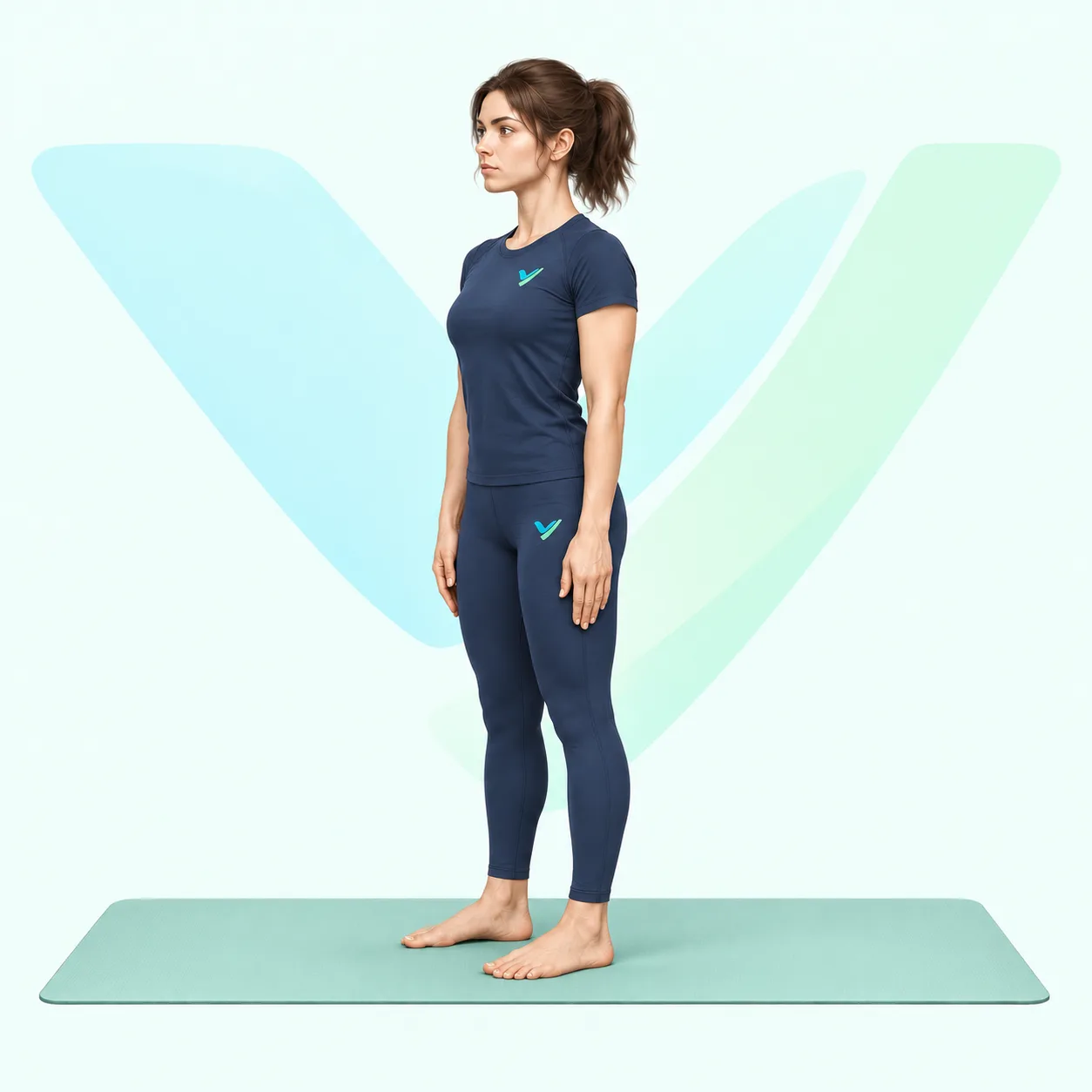
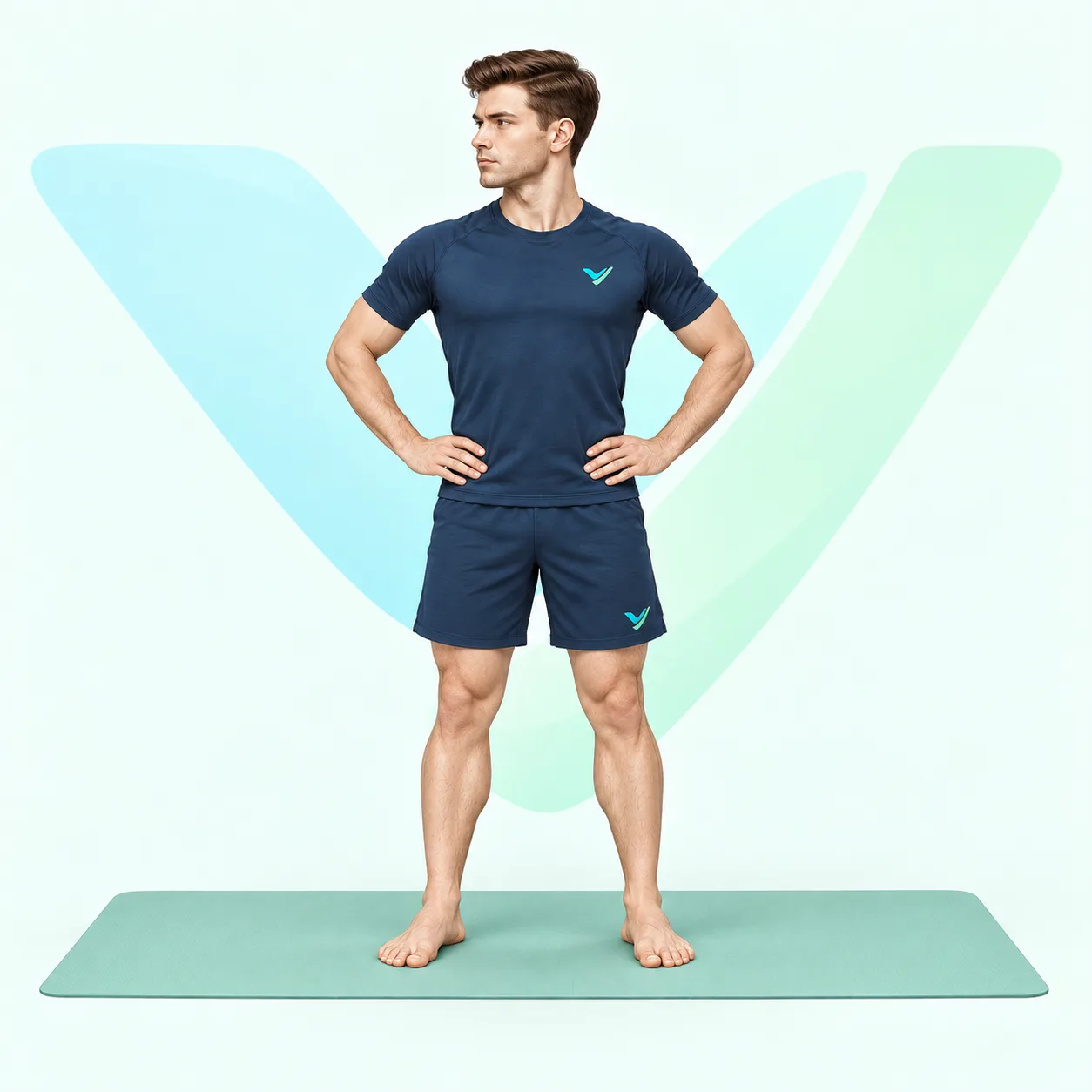
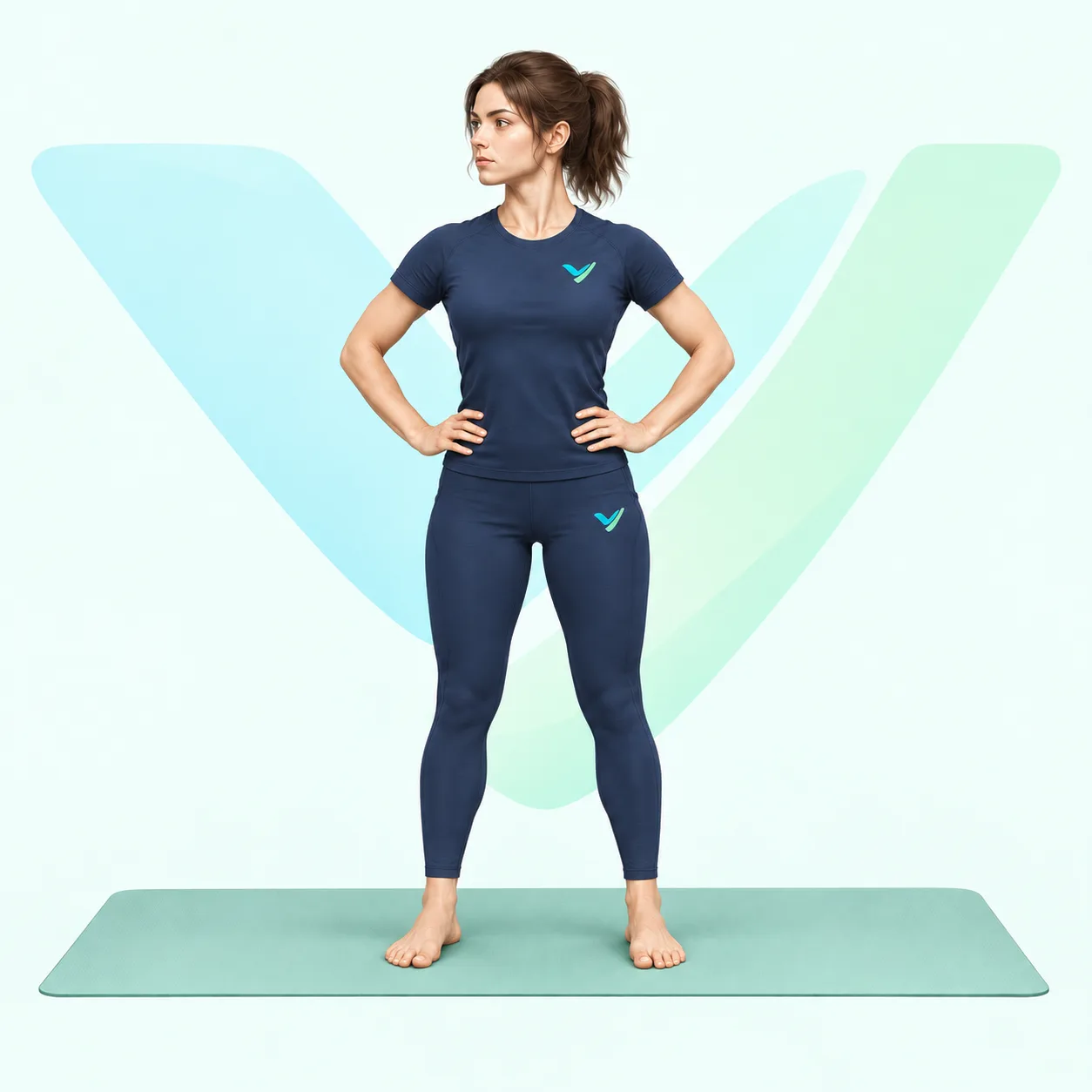
- Mountain pose
- Instructions
- This pose brings attention to support and balance. Take the time you need to find a comfortable standing position.
- Title
- Mountain Pose
- Description
- A standing posture for finding a steady base and comfortable alignment. The change from preparation is subtle: balance your support, lengthen your torso and relax your shoulders while breathing naturally.
- Instructions
- Stand on the mat with parallel feet approximately hip-width apart.
- Instructions
- Ground both whole feet and keep your legs straight without locking your knees.
- Instructions
- Balance your weight between both feet rather than resting only on your heels or toes.
- Instructions
- Stack your pelvis above your feet and lengthen your torso without thrusting your chest or arching your lower back.
- Instructions
- Rest your arms by your sides and relax your shoulders. Look ahead and hold while breathing naturally.
- Instructions
- Finish by gradually relaxing your attention. Record the total time held.
- Tips
- You do not need to bring your feet together or stand rigidly.
- Tips
- Keep breathing freely; the images do not depict a breathing change.
- Tips
- Stand near stable support if balancing is difficult.
- Equipment
- Yoga mat. Optional stable support.
- Level
- Beginner, for the variation described.
- Block
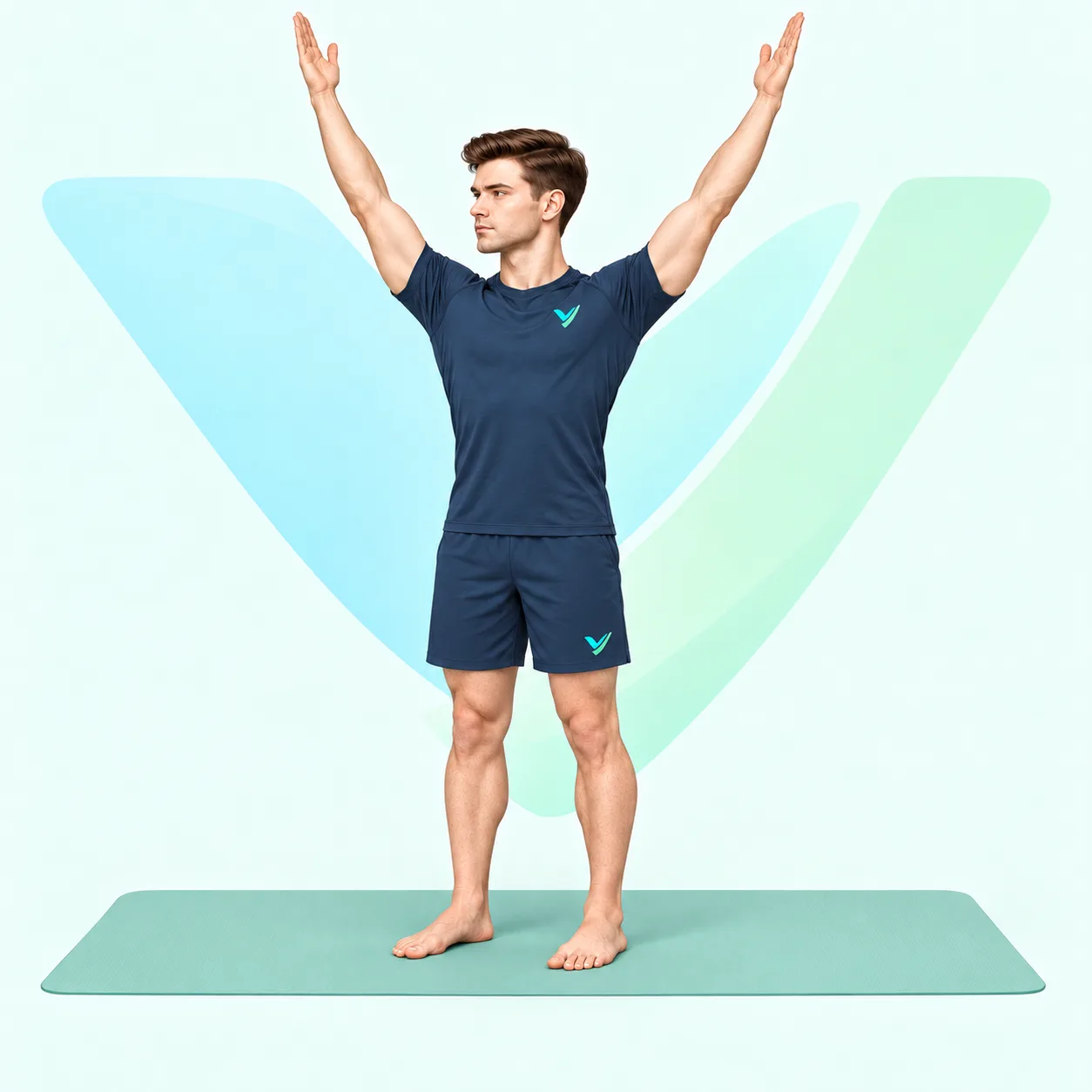
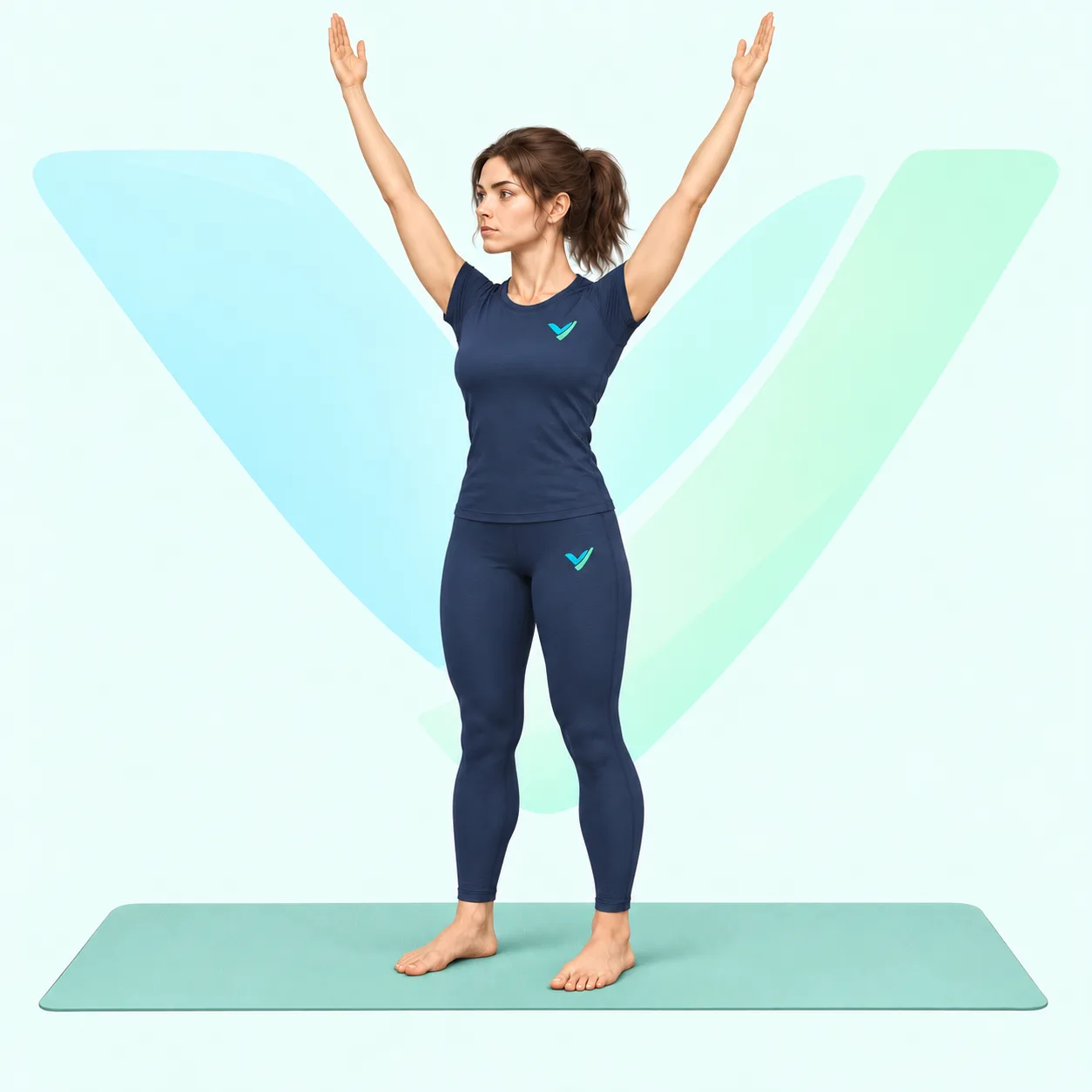
- Raised arms
- Instructions
- This movement links standing practice to the next section. Adjust the range to maintain a sense of space and comfort.
- Title
- Upward Salute
- Description
- A standing posture with the arms raised within a comfortable range. Keep a steady base and upright torso without compensating for the arm lift by arching your back.
- Instructions
- Start standing with parallel feet hip-width apart and your arms by your sides.
- Instructions
- Distribute your weight between both feet and keep your knees soft.
- Instructions
- Raise your arms out to a comfortable V, keeping your hands apart with palms facing inward.
- Instructions
- Keep your ribs above your pelvis and avoid leaning backward to raise your hands higher.
- Instructions
- Look ahead and hold while breathing naturally, without shrugging your shoulders.
- Instructions
- Lower your arms slowly to the starting position. Record the holding time.
- Tips
- Lower your arms if your shoulders or neck become tense.
- Tips
- Your hands do not need to meet overhead.
- Tips
- Keep both feet grounded throughout the hold.
- Equipment
- Yoga mat.
- Level
- Beginner, for the variation described.
- Block
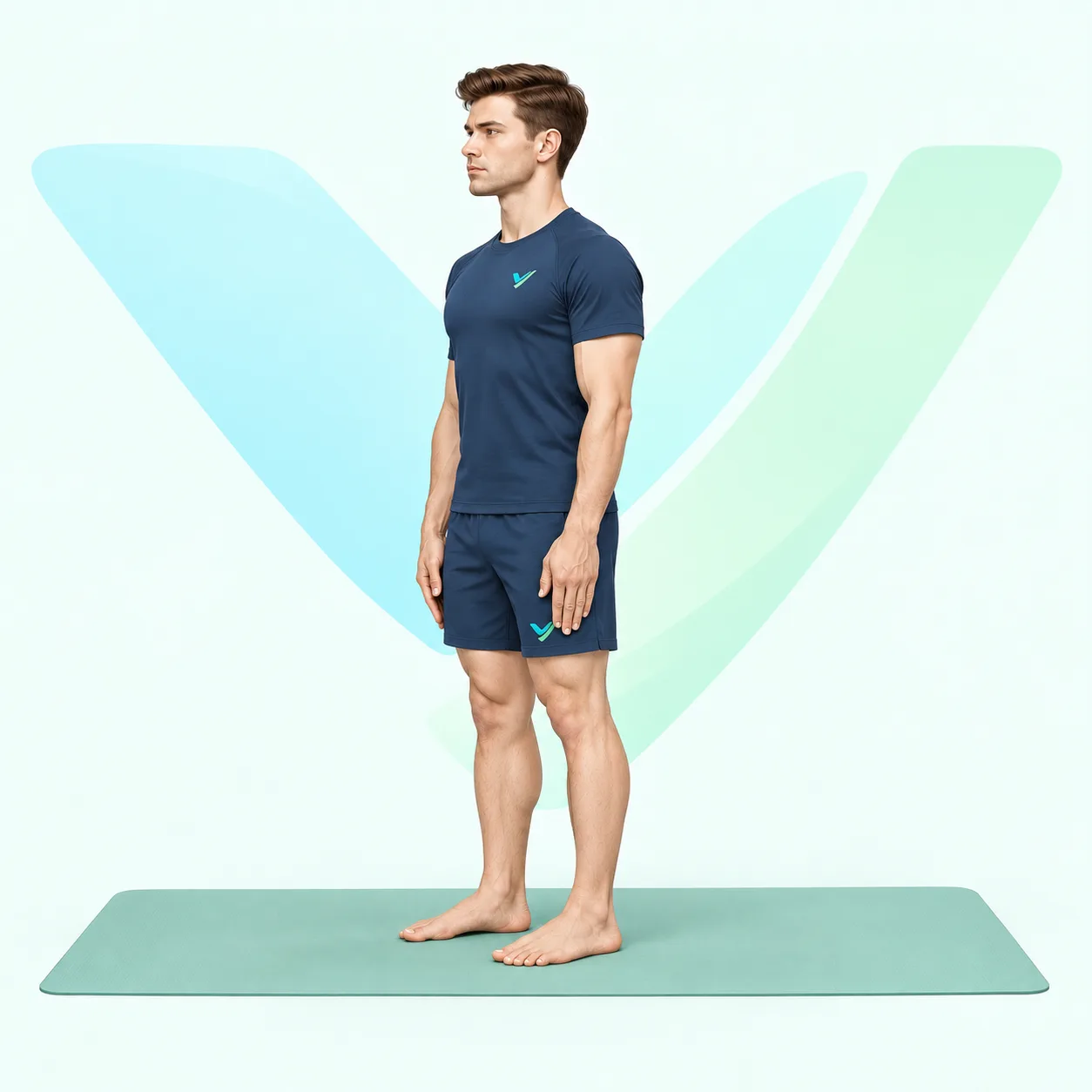
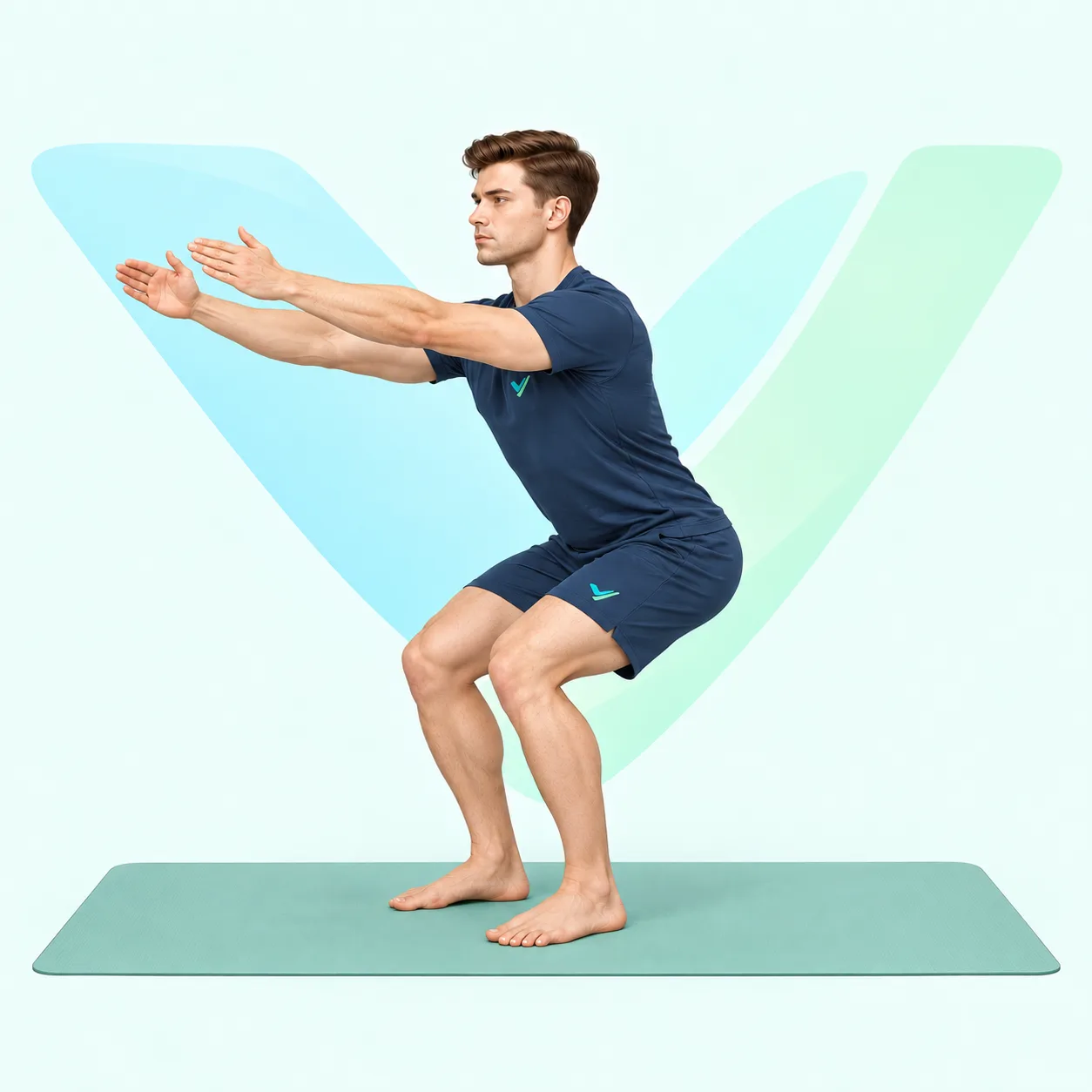
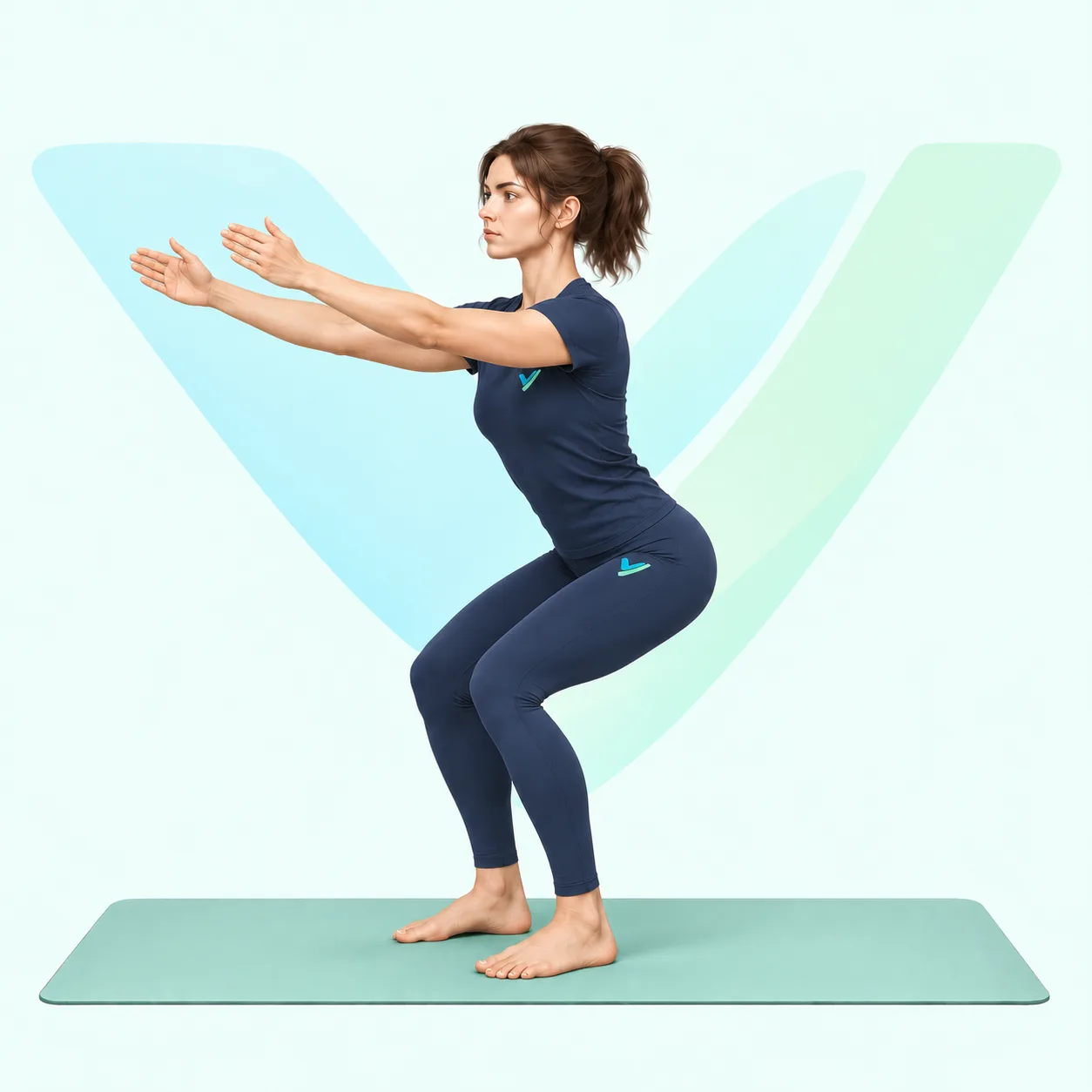
- Chair pose
- Instructions
- Chair pose adds brief leg effort within the gentle sequence. Reduce the bend or return to mountain whenever you need rest.
- Title
- Chair Pose
- Description
- A standing posture with the hips moving backward and a moderate knee bend, as if approaching a high seat. Raise your arms within a comfortable range while keeping your heels grounded.
- Instructions
- Stand with parallel feet hip-width apart and relaxed arms.
- Instructions
- Move your hips slightly backward and bend both knees in the direction of your feet.
- Instructions
- Keep your heels grounded and stop lowering before you lose stability; your thighs do not need to be horizontal.
- Instructions
- Raise your arms forward and upward within a comfortable range, keeping your hands apart.
- Instructions
- Keep your spine long, with a slight lean from your hips, and breathe naturally.
- Instructions
- Lower your arms and straighten your legs with control to stand up. Record the holding time.
- Tips
- Adjust the depth without forcing your knees.
- Tips
- Track your knees towards your feet rather than letting them fall inward.
- Tips
- Keep your hands on your hips if raising your arms is uncomfortable.
- Equipment
- Yoga mat.
- Level
- Beginner, for the variation described.
- Block
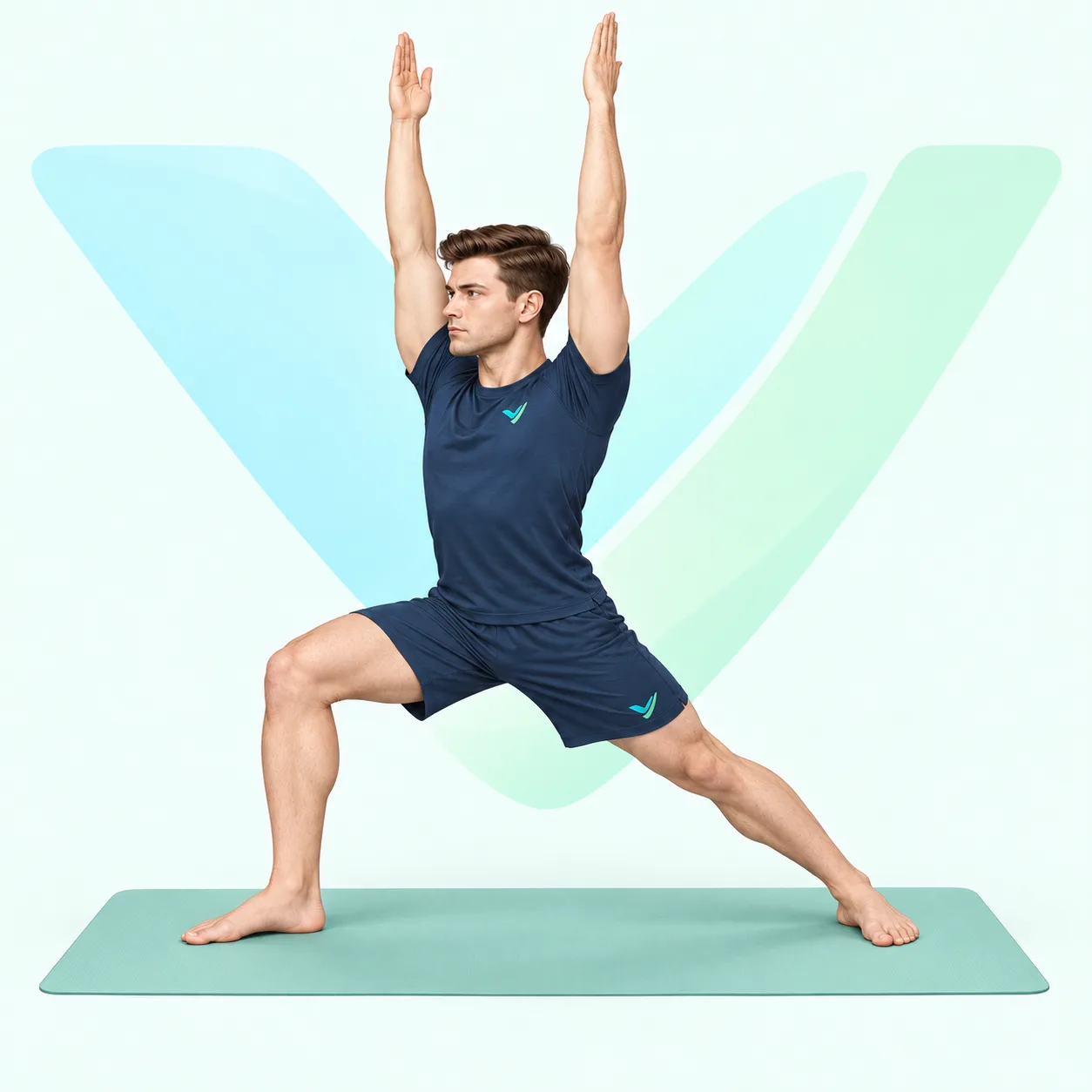
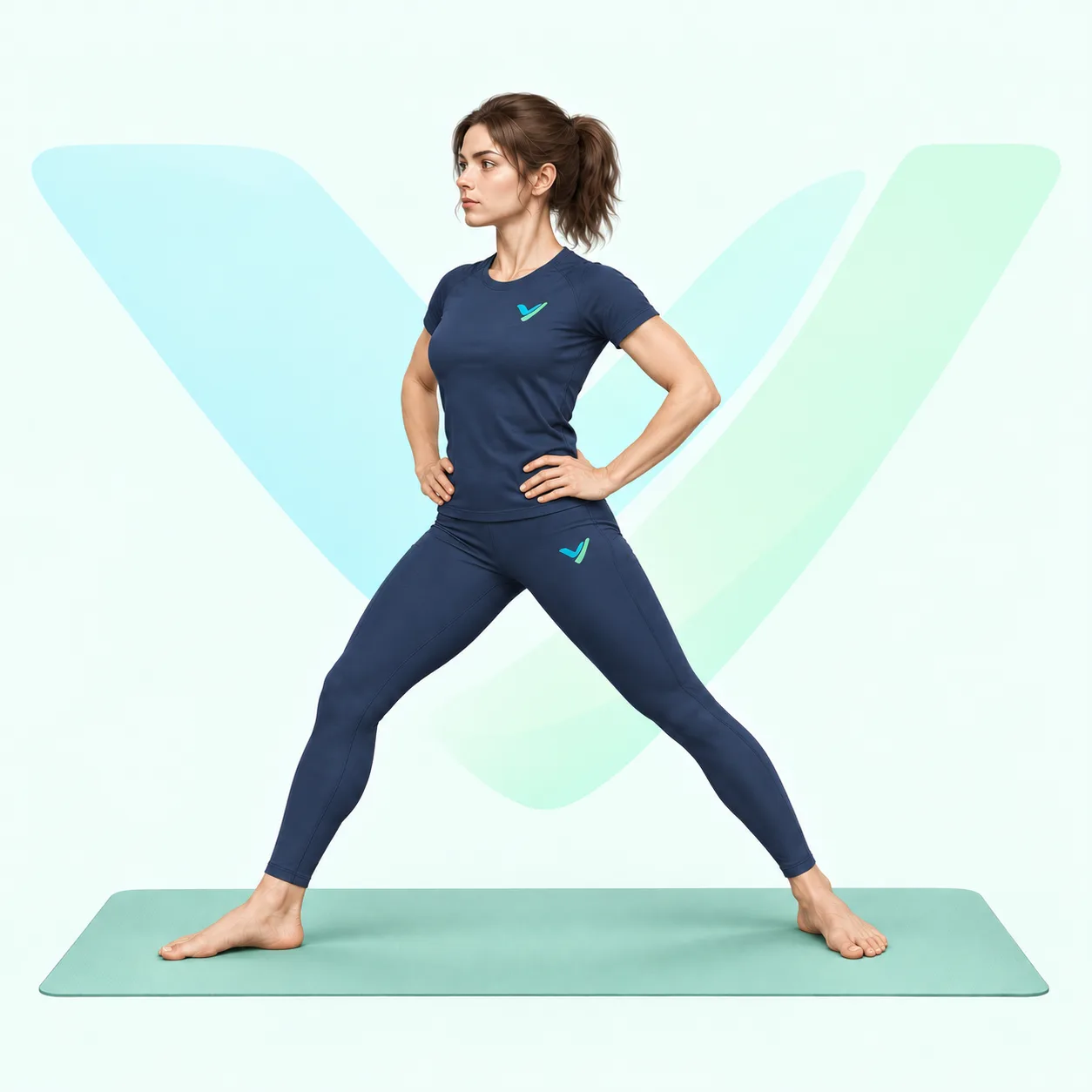
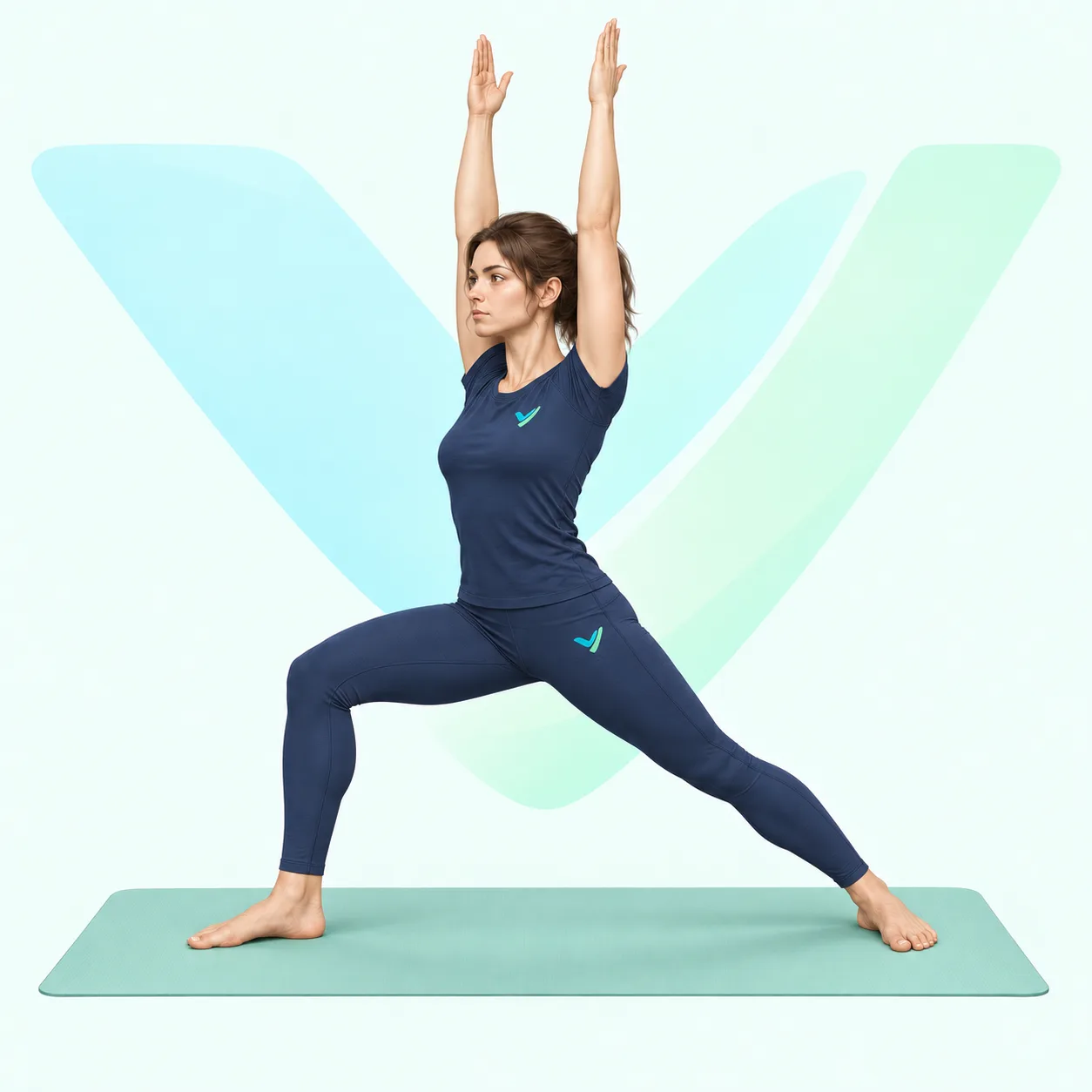
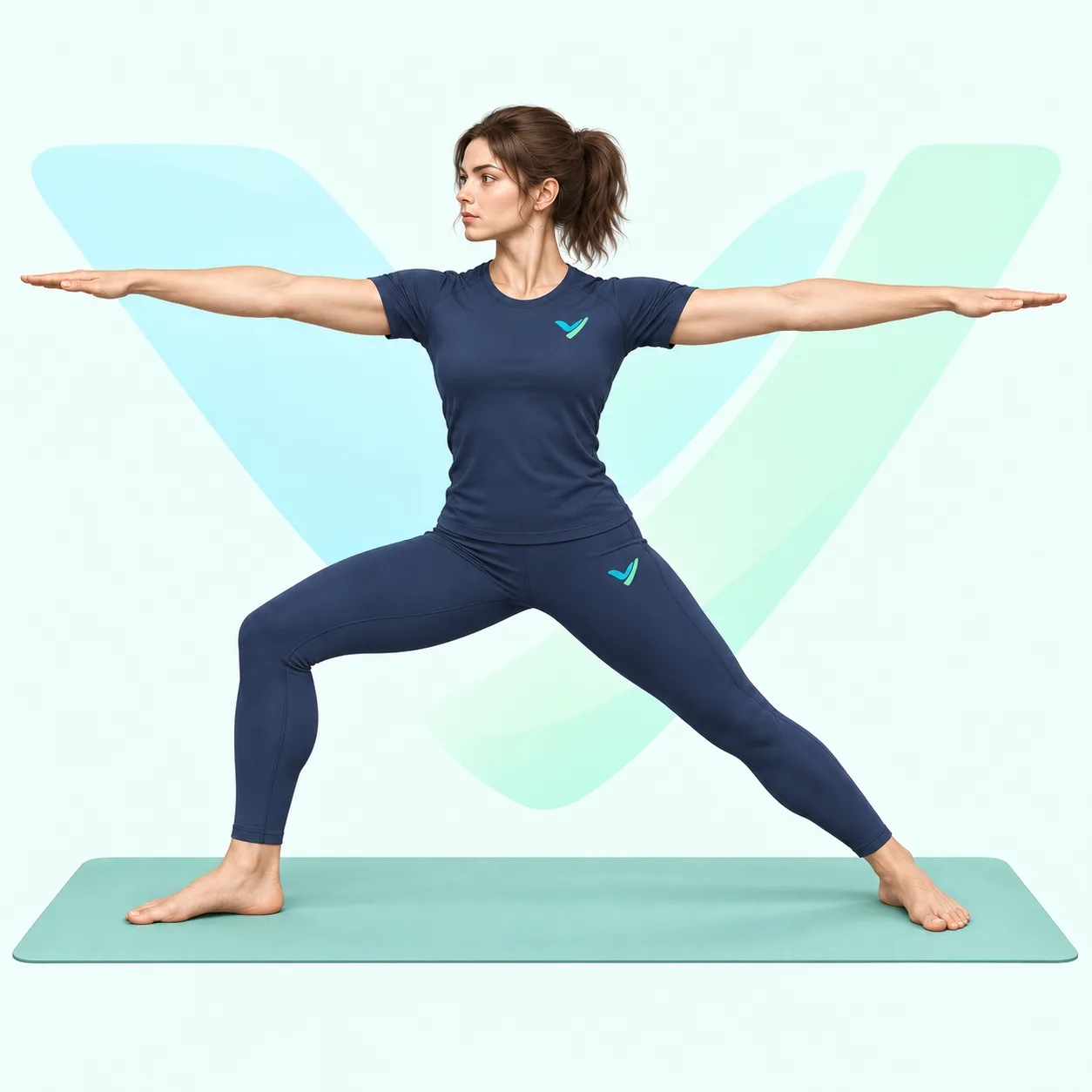
- Warrior I
- Instructions
- This pose introduces staggered support and attention to balance. Use a short stance and keep a wall nearby if you need stability.
- Title
- Warrior I
- Description
- A standing lunge with the back heel grounded and arms raised. Turn the pelvis comfortably towards the front foot and let the front knee follow the direction of its toes.
- Instructions
- Step into a stable staggered stance with enough side-to-side space for balance.
- Instructions
- Point the front foot forward and turn the back foot out about 45 degrees, keeping both heels grounded.
- Instructions
- Place the hands on the hips and turn the pelvis forward only as far as comfortable.
- Instructions
- Bend the front knee in line with its toes, keeping it approximately over the ankle and the back leg long.
- Instructions
- Raise both arms shoulder-width apart, lengthen the torso and breathe without overarching the lower back.
- Instructions
- Lower the arms, gently straighten the front knee and step the feet together before changing sides. Record time per side and complete both sides.
- Tips
- Shorten the stance if the back heel lifts.
- Tips
- The pelvis does not need to be perfectly square.
- Tips
- Relax the shoulders even with the arms raised.
- Equipment
- Yoga mat.
- Level
- Beginner, for the variation described.
- Block
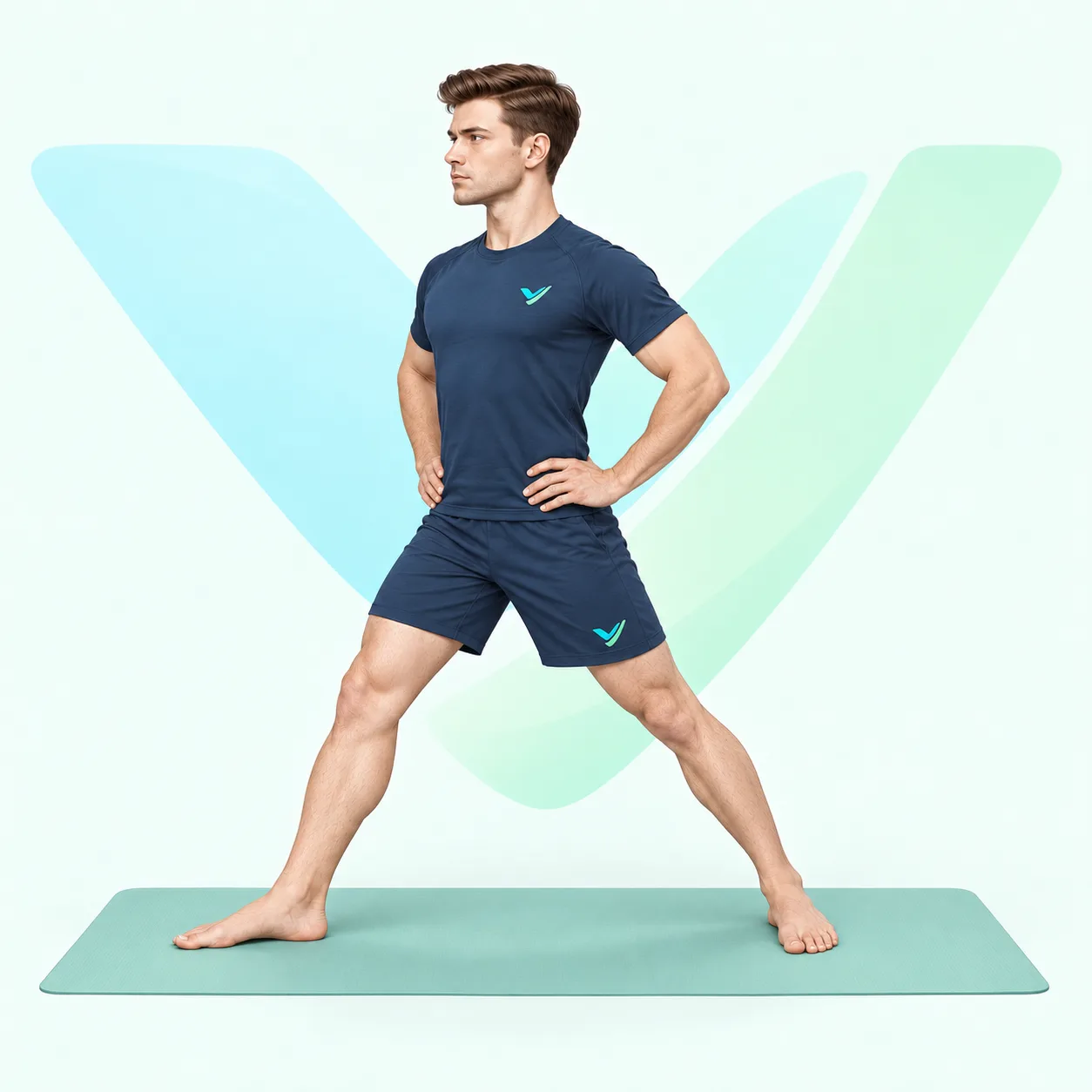
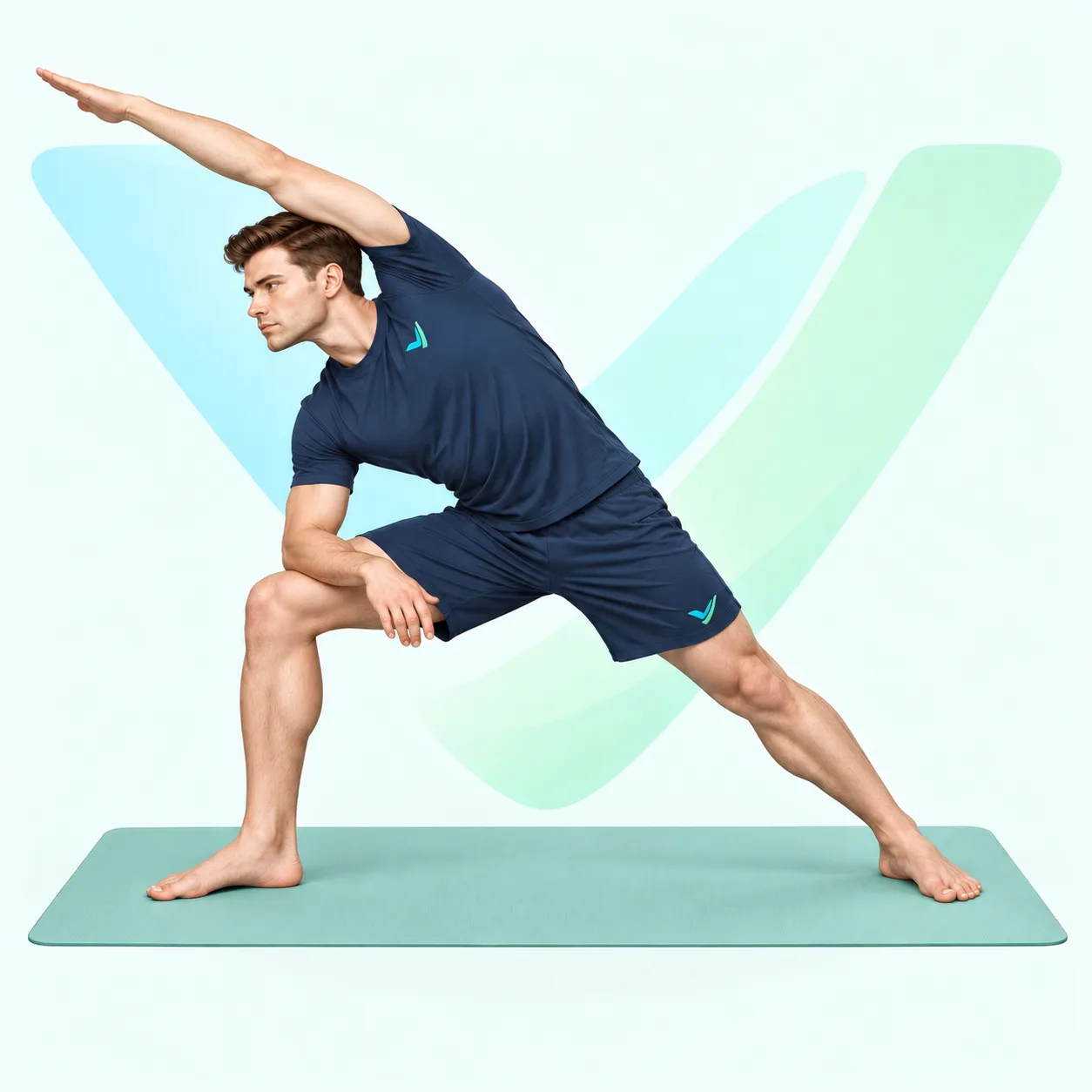
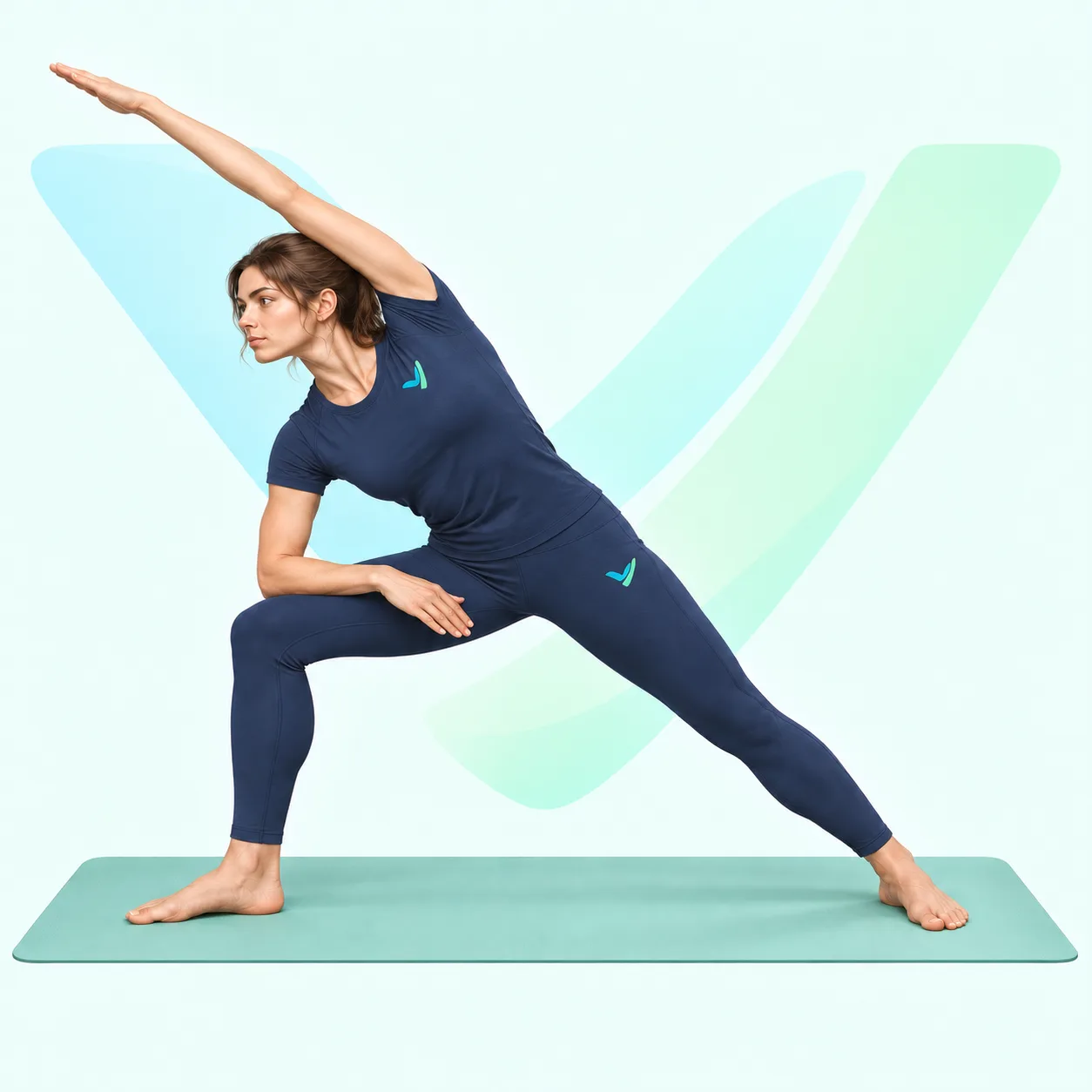
- Forearm-supported side angle
- Instructions
- This section connects leg work with a comfortable side opening. Forearm support lets you explore the movement without forcing range.
- Title
- Side Angle with Forearm on Thigh
- Description
- A side angle variation with the forearm resting lightly on the front thigh. A wide base and a knee aligned with the foot allow a sideways torso lean and an overhead reach without seeking an extreme range.
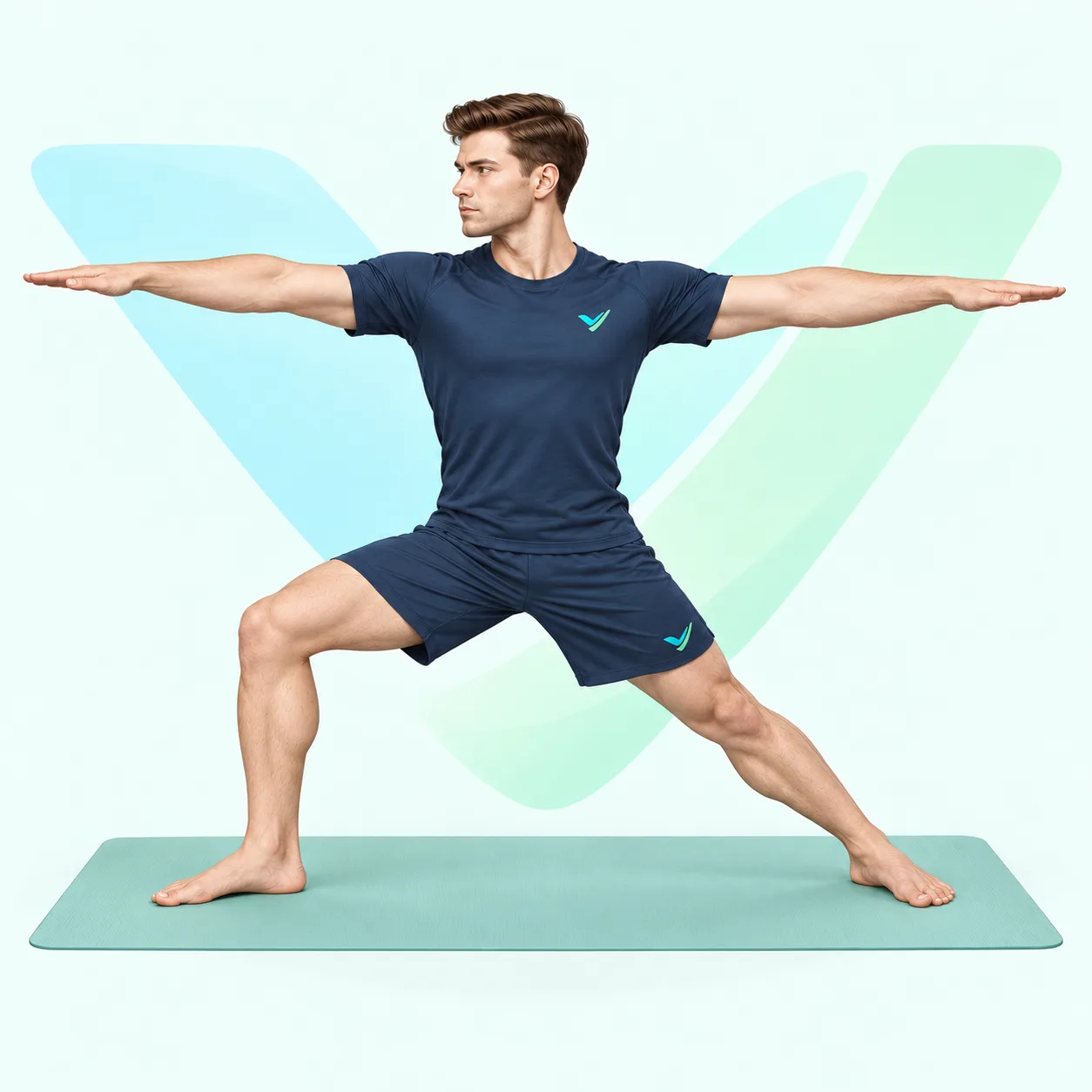
- Instructions
- Step your feet apart on the mat. Turn the front foot towards the working side and angle the back foot slightly inward.
- Instructions
- Bend the front knee in line with the foot, keeping the back leg extended and both feet grounded. Extend your arms at shoulder height.
- Instructions
- Lean towards the front leg and rest that forearm on the thigh, without collapsing your shoulder or loading the knee.
- Instructions
- Reach the other arm overhead on a comfortable diagonal. Open your chest without forcing rotation.
- Instructions
- Look forward or down if that is easier on your neck. Hold while breathing naturally.
- Instructions
- Return with control to Warrior II, straighten the leg and change sides. Record time per side and complete both sides.
- Tips
- Keep the back heel grounded and the front knee aligned with the foot.
- Tips
- Use the forearm as gentle support rather than a lever to force rotation.
- Tips
- Reduce the knee bend or lean if you lose stability.
- Equipment
- Yoga mat.
- Level
- Beginner, for the variation described.
- Block
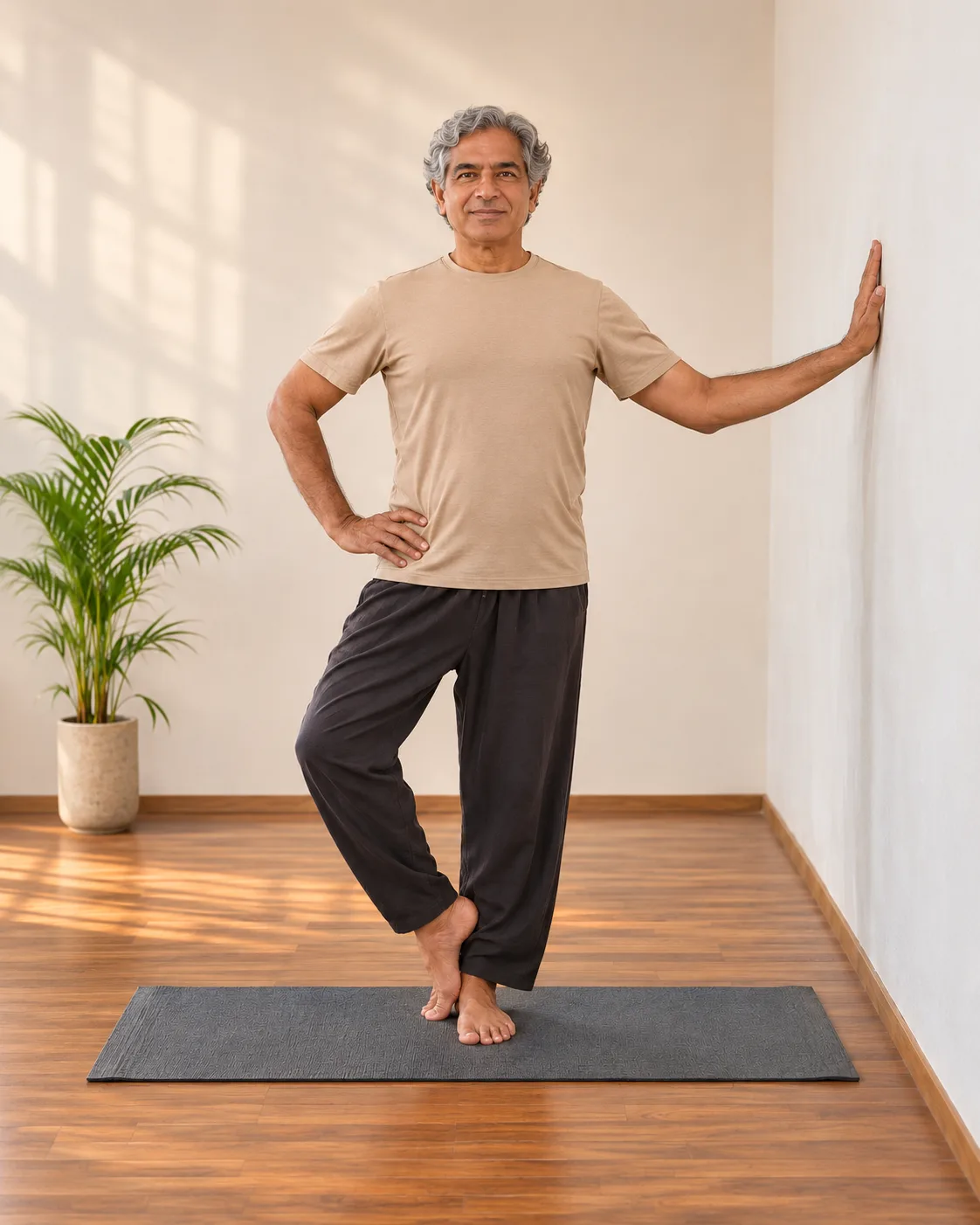
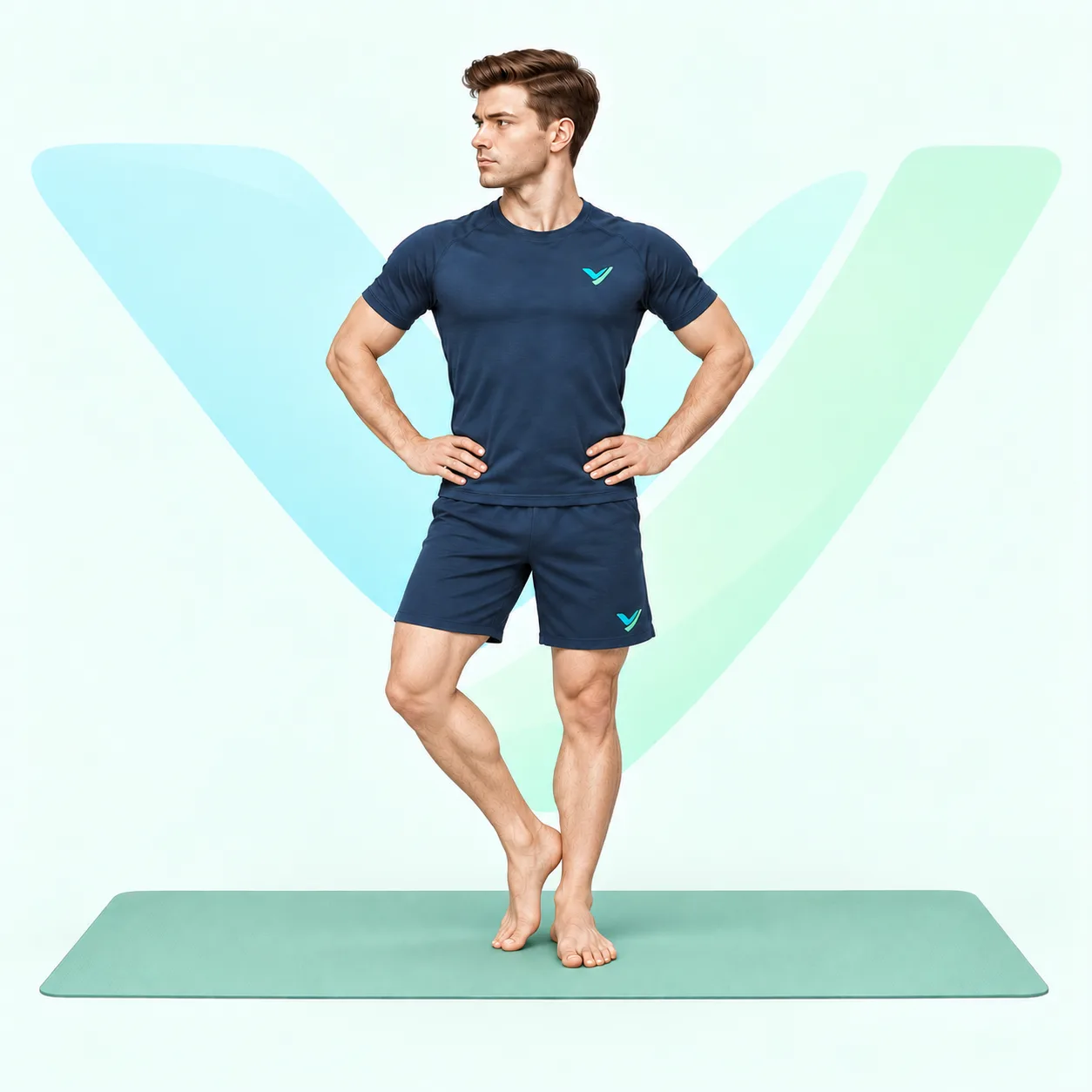
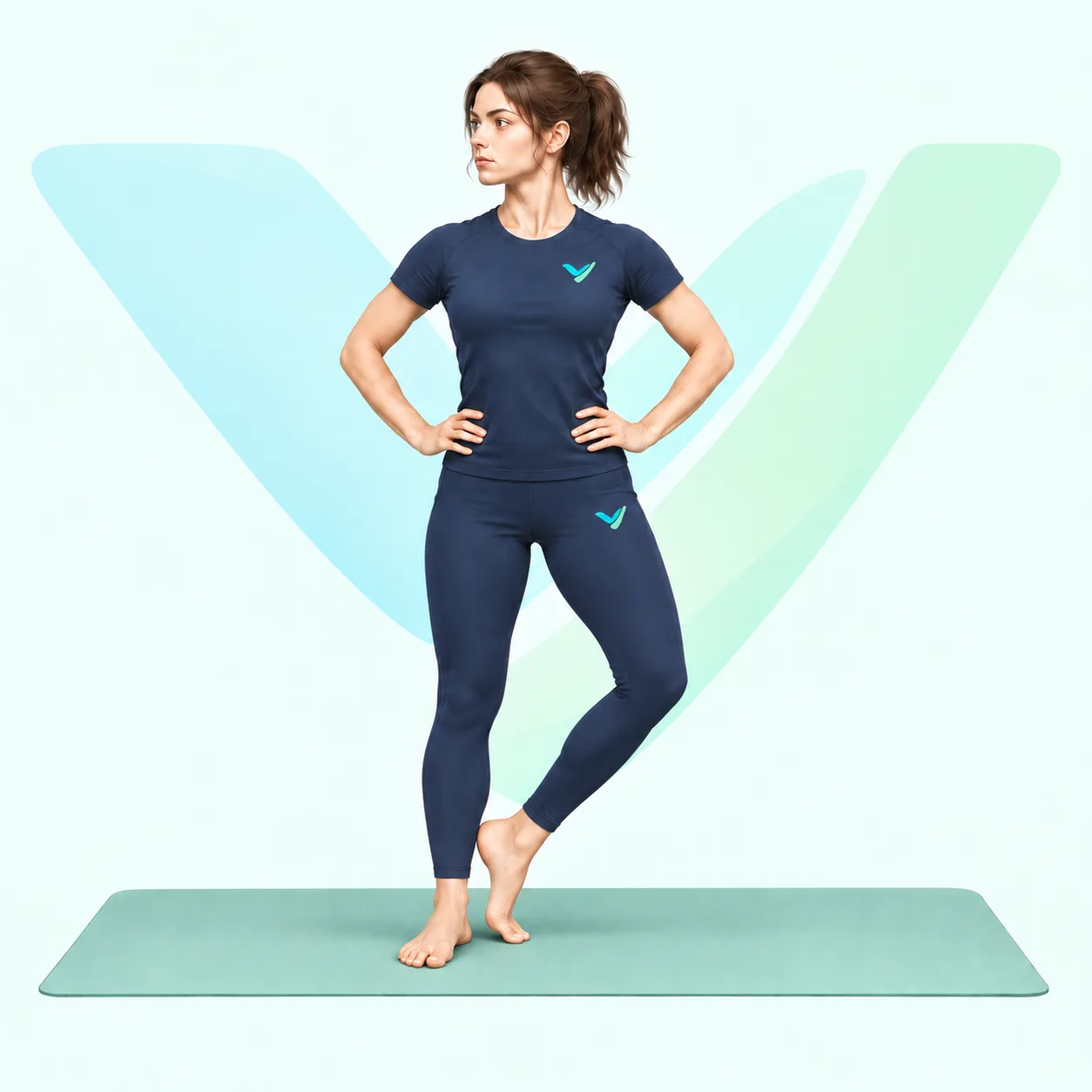
- Low-foot tree pose
- Instructions
- Tree pose focuses on balance with an accessible variation. Keep a wall within reach and return to both feet whenever needed.
- Title
- Tree Pose with Low Foot
- Description
- A standing balance variation with the opposite foot resting against the ankle or lower calf, avoiding the knee. Keep the pelvis level and use a wall or stable support if needed.
- Instructions
- Stand with parallel feet near a wall or stable support if needed, with your hands on your hips.
- Instructions
- Shift your weight to one leg, keeping that knee soft and the whole foot grounded.
- Instructions
- Open the other knee sideways within a comfortable range and place that foot against the lower calf or ankle. Avoid pressing against the knee joint.
- Instructions
- Keep your pelvis level and torso upright. Leave the moving foot toes on the floor if you need more stability.
- Instructions
- Focus on a fixed point and hold while breathing naturally.
- Instructions
- Lower the foot to the floor with control and change sides. Record time per side and complete both sides.
- Tips
- Keep the foot low; lifting it higher is not the aim of this variation.
- Tips
- Do not lock the standing knee or tilt your pelvis.
- Tips
- Use a wall rather than compensating with sudden movements.
- Equipment
- Yoga mat. Optional wall or stable support.
- Level
- Beginner, for the variation described.
- Block
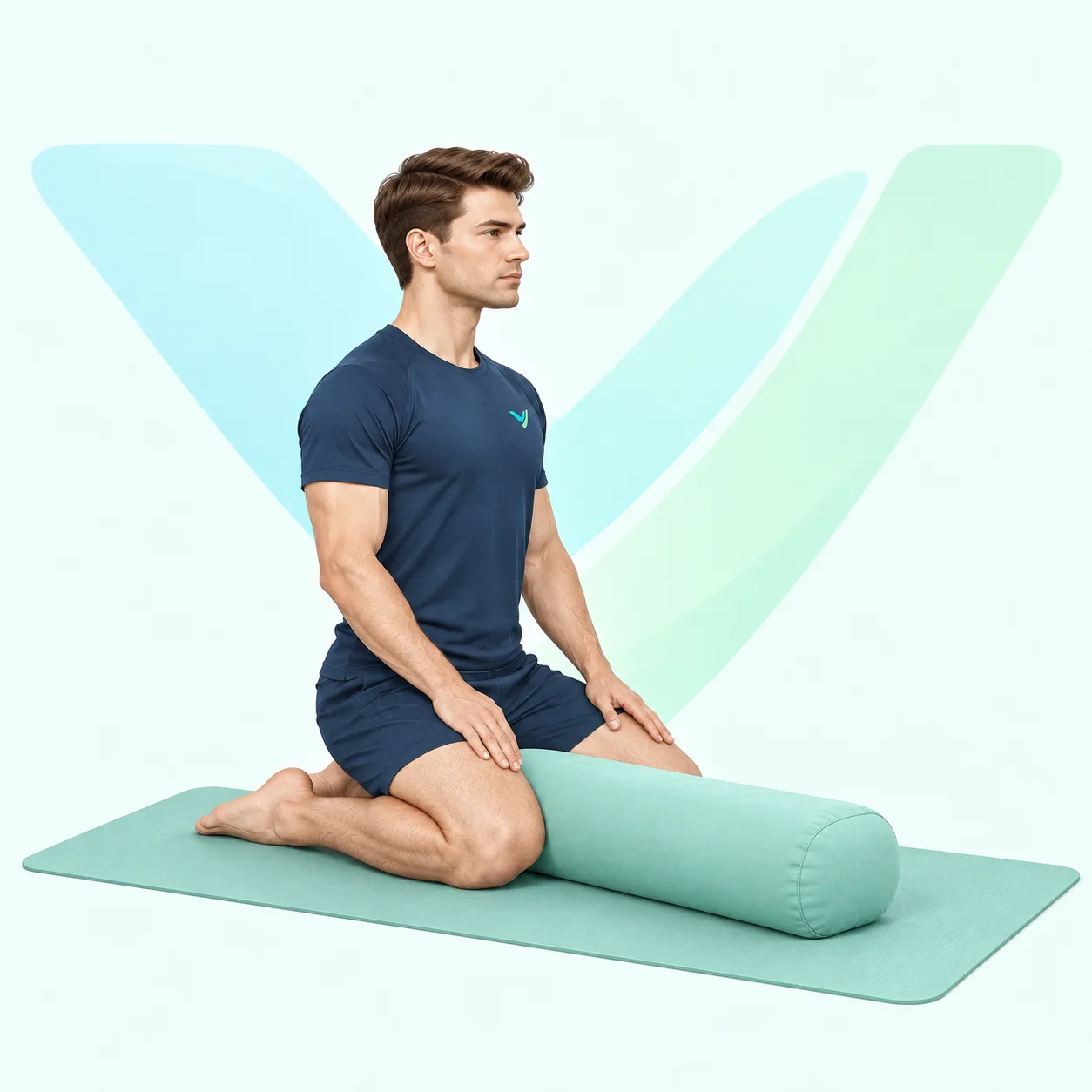
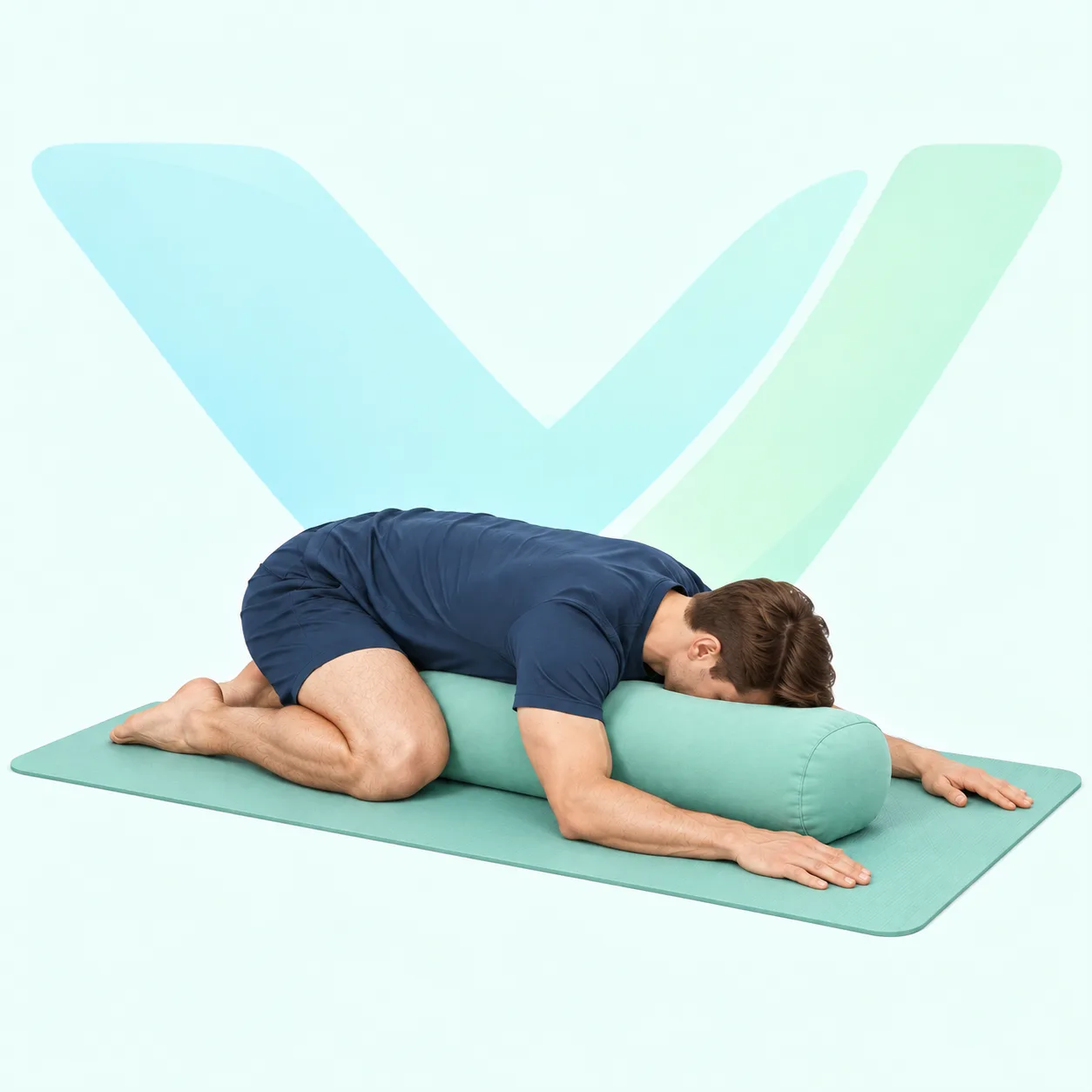
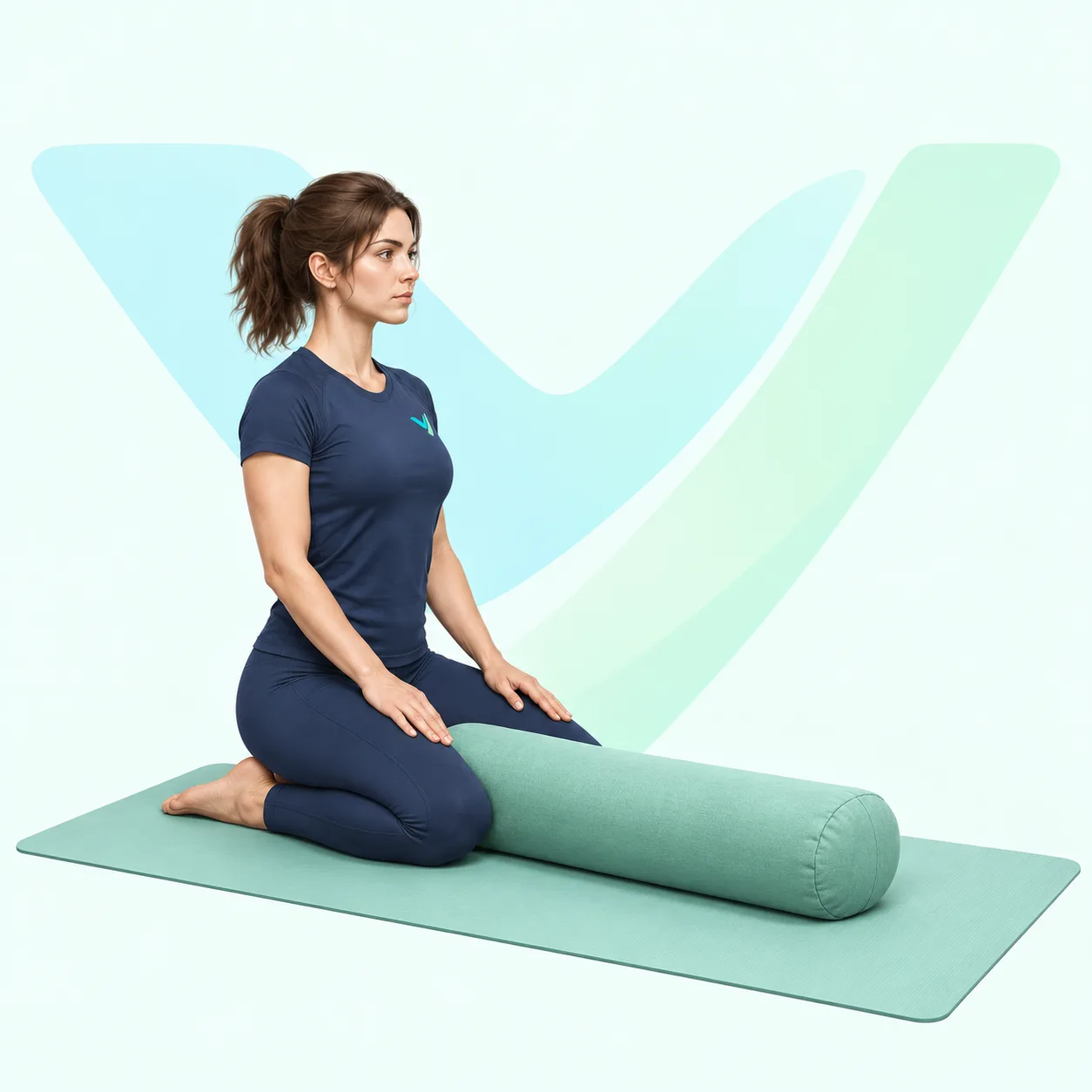
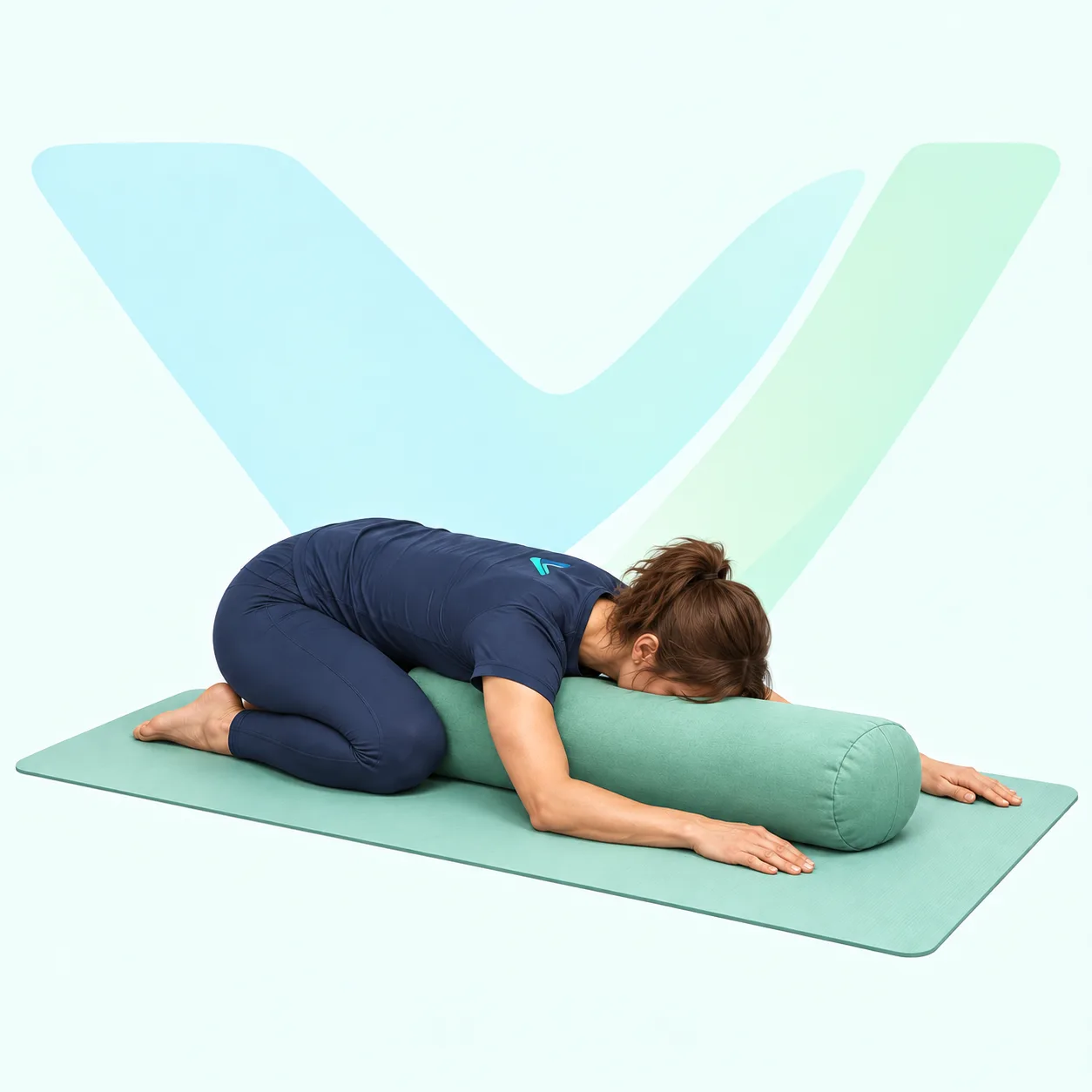
- Supported child’s pose
- Instructions
- This closing section reduces effort after standing poses. Use the supports that make the resting position comfortable for you.
- Title
- Supported Child’s Pose
- Description
- A kneeling resting posture with the torso over a firm bolster and the forehead supported. Adjust knee spacing and support height so you can breathe comfortably.
- Instructions
- Kneel on the mat with a firm long bolster in front, positioned between your knees.
- Instructions
- Separate your knees comfortably and move your pelvis towards your heels without forcing contact.
- Instructions
- Lean forward and rest your torso on the bolster, leaving room to breathe.
- Instructions
- Rest your forehead on the end of the bolster or a folded blanket and relax your arms beside the support.
- Instructions
- Adjust the height and hold with a comfortable neck and natural breathing.
- Instructions
- Place your hands down and lift your torso slowly back to kneeling. Record the total resting time.
- Tips
- Your pelvis does not need to touch your heels.
- Tips
- Raise the chest or forehead support if your neck is uncomfortable.
- Tips
- Reduce the range or leave the posture if your knees are uncomfortable.
- Equipment
- Yoga mat and firm yoga bolster. Optional folded blanket.
- Level
- Beginner, for the variation described.
- Block
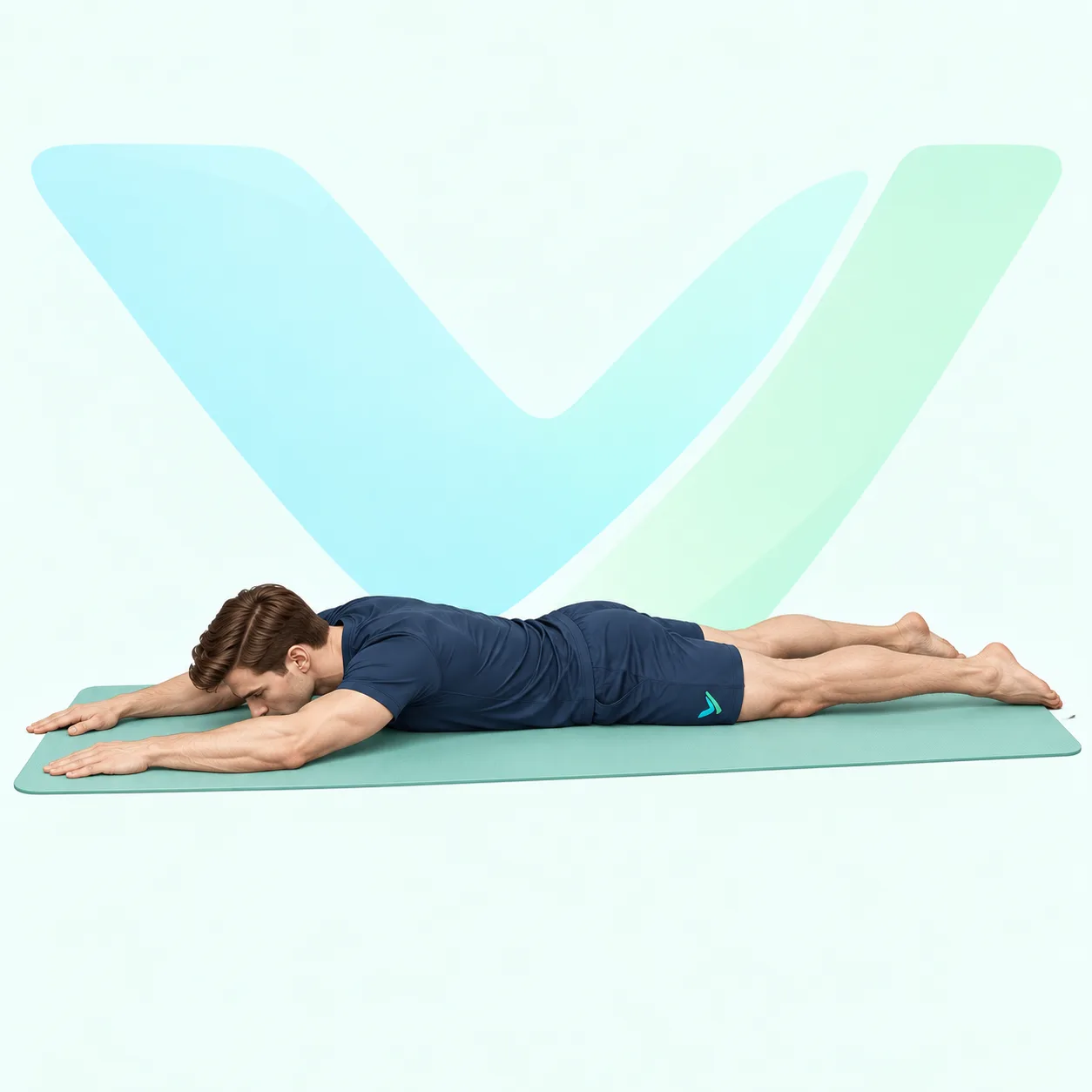
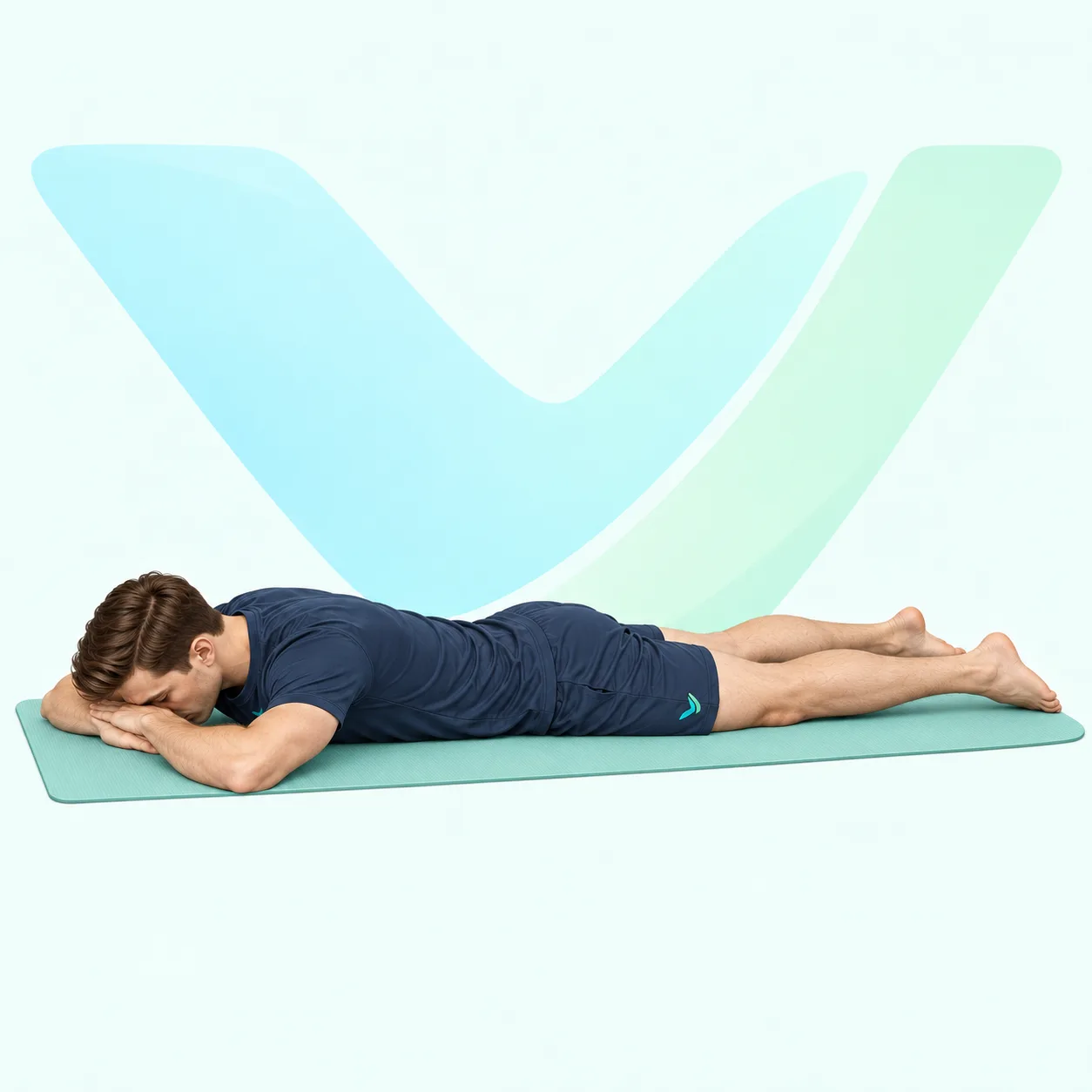
- Crocodile rest
- Instructions
- The final rest offers a quiet pause to finish the session. Choose a different lying position if this one is uncomfortable.
- Title
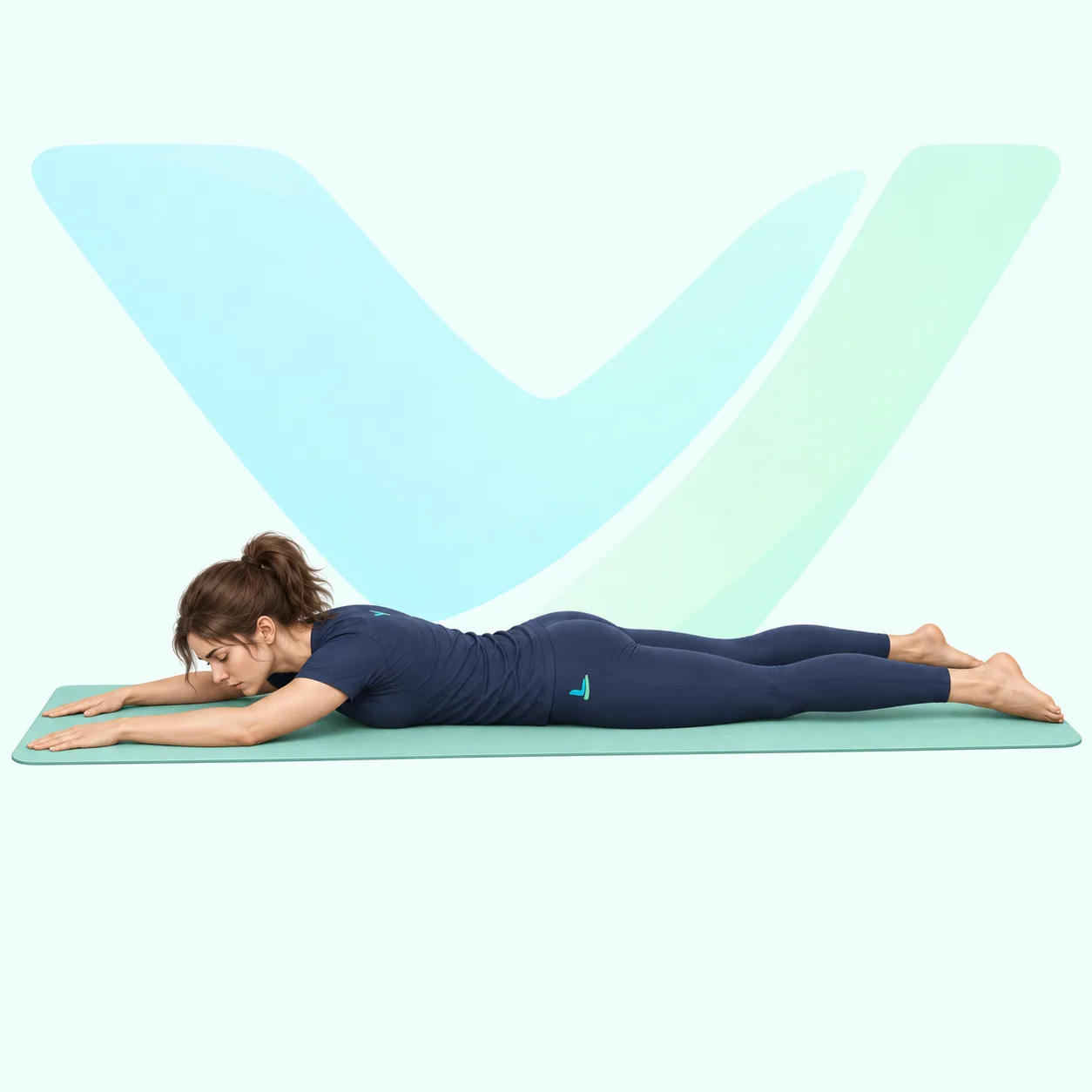
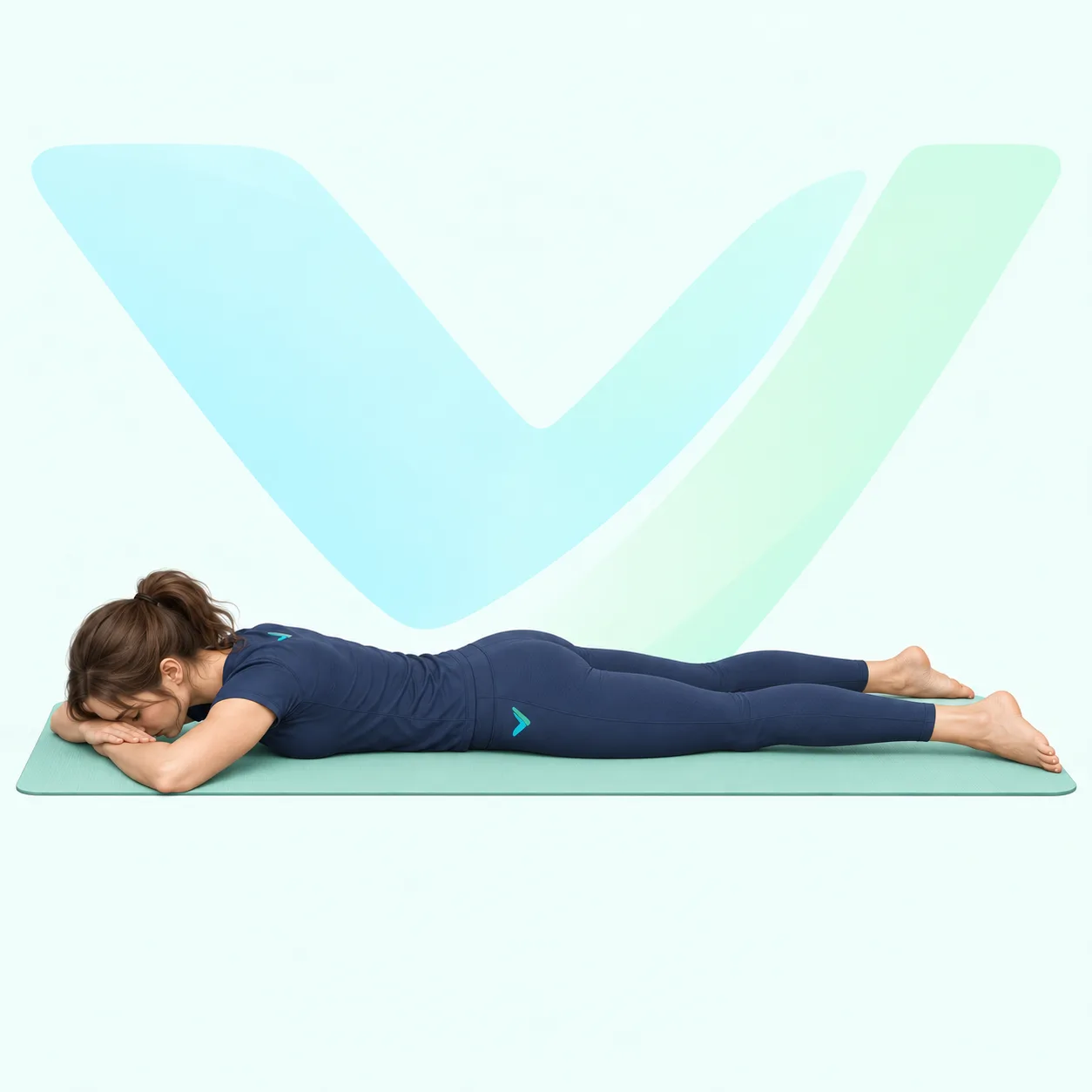
- Crocodile Rest
- Description
- A prone resting pose with the forehead on stacked hands, elbows open and legs comfortably apart. Keep the chest and pelvis grounded while breathing at a natural pace.
- Instructions
- Lie face down on the mat with your legs extended and comfortably apart.
- Instructions
- Rest the tops of your feet down and prepare your arms in front of your head.
- Instructions
- Bend your elbows outward and stack one hand on the other.
- Instructions
- Rest your forehead on the stacked hands and adjust their distance for a comfortable neck position.
- Instructions
- Relax your shoulders and keep your chest, pelvis and legs grounded, breathing naturally without exaggerating movement.
- Instructions
- To leave, lift your forehead just enough to free your hands and roll onto your side with control. Record the total holding time.
- Tips
- Let your hands support the forehead without lifting the chest.
- Tips
- Do not deliberately amplify the torso’s movement while breathing.
- Tips
- Adjust or leave the pose if your neck is uncomfortable.
- Equipment
- Yoga mat.
- Level
- Beginner, for the variation described.
- Block
- Session
- Title
- Vinyasa accesible · Fluidez suave y equilibrio · ⭐☆☆
- Description
- Portada editorial sintética; no documenta una sesión realizada por el autor.
- Title
- Gato-vaca
- Description
- Ilustración de referencia; no representa una ejecución real del autor.
- Title
- Gato-vaca
- Description
- Ilustración de referencia; no representa una ejecución real del autor.
- Title
- Gato-vaca
- Description
- Ilustración de referencia; no representa una ejecución real del autor.
- Title
- Gato-vaca
- Description
- Ilustración de referencia; no representa una ejecución real del autor.
- Title
- Montaña
- Description
- Ilustración de referencia; no representa una ejecución real del autor.
- Title
- Montaña
- Description
- Ilustración de referencia; no representa una ejecución real del autor.
- Title
- Montaña
- Description
- Ilustración de referencia; no representa una ejecución real del autor.
- Title
- Montaña
- Description
- Ilustración de referencia; no representa una ejecución real del autor.
- Title
- Brazos elevados
- Description
- Ilustración de referencia; no representa una ejecución real del autor.
- Title
- Brazos elevados
- Description
- Ilustración de referencia; no representa una ejecución real del autor.
- Title
- Brazos elevados
- Description
- Ilustración de referencia; no representa una ejecución real del autor.
- Title
- Brazos elevados
- Description
- Ilustración de referencia; no representa una ejecución real del autor.
- Title
- Silla
- Description
- Ilustración de referencia; no representa una ejecución real del autor.
- Title
- Silla
- Description
- Ilustración de referencia; no representa una ejecución real del autor.
- Title
- Silla
- Description
- Ilustración de referencia; no representa una ejecución real del autor.
- Title
- Silla
- Description
- Ilustración de referencia; no representa una ejecución real del autor.
- Title
- Guerrero I
- Description
- Ilustración de referencia; no representa una ejecución real del autor.
- Title
- Guerrero I
- Description
- Ilustración de referencia; no representa una ejecución real del autor.
- Title
- Guerrero I
- Description
- Ilustración de referencia; no representa una ejecución real del autor.
- Title
- Guerrero I
- Description
- Ilustración de referencia; no representa una ejecución real del autor.
- Title
- Ángulo lateral con antebrazo en muslo
- Description
- Ilustración de referencia; no representa una ejecución real del autor.
- Title
- Ángulo lateral con antebrazo en muslo
- Description
- Ilustración de referencia; no representa una ejecución real del autor.
- Title
- Ángulo lateral con antebrazo en muslo
- Description
- Ilustración de referencia; no representa una ejecución real del autor.
- Title
- Ángulo lateral con antebrazo en muslo
- Description
- Ilustración de referencia; no representa una ejecución real del autor.
- Title
- Árbol con pie bajo
- Description
- Ilustración de referencia; no representa una ejecución real del autor.
- Title
- Árbol con pie bajo
- Description
- Ilustración de referencia; no representa una ejecución real del autor.
- Title
- Árbol con pie bajo
- Description
- Ilustración de referencia; no representa una ejecución real del autor.
- Title
- Árbol con pie bajo
- Description
- Ilustración de referencia; no representa una ejecución real del autor.
- Title
- Niño con apoyo
- Description
- Ilustración de referencia; no representa una ejecución real del autor.
- Title
- Niño con apoyo
- Description
- Ilustración de referencia; no representa una ejecución real del autor.
- Title
- Niño con apoyo
- Description
- Ilustración de referencia; no representa una ejecución real del autor.
- Title
- Niño con apoyo
- Description
- Ilustración de referencia; no representa una ejecución real del autor.
- Title
- Cocodrilo de descanso
- Description
- Ilustración de referencia; no representa una ejecución real del autor.
- Title
- Cocodrilo de descanso
- Description
- Ilustración de referencia; no representa una ejecución real del autor.
- Title
- Cocodrilo de descanso
- Description
- Ilustración de referencia; no representa una ejecución real del autor.
- Title
- Cocodrilo de descanso
- Description
- Ilustración de referencia; no representa una ejecución real del autor.
Cat–cow
Planned2sets60s/setOpen or close the full breakdown
Planned sets
- Set160s work30s rest
- Set260s work
Mountain pose
Planned1sets90s/setOpen or close the full breakdown
Planned sets
- Set190s work
Raised arms
Planned2sets40s/setOpen or close the full breakdown
Planned sets
- Set140s work30s rest
- Set240s work
Chair pose
Planned2sets25s/setOpen or close the full breakdown
Planned sets
- Set125s work40s rest
- Set225s work
Warrior I
Planned4sets30s/setOpen or close the full breakdown
Planned sets
- Set130s work20s rest
- Set230s work20s rest
- Set330s work20s rest
- Set430s work
Forearm-supported side angle
Planned4sets30s/setOpen or close the full breakdown
Planned sets
- Set130s work20s rest
- Set230s work20s rest
- Set330s work20s rest
- Set430s work
Low-foot tree pose
Planned4sets30s/setOpen or close the full breakdown
Planned sets
- Set130s work20s rest
- Set230s work20s rest
- Set330s work20s rest
- Set430s work
Supported child’s pose
Planned2sets60s/setOpen or close the full breakdown
Planned sets
- Set160s work30s rest
- Set260s work
Crocodile rest
Planned1sets300s/setOpen or close the full breakdown
Planned sets
- Set1300s work
YouVisible
YouVisible original artwork
YouVisible
YouVisible original artwork
YouVisible
YouVisible original artwork
YouVisible
YouVisible original artwork
YouVisible
YouVisible original artwork
YouVisible
YouVisible original artwork
YouVisible
YouVisible original artwork
YouVisible
YouVisible original artwork
YouVisible
YouVisible original artwork
YouVisible
YouVisible original artwork
YouVisible
YouVisible original artwork
YouVisible
YouVisible original artwork
YouVisible
YouVisible original artwork
YouVisible
YouVisible original artwork
YouVisible
YouVisible original artwork
YouVisible
YouVisible original artwork
YouVisible
YouVisible original artwork
YouVisible
YouVisible original artwork
YouVisible
YouVisible original artwork
YouVisible
YouVisible original artwork
YouVisible
YouVisible original artwork
YouVisible
YouVisible original artwork
YouVisible
YouVisible original artwork
YouVisible
YouVisible original artwork
YouVisible
YouVisible original artwork
YouVisible
YouVisible original artwork
YouVisible
YouVisible original artwork
YouVisible
YouVisible original artwork
YouVisible
YouVisible original artwork
YouVisible
YouVisible original artwork
YouVisible
YouVisible original artwork
YouVisible
YouVisible original artwork
YouVisible
YouVisible original artwork
YouVisible
YouVisible original artwork
YouVisible
YouVisible original artwork
YouVisible
YouVisible original artwork