


Executive summary
Choosing an unsuitable yoga festival schedule does not always mean selecting an advanced class. It can mean linking different-looking sessions that repeat the same demand: frequent hand support, repeated spinal extension or prolonged hip positions. A programme may offer variety in its titles without offering much variety in what your body is asked to do.
For Sonaya, the useful decision is to build a day you can enjoy through to the end, without treating every empty slot as a missed opportunity. This guide looks at support positions, time spent holding poses, transitions and previous experience. These are planning considerations, not clinical advice or promises about yoga's effects. Discuss individual adaptations with the professional supporting you and with the session teacher.
Official information: a day in Fellbach
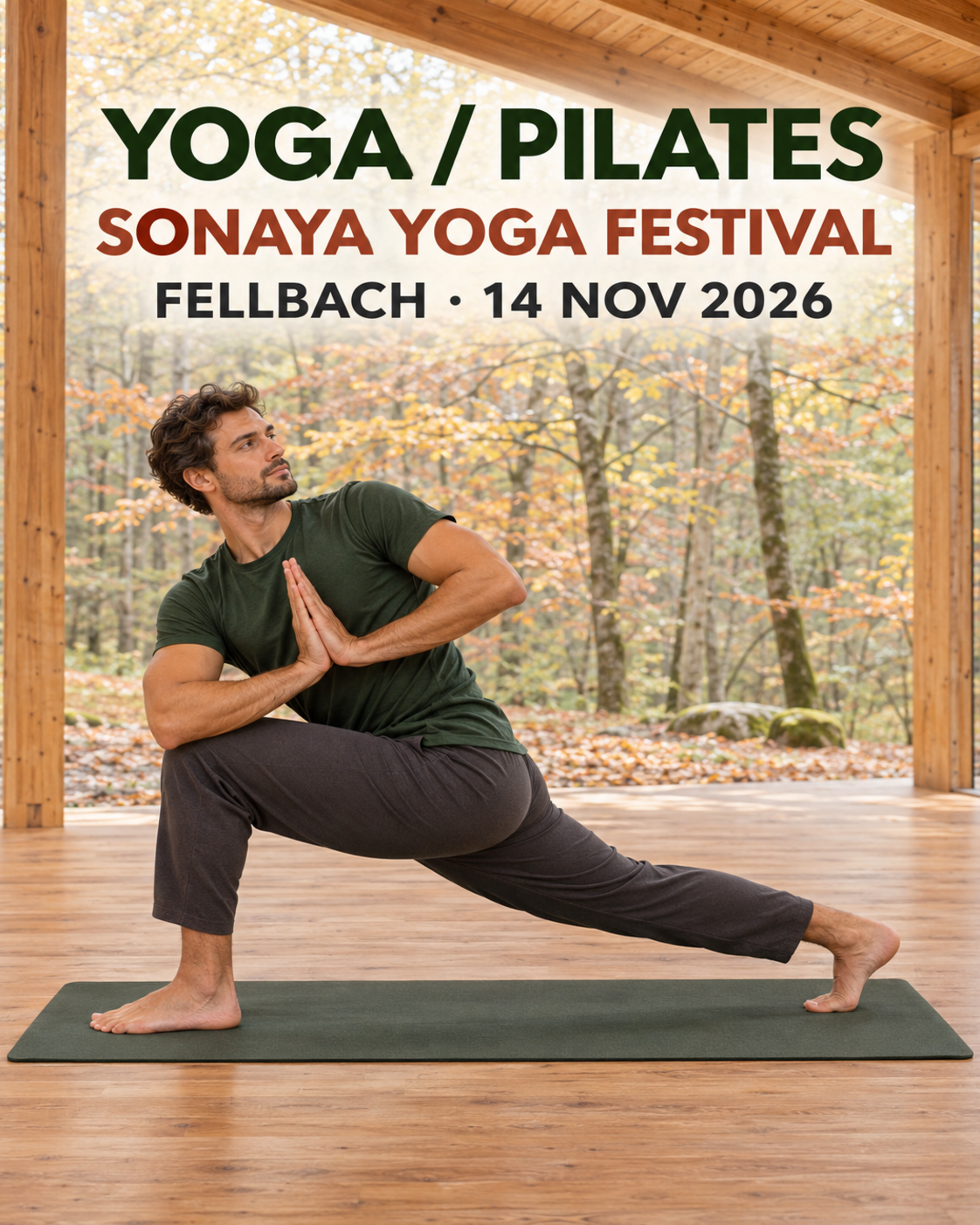
Information checked on 07/11/2026. The official SV Fellbach Sonaya Yoga Festival page announces 14 November 2026, 11:00–17:30, at the Waldschlössle in Fellbach. A booking link is published. That link alone does not establish current availability or confirm an individual place.
Ask SV Fellbach for the current programme, access arrangements, participation conditions and equipment requirements. We do not assign styles, teachers or levels to unverified time slots. The combinations below illustrate decisions rather than describe an announced timetable. Check with the organiser for last-minute changes, especially before finalising travel and reservations. A personal plan should remain compatible with the actual event arrangements.
Read the demand beneath the title
Labels such as gentle, dynamic and restorative provide a starting point, but cannot explain an entire session. Ask how long participants remain standing, how often hands bear weight and whether transitions are continuous. A visually quiet class may involve holding an unfamiliar position longer than you find comfortable.
The difficulty shown in a photograph is not the total demand either. A striking pose might be a brief option, while a simple sequence may recur many times. Identify missing information before booking consecutive sessions. Asking whether alternatives without wrist loading are offered is more useful than asking only whether a class is hard. Specific questions make it easier for a teacher to explain what participation could involve.
Shoulders and hands: notice repeated exposure
If the first class includes frequent arm supports, the next may repeat them despite using another style name. No numerical load score is needed. Note which areas have already worked and whether you are asking them to do the same thing immediately afterwards. A different teacher does not reset that exposure.
A practical response may be to choose different support positions next or leave the interval free. Confirm alternatives before starting instead of waiting until continuing feels impossible. Getting value from a ticket does not require enduring every pose. Using a familiar variation, watching part of an explanation or leaving a position under control can all be part of thoughtful participation. The decision should make sense for you, rather than match the busiest person's schedule.
Spine: variety does not require maximum range
Combining forward bends, extensions and rotations does not mean taking each movement to its limit. A demonstrated range is not a target everyone must reach. Ask whether you can use a familiar version while maintaining attention and comfortable breathing, without pursuing someone else's shape.
When reviewing the programme, avoid stacking several sessions that explore the same demanding pattern simply because their names differ. This is a recommendation to distribute experiences, not a therapeutic balancing prescription. One class does not automatically correct the effects of another. Stop and seek suitable guidance if pain or concerning discomfort develops. Do not interpret it as a challenge that proves commitment or as a necessary part of learning a new practice.
Hips: duration changes the experience
A position can feel accessible on entry and become demanding while held. Before adding another similar session, review the first one. Could you change position with control? Were alternatives clear? Did you need to copy the person next to you continuously because the instructions were unfamiliar?
That last detail matters too: unfamiliar practice requires attention. With limited experience, alternate learning with situations in which you can follow known instructions. There is no need to sample every style in one day. Fewer sessions understood well may provide more value than a long list of titles you barely remember afterwards. Experienced participants can use the same principle when a new approach makes familiar-looking movements unexpectedly demanding.
Perceived effort differs from visual difficulty
Use practical questions to assess effort. Can you listen to a complete instruction? Can you leave the pose without rushing? Are you still aware of your space and the people around you? These observations help determine whether to continue, use a variation or take a break.
Do not turn a personal assessment into competition with other participants. A session one person finds straightforward may feel intense to another. Nor must every sensation be assigned a diagnosis. For planning the day, recognising that your available capacity has changed is enough reason to reconsider the next block. Revising a choice does not mean that the original decision was wrong; it means you are using information that was unavailable earlier.
Give empty intervals a purpose
An open slot allows time to change rooms without rushing, ask a question, eat calmly or simply stop receiving instructions for a while. If sessions run simultaneously, choosing one means missing another. That is a normal part of planning, not a deficit to compensate for by doing more later.
Mark one priority and one alternative before the festival. Keep the rest flexible until you know how you feel and what the arrangements are like. We do not prescribe a universal break length or menu. The useful standard is whether your timetable leaves room for basic needs without arriving late or hurried at the next session. Check the organiser's conditions for entering, leaving or changing activities as well.
A worked decision
Suppose the first available class uses frequent hand supports. Afterwards you are considering another class with similar support demands or an option that appears less physically demanding. Without your history, we cannot choose for you. You can compare repeated loading, familiarity, available adaptations and the time needed to move between sessions.
Ask if the description does not answer those questions. If the first practice leaves less capacity than expected, use the alternative or keep the interval free. Success is not strict compliance with the original plan. It is recognising a real condition and making a choice that keeps the day workable. The same reasoning helps experienced practitioners who tend to fill the programme through enthusiasm and only later notice how little margin remains.
Common mistakes and checklist
Choosing from photographs, confusing level with effort and ignoring repeated support positions are common mistakes. So is making every session a new experience while leaving no time to absorb instructions. A ticket does not oblige you to complete every advertised activity.
- I have confirmed my booking and the programme with SV Fellbach.
- I know which support positions and patterns recur in my chosen sessions.
- I have asked about alternatives I can actually use.
- I have one priority, an easier option and an open interval.
- I can revise the plan without comparing my practice with others.
- I understand the organiser's equipment and participation requirements.
Official source and a useful record
The SV Fellbach Sonaya page is the reference for changes. This guide's suggestions are not part of the official programme.
Record the activity and what you learned about choosing sessions in YouVisible. Respect privacy in the room and obtain permission before filming a shared moment. A note explaining how a break helped you remain attentive can describe the day better than a difficult pose performed mainly for the camera.