


You pull your navel firmly in during the warm-up and keep it there. Your ribs barely move, and after each exercise you need to catch your breath. You believe this protects your back throughout class. Yet the constant rigidity may be making the coordination you want to learn harder to achieve.
Your core is not an on/off switch. You can adjust the contribution of your abdominal and back muscles, keep breathing and change your response as the exercise changes. Ask how much tension this task needs, rather than how long you can hold your stomach in.
Drawing in and bracing are different strategies
Hollowing, or drawing in, means gently pulling the abdominal wall inward to reduce its diameter. Imagine narrowing your waist slightly without moving your pelvis. It does not mean sucking your stomach in forcefully, emptying every last breath or performing an extreme abdominal vacuum.
Bracing creates broader tension around your trunk, as though preparing to receive a force. You may feel firmness across the front, sides and back. It does not require pulling your belly inward or necessarily holding your breath. Nor does it mean deliberately bearing down.
“Engage your abs” can mean different things. Clarify whether the cue aims to improve precision, resist rotation or support a position. A permanent maximal contraction is not the goal. Coordinated breathing means keeping enough air moving while using the tension the task requires.
What the measurements suggest—and their limits
Jung and Oh compared these strategies during the Pilates leg pull front in 20 healthy participants. Hollowing increased the combined transversus abdominis/internal oblique signal more; bracing reduced pelvic rotation more. Both increased multifidus activity, involving the back of the trunk, compared with performing without a cue. These findings support task-dependent differences, not injury prevention or universal superiority.
The transversus wraps around part of your abdomen, while the internal obliques help control your trunk. “More selective” describes an activity pattern, not a single muscle working alone or automatic spinal protection. Surface measurements also cannot perfectly separate all these muscles.
Kim and Lee (2017) observed muscle activity changes after two weeks of Pilates breathing practice in 28 healthy women. This was a before-and-after study without a control group, and injuries were not measured. Although the authors suggest protection, their design cannot demonstrate it.
Tsartsapakis and colleagues (2023) used ultrasound in 44 healthy women experienced in Pilates. Dead bug produced the greatest transversus thickness increase among five exercises. Thickness is an indirect indicator; it does not make that exercise the best choice for everyone.
These are small samples and specific populations. An immediate electrical activity or ultrasound measurement cannot establish lasting clinical benefits. It also cannot justify using one strategy for every exercise or prescribing a universal contraction percentage.
Breathing, posture and pressure interact
Kawabata and Shima (2023) studied 14 healthy university students using different breathing patterns lying down and in a plank. Abdominal activity and intra-abdominal pressure changed with breathing and posture. Internal pressure is part of responding to effort, rather than inherently harmful or beneficial. This cross-sectional study does not establish an individual safety threshold.
In practice, lying down need not feel the same as supporting your body weight. Allow room for rib expansion without chasing huge inhalations or continuously forcing air out. Exhaling during an effort can help organise movement, but one breathing phase is not compulsory for everyone.
Zhang, Zhao and Wang (2025) assigned 66 female university students to Pilates, Pilates plus breathing exercises or control over 16 weeks. Some respiratory and postural measures improved. The additional programme used a breathing device: it did not compare hollowing with bracing or validate a universal class cue. Results cannot automatically extend to men, other ages or people with symptoms.
A simple check without equipment
During a manageable version of an exercise, ask yourself:
- Can I breathe in and out without running short of air?
- Can I say a short sentence, such as “I can control this and keep breathing”?
- Am I unnecessarily tightening my jaw, neck or shoulders?
- Can my ribs still expand?
- If I ease my abdominal tension slightly, do I actually lose postural control?
- Does the abdominal effort match how demanding the exercise really is?
These are practical observations, not diagnostic tests or pressure measurements. If speaking is difficult during an easy task, reduce tension or make the exercise easier and check again. During strenuous efforts, difficulty speaking can also reflect the effort itself.
Choose according to the task
Gentle mobility, recovery or relaxation: use the minimum tension needed and let breathing move freely. Every slow bend or movement does not require deliberate rigidity.
Precision exercises in Pilates: try a gentle draw-in if it helps you move a leg without dragging your pelvis along. Keep air available and avoid forceful sucking in. If movement gets worse, reconsider the cue.
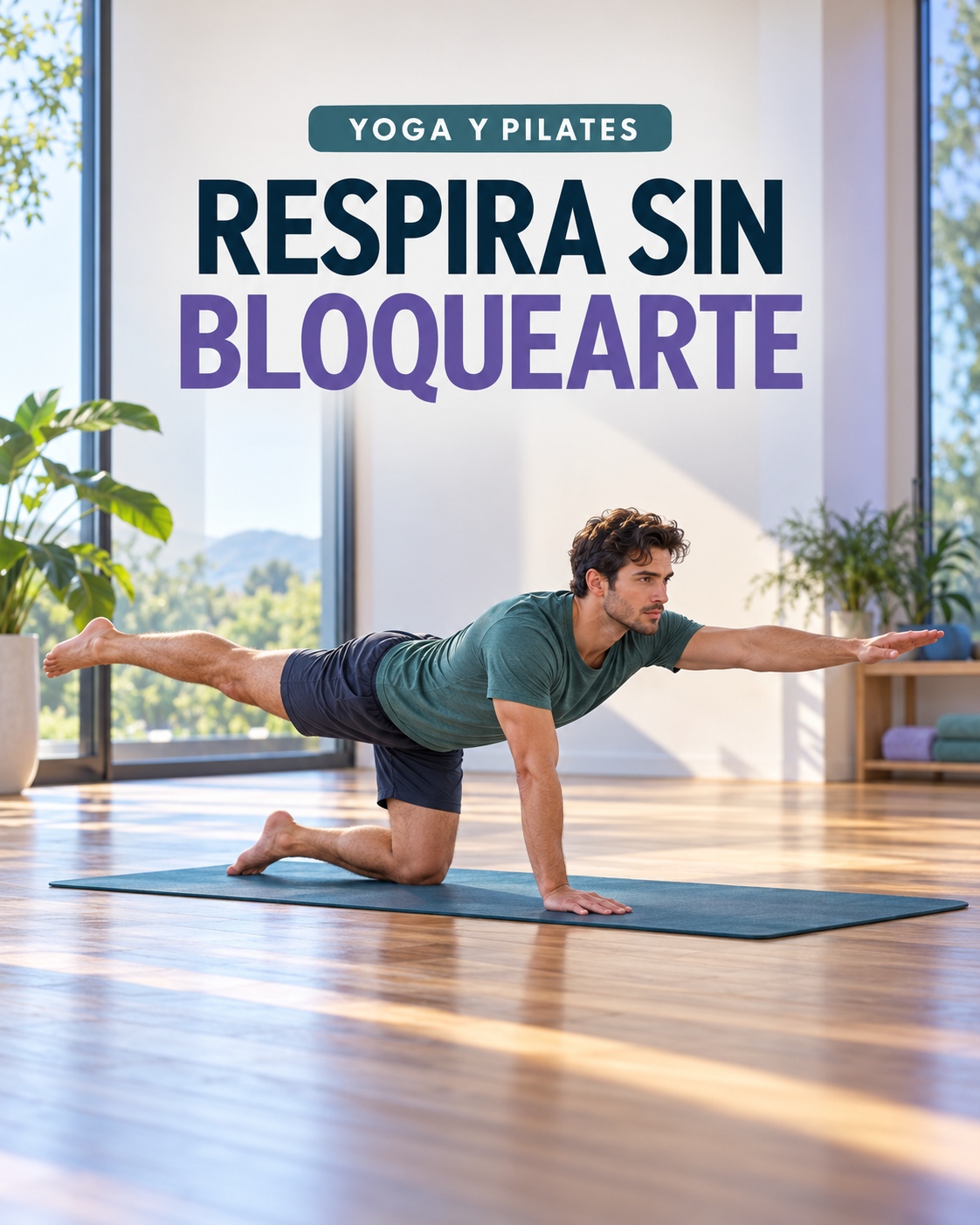
Planks, bird-dog and anti-rotation exercises: broader bracing may help when you need to resist movement. Increase tension only enough to manage the task while breathing. Shortening the lever can also reduce demand.
Brief, demanding efforts: greater tension can be reasonable. Finish the effort, recover and readjust; do not carry maximal tension through the whole session.
Yoga: adapt to the pose, transition and load. A restorative position and a transition bearing weight through your arms require different responses. Avoid imposing one breathing instruction on the entire practice.
A progressive nine-minute practice
This is an educational suggestion, not a validated clinical protocol. Use a stable surface. Compare gentle selective activation with moderate global tension while keeping speed and range the same. Do not chase fatigue or hold your breath to finish a timed interval.
- Two minutes lying down. Bend your knees and rest both feet on the floor. Breathe comfortably, noticing expansion at the front, sides and towards your back. After several easy breaths, try two with a gentle draw-in and two with moderate bracing. Release between attempts and avoid forcing the volume.
- Two minutes of an easy dead bug variation. Start by sliding one heel away while the other foot stays down; return and alternate. Do four repetitions per side, split between the strategies. Keep your trunk comfortable. If that is easy, lift one leg at a time rather than adding every longer lever together.
- Two minutes on all fours. Place hands under shoulders and knees under hips. Slide one leg back first, then try reaching the opposite arm and leg if you can avoid excessive rotation. Do three repetitions per side with each strategy, taking brief pauses. Shorten the reach if your pelvis becomes difficult to control.
- Two minutes of a modified side plank. Support yourself on your forearm and bent knees, lift your pelvis and breathe for 10–15 seconds. Rest, then change sides. Repeat to compare strategies without sinking into your shoulder. A smaller lift can make the movement more manageable.
- One minute to compare. Recover sitting or lying down. Choose whichever option let you breathe, control your position and perform each exercise more comfortably. Different exercises may produce different answers.
Include rests within each interval. If you need longer recovery, leave out a repetition instead of rushing to beat the clock. Record one concrete observation, such as “drawing in less let me inhale without turning my pelvis”.
Use familiar variations throughout this comparison. If coordinating opposite limbs is new, keep both hands down and practise a leg slide. A simpler movement makes it easier to notice whether the abdominal cue helps, rather than mixing that question with learning an unfamiliar exercise.
Common errors that add unnecessary effort
Pulling your abdomen in too hard can make maintaining its appearance your main concern. Breathing only by lifting your chest may come with avoidable neck and shoulder effort. See whether you can distribute breathing movement more comfortably without imposing a rigid posture.
Holding your breath in easy exercises, or squeezing your pelvic floor and abdomen maximally throughout class, should not become the default instruction. Between repetitions, allow yourself to release tension and reorganise.
Motor control does not mean keeping your stomach flat. Your abdomen changes with breathing and position. More tension does not always mean greater protection either. Applying the same exhalation cue to every exercise can complicate coordination that already works: retain helpful instructions and ask to adapt those that leave you stuck.
Applying it across different classes
In mat Pilates, compare strategies in an easier variation before reaching your legs or arms further. On the reformer, ask your instructor to adjust support and springs for the exercise: more resistance does not always mean a harder stability challenge. Keep the carriage controlled and avoid experimenting during an unfamiliar transition.
In barre, check whether you can breathe through small repetitions without fixing your jaw or continuously squeezing your pelvic floor. In mobility and other mind-body classes, let tension change across the movement. In yoga, distinguish holding a pose from moving into the next one; a useful starting cue may need adjusting during the transition.
You do not need to monitor every muscle throughout class. Use the check briefly, settle on one helpful cue and return your attention to the movement. If you cannot find a comfortable option, reduce range, use more support or ask the teacher for a suitable regression.
When to seek an assessment
Stop or adapt the exercise if pain or breathing difficulty appears. Consult a qualified healthcare professional for recurrent dizziness, pelvic heaviness, leakage, concerning abdominal bulging, postpartum symptoms or a suspected hernia. These signs warrant an individual assessment; a self-check cannot diagnose their cause.
Your experiment for the next session
Choose two familiar exercises. Try each with a gentle draw-in and moderate bracing, keeping everything else the same. Notice which strategy best combines breathing, control and execution in each task. Choose the tension that helps you perform, and readjust it when the demand changes.