


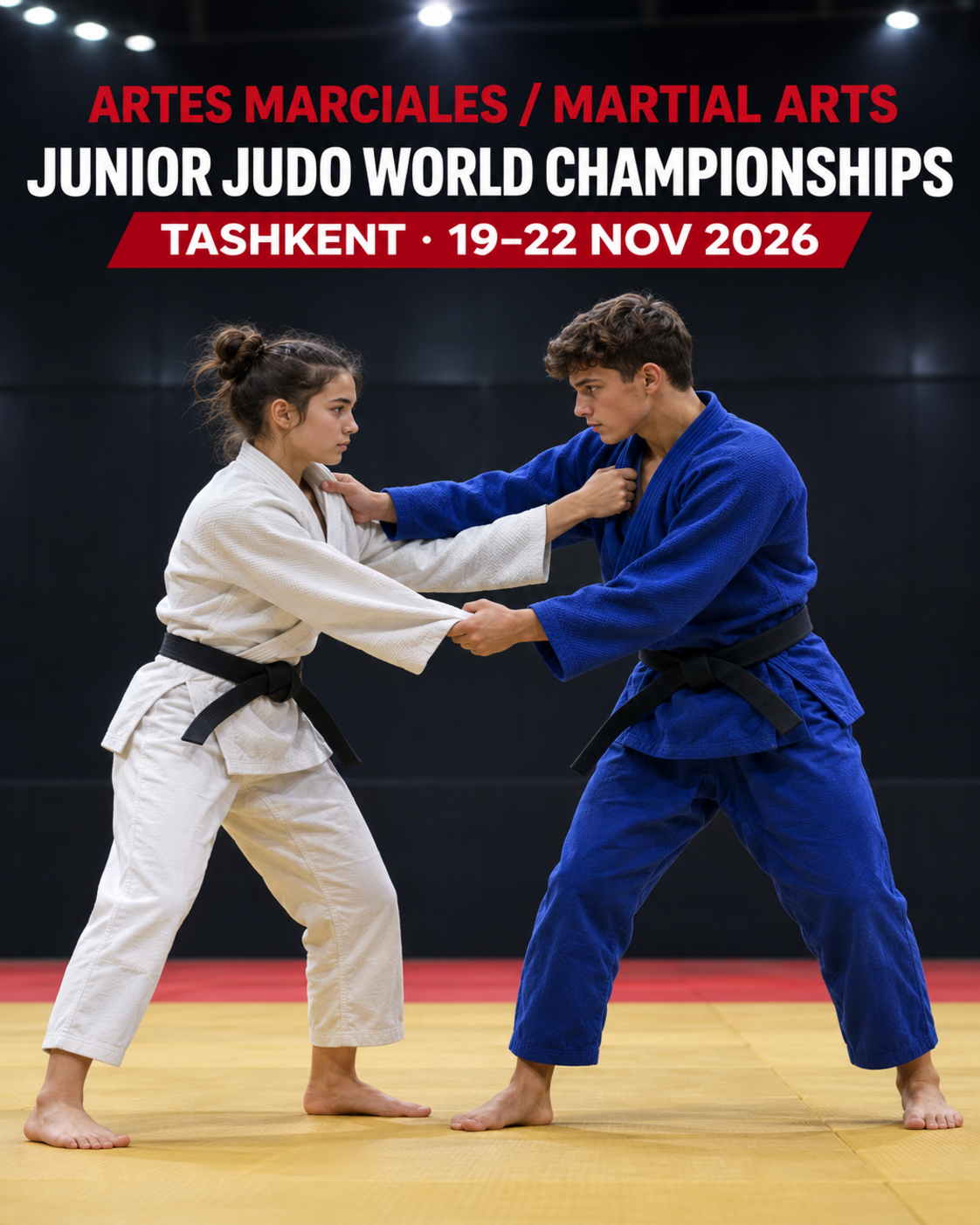
The category is prepared before weigh-in arrives
As a championship approaches, a weight category can begin to look like a number that must be reached at any cost. In junior judo, that idea can displace the ability to train, recover and compete during a period of development. Normalising rapid weight cuts is not a requirement for sporting commitment, and a young athlete should not have to prove dedication through them.
The Tashkent Worlds provide context for reviewing pre-weigh-in decisions with coaches, family and qualified healthcare professionals. This is general information, not individual medical care. It contains no dehydration protocols, aggressive restrictions or instructions for losing weight quickly. Clinical and nutritional decisions require appropriate assessment, particularly when the athlete is a minor.
Official facts and the venue change
Editorial date: 10/11/2026. Documentary verification: 11/11/2026. The IJF individual event listing places Junior Worlds in Tashkent, Uzbekistan, on 19–21 November 2026. The IJF announcement of the move from Amman confirms the broader 19–22 November window, with mixed teams scheduled for the 22nd.
Check selection, documentation and weigh-in procedures through the event documents and your federation. We do not infer windows, tolerances or permissions from previous editions. A junior category does not mean everyone has identical maturation or needs. Calendar dates establish a competition window, not a reason to make rapid changes to the body before departure.
The specific IJF mixed teams listing confirms 22 November 2026.
Entering a category does not establish wellbeing
The 2023 IOC consensus on REDs describes health and performance risks associated with inadequate energy availability. Appearance or one numerical measurement cannot diagnose an individual. The American Academy of Pediatrics guidance for young athletes supports discussing intended weight changes with a paediatrician rather than deciding from sporting pressure alone.
The practical recommendation is to separate eligibility from wellbeing. Reaching the category does not prove the process was safe. A competitive result cannot retrospectively validate a dangerous practice either. Avoid using pictures, comparisons with opponents or comments about appearance to justify decisions requiring clinical information and an understanding of development. A confident opinion is not a substitute for that assessment.
Plan a conversation rather than a crisis
Review category choice early enough to consider training, growth and the competition calendar. The coach understands sporting demands. Qualified healthcare and sports nutrition professionals can assess individual needs within their competence. Previous competition experience does not mean one person should informally take responsibility for all these roles or make every decision alone.
Prepare specific questions: is this category still appropriate, have developmental needs changed, is there a health concern, and what alternatives does the invitation allow? Insufficient time for proper assessment does not make a rapid cut an acceptable solution. A responsible plan must remain open to change, including a decision about participation when the available options are unsuitable.
Hydration is a need, not a cutting tool
Do not restrict fluids to try to make a category. Avoid improvised sweating strategies and products promising quick weight loss too. This guide does not calculate acceptable losses or explain how to recover after such practices. If a concerning situation already exists, seek an appropriate healthcare assessment rather than trying to solve it through teammates' advice.
For everyday organisation, confirm access to drinks, familiar meals and rest during travel and long competition days. We do not prescribe universal fluid volumes: needs, climate and personal circumstances differ. Practical logistics can support an individual plan, but cannot replace assessment or guarantee that a weight-management process is appropriate simply because supplies are available.
Review performance and recovery in context
A performance decline can have many explanations. Record relevant changes in energy, concentration, recovery and tolerance of training to discuss with the healthcare team. Do not turn the record into a home REDs test or a checklist that lets you independently authorise or forbid competition. Clinical tools require the professional context in which they are intended to be used.
Useful information describes when a change began, how it affects activity and which other circumstances coincide. Avoid assuming all fatigue is normal because a Worlds campaign is demanding. Equally, do not attribute it automatically to body weight. Individual assessment should consider other explanations and establish what support or treatment, if any, is needed.
Reasons to request help
Dizziness, fainting, confusion or substantial deterioration call for stopping activity and seeking suitable care. A scale or a teammate's suggestion cannot resolve them. In an emergency, use local emergency services and event medical staff. Significant illness should be communicated when it appears, rather than hidden until the weigh-in deadline has passed.
Professional support is also appropriate when intense weight concerns, secrecy around food or pressure make asking for help difficult. These behaviours do not establish a diagnosis by themselves. They justify listening without punishment and facilitating assessment. An athlete should be able to express a difficulty without fearing that belonging to the team depends on concealing it.
Protect adolescent development
Do not compare two same-age judoka as though they should have identical size, growth or category. Developmental needs deserve specific attention in minors. Avoid public body comments, weigh-ins treated as entertainment and praise for enduring hunger or thirst. Those messages can turn a decision that needs review into an obligation tied to personal worth.
Families can ask how a category decision was reached and who supervises it. Support does not mean policing every meal or watching with suspicion. Facilitate professional access, listen to concerns and support reconsideration where appropriate. Respect should remain the same regardless of selection or results. Nobody needs to disclose private concerns publicly to deserve that support.
Before travel and weigh-in
Confirm documentation, team contacts and access to medical care. Keep health information private and share only what responsible people need. Avoid publishing a minor's weigh-in figures or images as proof of discipline. Permission for a sporting photograph does not automatically extend to disclosure of sensitive personal information connected to health or body weight.
Consider an editorial example: a judoka feels unwell and fears disappointing the team. The useful response is to facilitate assessment and review options, rather than invent a last-minute manoeuvre to preserve the entry. Participation, a permitted category change or withdrawal must fit both the regulations and appropriate professional advice. None should be decided through public pressure.
Responsible preparation checklist
- I have confirmed the current venue, dates and documents.
- Category choice is reviewed with the coach and qualified professionals.
- The plan considers development, food and hydration.
- Rapid cuts and dehydration practices are not normalised.
- I know whom to tell about illness and where to obtain help.
- Privacy and the ability to reconsider remain protected.
Use YouVisible to organise training and share authorised technical learning. Keep health and weigh-in information out of public exposure. Sporting visibility can focus on preparation, skills and respectful support without publishing sensitive numbers.