


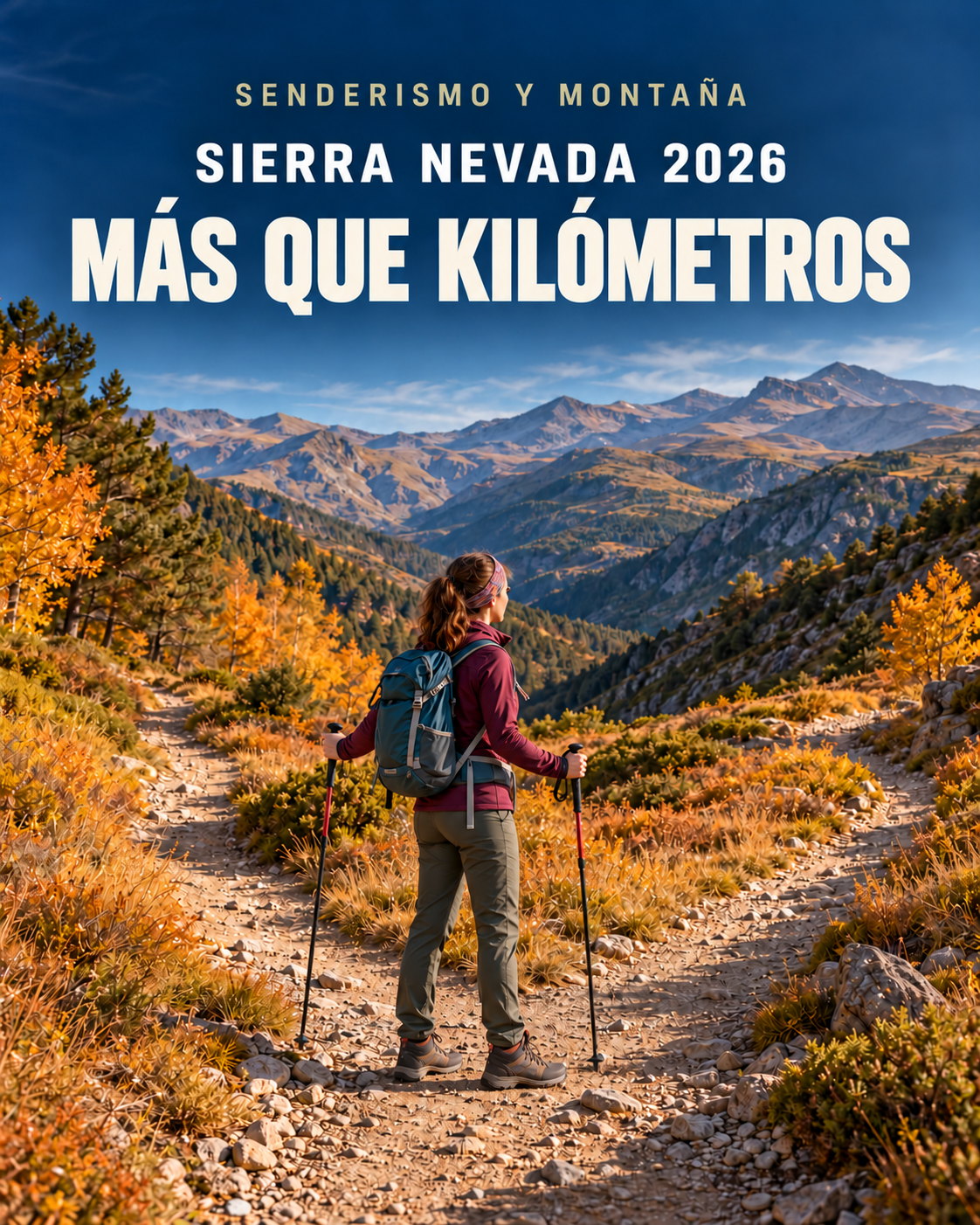
Choosing by kilometres can send you onto the wrong route
Five kilometres sounds like a short morning; ten might be your usual Sunday walk. Those numbers do not tell you how much you will climb, what the ground is like or how many hours you will spend outside. A family may enjoy a slow activity yet finish tired from cold and waiting. Someone who walks long distances on flat paths may feel unsure descending over stones.
The right route matches effort, skill and exposure time to the whole group, with something left in reserve. The third Sierra Nevada Ecotourism Festival offers practical examples, without turning difficulty labels into promises.
Dates, sources and bookings
Information checked on 30 October 2026. The official festival website announces 30 October–2 November 2026. The experiences calendar lists days and time slots; the official walking and cycling activity descriptions provide route details, operators and contacts.
The descriptions checked publish prices and group conditions, but do not confirm remaining places or an accepted individual booking. Contact the organising company directly to confirm availability, whether the activity will run and its terms before paying or travelling. A calendar listing does not establish that a place is available for you.
Five activities compared
These are published facts, rather than our own safety ratings. Official Spanish names are retained so you can find the correct description. Scroll the table horizontally on mobile.
| Activity and dates | Published distance and elevation | Duration and times | Difficulty, terrain and audience | Price |
|---|---|---|---|---|
| Disfruta Sierra Nevada — Otoño en la Base del Trevenque 30 and 31 October | 5 km; 100 m accumulated ascent and descent | 5 hours; 09:00–14:00 | Low–medium; families and hikers | €12 adults; €8 children up to age 12 |
| Desayuno ecológico, ruta Medieval y experiencia agroecológica 30 October–2 November | 10 km; 540 m accumulated elevation change | 7.5 hours; 09:30–17:00 | Mid-mountain terrain, loose stones and rock blocks; broadly advertised audience, but universal participation excluded | €40; 10% discount for under-18s |
| Trekking del Poqueira y cata de quesos artesanos 30 October–2 November | 9.5 km; 635 m accumulated elevation change | 7.5 hours; description says 09:30–17:00 | Medium; technical terrain; people who move confidently in mountains | €55 |
| Descubre y Saborea el Barranco del Poqueira 2 November | 11–12 km; 600 m ascent | 4–5 hours; 09:00–13:30 | Moderate; people accustomed to walking | €38 |
| Biodiversidad y poesía para todos y todas 31 October | 3 km return; flat | Technical details say 4.5 hours; slot 10:30–16:00 | Low; families with children older than six; accessibility adaptations advertised | €35 adults; €30 children |
Two details need confirmation. Biodiversidad gives 4.5 hours, although its time slot spans 5.5. The Trekking calendar entry for 30 October says 09:31, while its description says 09:30. We have not resolved these differences ourselves. All times are local; confirm meeting and finishing times. For Trevenque, we retain the combined ascent-and-descent wording rather than reinterpret it as 100 m up plus another 100 m down.
What a route really asks of you
The overall demand covers the whole day. Climbing takes effort; descending uneven ground takes attention and control. A heavier backpack, a long stop in the wind or keeping pace with a group also changes the experience. Published duration may include interpretation, meals, transfers and visits. It does not automatically mean time spent walking.
Five kilometres over five hours does not describe a slow fitness walk that you can simply speed up. Interpretation means progress is only part of the purpose. The physical effort may be manageable while still requiring a long morning outdoors. That matters for children and anyone who becomes cold when standing still.
The 9.5 km and 10 km activities allow 7.5 hours and list over 500 m of accumulated elevation change. The 11–12 km option includes about 600 m of ascent within 4–5 hours. Our editorial interpretation is that it may require more continuous progress. It does not establish a particular walking speed, because we do not know the allocation of stops.
Ascent per kilometre is only an initial filter
Dividing the 600 m ascent of Descubre y Saborea by 11–12 km gives approximately 50–55 m of climbing per kilometre. This is a simple calculation using official figures, rather than a new measurement. It does not show where the slopes occur: much of the climbing could be concentrated in a few sections.
Other descriptions use accumulated elevation without always specifying its components. Turning every figure into positive ascent would produce a misleading ranking. Even with comparable figures, the ratio would tell you nothing about stones, mud, descending, exposure or your own experience.
Interpretive walks, moderate hiking and technical trekking
These categories help you ask questions; they are editorial guidance. An interpretive walk prioritises observation and activities. Moderate hiking requires sustained walking and managing climbs and descents. Technical trekking adds demands on foot placement and confidence over uneven ground.
Low–medium, medium and moderate come from different operators, rather than a universal scale. Ask about the hardest section, pace and available support. The broad audience description for the Medieval route does not remove its loose stones and rock blocks. A guide provides professional accompaniment, but cannot replace your ability to negotiate the ground throughout the day.
A straightforward method for choosing
- Review your recent actual walks. Remember hours outdoors, hills, surfaces and how you finished, rather than your best outing years ago. Include every participant's experience.
- Check hours and elevation. Compare a whole day with another whole day. Ask how much is walking and how much involves activities or transfers.
- Consider confidence on uneven ground. If you repeatedly stop to find secure footing, explain that before booking. Being able to climb does not mean descending confidently.
- Consider weather and exposure. Check the forecast close to departure and ask about changes for cold, wind or rain. We are not providing a specific forecast here.
- Leave room in reserve. Use the least experienced participant as your reference. Your choice should allow time to eat, adjust clothing and remain attentive at the end.
Who might each activity suit?
For a family seeking time in nature without chasing distance, Trevenque may fit if everyone can manage five hours of activity. A short distance does not necessarily mean an early return to the car.
Biodiversidad y poesía may interest families with children older than six and people needing adaptations. The organiser advertises wheelchair accessibility and adaptations for other educational needs. Ask about specific assistance, access and the actual timetable. Accessibility does not mean identical support for everyone.
Consider the Medieval route if you already spend long days walking and handle stony ground comfortably. Breakfast and an agroecology experience do not turn it into an urban stroll. Trekking del Poqueira is better matched to proven mountain experience and technical confidence. Descubre y Saborea may suit regular walkers who can maintain progress on climbs. These are indicative profiles, never individual clearance to participate.
Match equipment and provisions to the activity
For Trevenque, prepare food for midday and layers you can add while listening to explanations. For Biodiversidad, check the included meal and any dietary needs; bring water and clothing comfortable for the pauses. Duration matters as much as the size of your backpack.
For the two GOinsitu days, the published list requests snacks, a picnic, grippy mountain footwear and poles, plus autumn clothing and protection suited to conditions. Practise with poles beforehand: they do not resolve uncertain footing on their own. Confirm water availability and take familiar food. Breakfast or a cheese tasting does not automatically cover the rest of the day.
Descubre y Saborea recommends two litres of water and food. That is this operator's instruction, rather than a universal amount for every person or weather condition. Check refill opportunities and discuss preparation with the guide. Ask about early exits too: this description allows finishing in intermediate villages, but assistance and return transport still need agreement. We do not assume equivalent exits exist on the other routes.
Reasons to choose a less demanding option
Choose less if your recent experience is entirely on flat ground, your confidence deteriorates on descents or someone needs breaks incompatible with the planned day. Do the same if you cannot prepare sufficient food, water or clothing, or conditions differ substantially from those you know. Uncertainty about a particular section deserves a conversation before you book, rather than an experiment halfway through the outing.
Before booking
- Confirm the date, actual timetable, meeting point and availability directly with the operator.
- Describe everyone's experience, ages, pace and support needs.
- Ask about difficult ground, stops, group size and professional accompaniment.
- Clarify meals, water, accessibility support and realistic early exit arrangements.
- Check weather policies, cancellation conditions and possible route changes.
A good choice lets you enjoy the purpose of the activity while retaining resources for the return. Kilometres begin the comparison; terrain, hours and the needs of your group determine whether the proposal makes sense for you.