


The person beside you is not your measuring stick
A full room changes practice even when a sequence is familiar. Someone moves further, movement catches your attention and you may begin copying before asking how you feel. Across a meeting with several sessions, that comparison can also lead you to accumulate more activity than you originally intended.
For Córdoba, the aim is to retain internal references and simple decisions about space, adaptation and rest. You do not need to shut out the room or achieve a particular pose to participate. The recommendations here are general and make no promise to treat pain, anxiety or any clinical condition. Learning and individual healthcare have different responsibilities.
Official facts: a meeting across several days
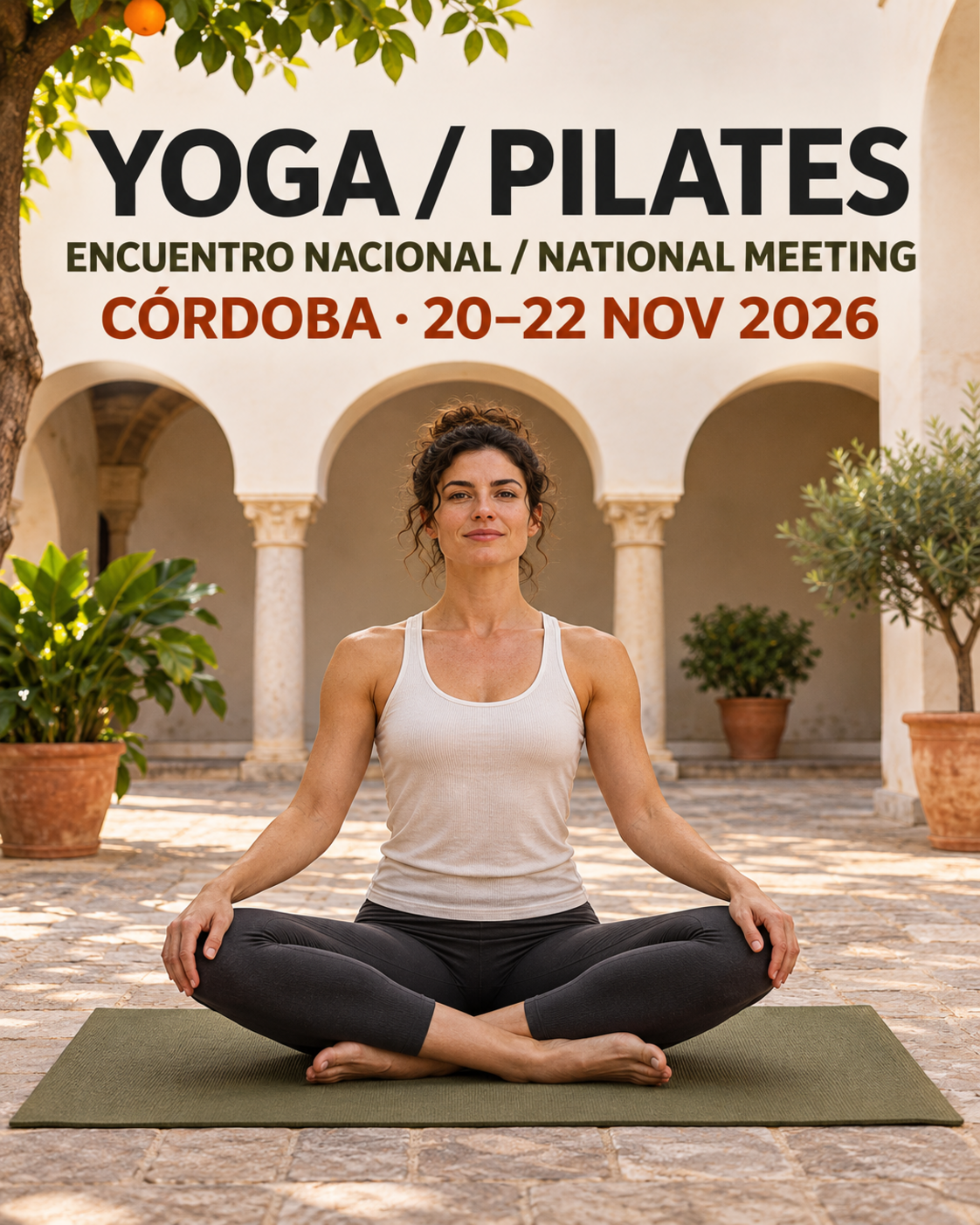
Editorial date: 10/11/2026. Documentary verification: 11/11/2026. AEPY announces its 12th National Yoga Meeting for 20–22 November 2026 in Córdoba, based at Hotel Macià Alfaros. The programme combines activities and sessions; its overall duration is not an instruction to undertake continuous physical practice throughout the weekend.
The organiser warns that programming may change. Check the official page for times, access and current arrangements before travelling. The meeting's theme of silence does not establish a guaranteed psychological outcome. The NCCIH guidance on yoga and safety highlights appropriate instruction and adaptation of practice to individual circumstances.
Choose references you can observe without competing
Before starting, notice your breathing, perceived effort and ability to enter and leave a movement with control. These questions do not require scores. They help you recognise change and select an adaptation, rather than prove you have reached a supposedly ideal feeling. You can use the same questions at different points in a session.
When your attention moves around the room, return to a personal reference: available support or the ease of reducing the movement. If another person's range becomes the target, you may stop listening to the instruction. Comparison can occur. Recognising it and returning to your task is often more useful than becoming frustrated with yourself for having noticed it.
A smaller range is still participation
A smaller movement may allow you to follow the purpose of the session. Ask the teacher about alternatives before you need to improvise in a hurry. If props are involved, confirm availability and appropriate placement. Avoid copying a complex modification simply because someone else appears comfortable using it; their circumstances may be quite different.
A practical reference is being able to stop or change option without losing control. If a pose requires enduring pain or makes comfortable breathing difficult, do not turn it into a test. Reduce or stop and speak with the teacher. Individual health concerns need qualified healthcare advice. Group teaching cannot replace an appropriate assessment of your personal situation.
Count the whole day's demands
One session can feel moderate while still belonging to a demanding day. Include travel, time sitting, previous practice, meals and rest in your planning. This guide does not identify a universal number of sessions appropriate for everyone. Review how you arrive at the next session instead of treating an enthusiastic registration choice as a binding commitment.
For an editorial example, imagine finishing the first practice with steady attention but struggling to follow instructions and manage familiar supports at the next. Reducing participation or resting may be sensible. That observation does not diagnose an injury or demonstrate poor preparation. Your plan should permit a response without requiring a public explanation or comparison with the person beside you.
Prepare space before extending your arms
Notice the distance between mats and the movements the session may require. Ask when you are unsure how much room is needed. Leaving belongings in walkways or moving a mat while everyone is already active can create avoidable difficulties. Follow staff instructions about circulation and equipment rather than organising the room independently.
When space becomes limited, reduce your range and communicate calmly. You do not need a wide variation to remain consistent with the group. Personal space includes consent: hands-on adjustments require appropriate communication, and you can decline them. Attending a meeting does not automatically authorise every kind of physical contact, photograph or recording.
Useful silence still allows necessary communication
Silence does not mean concealing a need. If an instruction is unclear or you need to leave, communicate briefly and respectfully. A timely question may prevent you from continuing an unsuitable task. You also do not need to describe your medical history to the whole room in order to request an alternative.
Before the session, you can discuss relevant needs privately with the teacher. The NCCIH tips on complementary health practices support informed expectations and decisions. Keep a learning experience separate from a health consultation. A teacher can help with participation within their competence without making clinical promises about what the weekend will achieve.
Rest does not need to become a performance
Agree a rest option with the teacher and identify an exit that does not obstruct others. You might stop following part of a sequence and return when appropriate. We do not prescribe one universal resting pose because individual needs and conditions differ. What is comfortable for another participant is not automatically the right choice for you.
The practical question is whether rest restores attention and decision-making, rather than whether it enables you to complete the next sequence at all costs. Persistent or significant discomfort is a reason to seek help. Avoid compensating for a rested session by increasing demands later: the meeting is not a movement debt that must be repaid before leaving.
Privacy belongs in shared practice
Do not photograph or publish other participants without permission. A group image can reveal practices, conversations or situations someone would prefer to keep private. Check the meeting's policy and respect camera-free areas and moments. Consent should cover the intended use, particularly if material will be published rather than kept privately.
To preserve a lesson, write down a helpful cue and the adaptation you chose. That may be more useful than a photograph at maximum range. Keep the note focused on a decision, not a comparison with the group: what allowed you to participate attentively, and what will you ask next time? A modest observation can offer a clear direction for future practice.
Common mistakes and checklist
Common mistakes include copying range, filling every programme gap and confusing silence with an obligation to tolerate distress. A pleasant experience is also not proof of a therapeutic effect.
- I have confirmed the programme and possible changes.
- I have one simple internal reference.
- I know I can adapt, rest or leave.
- I will reassess demands before each session.
- I will respect space, consent and privacy.
- Qualified professionals will address individual health concerns.
Use YouVisible to organise attendance and share sessions that interest your group. Publish only authorised material and describe a specific lesson. Thoughtful participation can include choosing fewer activities across a busy weekend.