


Executive summary
At a rhythmic gymnastics competition, time on the floor can be brief while the day is long. The challenge is not staying maximally prepared for every hour. It is knowing when to eat, change tasks and begin preparation with the club without spending attention and energy before the call arrives.
Families often help most by reducing unfinished decisions rather than repeating technical instructions. This guide organises waiting around official information and agreements with the team. It does not prescribe individual nutrition, a universal warm-up or a method for controlling a child's emotions. The gymnast should be able to express needs without feeling that every comment changes the value of the performance. A workable day should support participation as well as the competitive routine.
Official information for Marbella
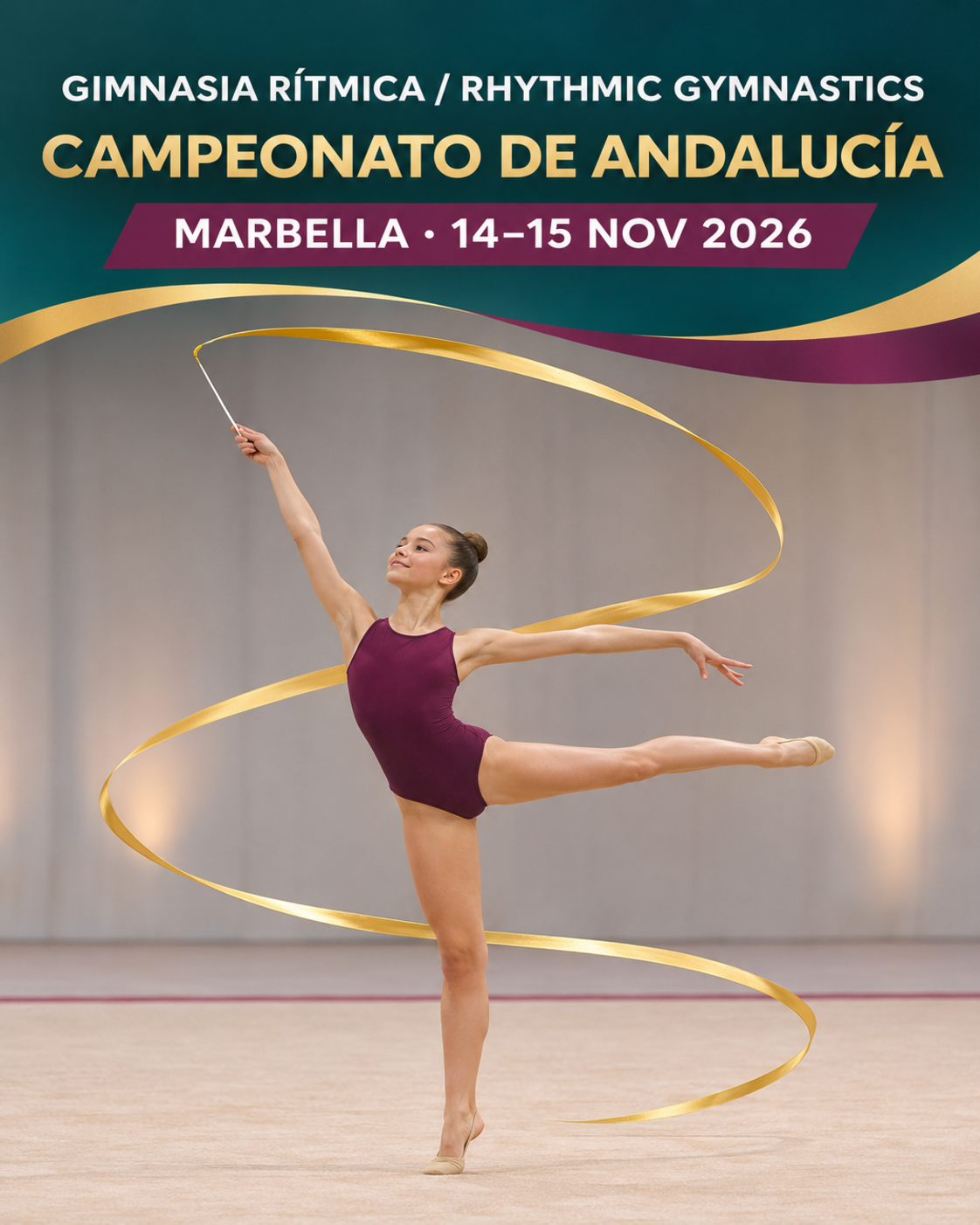
Information checked on 07/11/2026. The Marbella City Council event listing confirms the Andalusian Rhythmic Gymnastics Championship on 14–15 November 2026, at Palacio de Deportes Elena Benítez, San Pedro Alcántara. It publishes training, competition and awards blocks.
Those blocks are not each gymnast's exact performance time. Confirm order, reporting arrangements, access and changes with the club and organiser. A municipal listing does not establish open sporting registration or available spectator tickets. The framework below is editorial planning advice, subordinate to the team's actual instructions and championship arrangements. Recheck official information before travelling and do not assume that a saved timetable remains the final version.
Separate four different times
Before leaving home, distinguish arrival, access to the authorised area, preparation with the team and the expected performance. These may be separate moments. Remembering only the competition block's start can leave too little time for earlier tasks, or so much unnecessary margin that the whole day becomes uncertain waiting.
Ask the club where the gymnast needs to be and who confirms changes. Agree on one practical information channel. Several adults asking independently may produce conflicting versions. The child needs a simple answer about the next task and who will accompany them, rather than every possible guess about when their turn might come. Clear responsibility also helps the family avoid repeatedly interrupting coaching staff who are working with the group.
Food: find a usable window
Begin with the expected schedule and familiar foods the gymnast tolerates. Competition day is not the time to introduce products because somebody promises an advantage. Pack options that can be transported and eaten in permitted areas, with enough time to avoid rushing.
We do not assign compulsory minutes or quantities to every age. If the programme changes, review the available window with the team rather than postponing food indefinitely for an unconfirmed call. Individual needs should be discussed with appropriate professionals when necessary. Family language should remain neutral: eating is part of looking after oneself, not a reward, punishment or something the routine must compensate for. The aim is a practical opportunity to eat, not a test of discipline.
Staged warm-up needs coordination
Maintaining a complete warm-up for hours is not a realistic solution. Coaching staff should organise preparation around the running order and available spaces. Families can help by avoiding a parallel programme: do not request another element for a video just when the coach has planned a pause.
If there is a delay, ask who will signal renewed preparation and what should happen meanwhile. Do not improvise intense stretching or exercises from a video simply to fill the time. The useful task may be changing clothes, checking apparatus or staying at the agreed location. A shared plan preserves attention better than adding activity because waiting looks unproductive. Its content should respond to the actual situation, not an adult's discomfort with seeing an athlete sit quietly.
Comfortable layers without constant monitoring
Familiar clothing can help manage periods without activity and movement between spaces. Check that layers are easy to put on and remove and do not interfere with equipment or access. Follow the team's instructions about when to use them.
Avoid turning a momentary feeling of cold into a continuing argument. Ask and listen. Families do not need to monitor every minute or explain every error by reference to sitting down. The purpose is to provide simple resources that help the gymnast remain comfortable and follow team instructions. Communicate significant discomfort to responsible staff rather than interpreting it as insufficient commitment. Practical support works best when the child can report a need without expecting criticism in return.
Apparatus: assign responsibility for the check
Waiting provides an opportunity to confirm that the correct apparatus is ready, identified as required and kept in the agreed place. Technical checking belongs to the club. Families can remember where items are stored, avoid mixing them with other belongings and support an orderly handover.
Do not change a ribbon, adjustment or apparatus detail independently shortly before performance. A small alteration may change a familiar feel or conflict with a requirement. Report a problem to the person responsible for resolving it. An alternative is useful only when the team has planned it and the rules allow its use. We do not promise an unverified right to replace apparatus. Clear responsibility prevents several well-meaning people from making incompatible last-minute changes.
The call: fewer voices and fewer tasks
As the call approaches, support should become shorter. Confirm who accompanies the gymnast, where the family waits and which belongings stay outside. Avoid a final list of corrections when there is least time to process it and it may compete with familiar training cues.
Agree beforehand on a simple supportive phrase the gymnast wants to hear. They may prefer a gesture without an explanation. Respecting that preference does not reduce family involvement. Decide where to meet afterwards too, so leaving the floor does not create another uncertain search among spectators, bags and other people's comments. Knowing the next ordinary step can make the end of the routine easier to manage regardless of the result.
Emotional load: accompany without continuous evaluation
A long wait may involve boredom, nerves or wanting to discuss something unrelated. None defines a child's preparation or character. Ask what helps and avoid requiring a particular emotion, such as constant calm or uninterrupted enthusiasm.
After the performance, let the gymnast describe the experience before supplying analysis. Do not compare bodies, weight or development with other competitors. Nor should a result become repayment for the family's financial or logistical effort. You can recognise a specific decision, such as continuing after a difficulty, without making it another requirement to respond perfectly every time. If the child does not want to review the routine immediately, agree on a later moment rather than forcing the conversation in the stands.
A plan that can survive delays
Prepare a flexible sequence: confirmed arrival, club tasks, food opportunity, instructed preparation and the meeting afterwards. Identify who decides each change. The value is being able to update the sequence when real information arrives, not predicting every minute correctly from home.
When versions conflict, return to the agreed channel. Do not pass every adult discussion about organisation to the gymnast. Waiting becomes more manageable when there is one understandable next action. If the programme changes substantially, prioritise actual needs and consult the team instead of preserving a plan that no longer matches the championship. Flexibility means responding to verified changes, rather than generating a new rumour each time the previous estimate passes.
Common mistakes and family checklist
Typical mistakes include confusing a competition block with an individual performance, maintaining continuous activation, multiplying instructions and making food a form of control. Silence also does not remove the need to ask how the gymnast feels.
- I have confirmed reporting arrangements and order with the club.
- One channel and a named person confirm changes.
- We have familiar food and clothing within venue conditions.
- The team directs warm-up and apparatus checks.
- The call will not introduce improvised family corrections.
- We know where to meet afterwards and will listen before evaluating.
Official source and respectful memories
Revisit the municipal championship listing and official club communications for last-minute changes. If you record the activity in YouVisible, choose together which moments to share. Respect permissions, filming rules and other children's privacy. A day's memory can include teamwork and organisation without reducing the gymnast to the placing earned during a few minutes on the floor.