


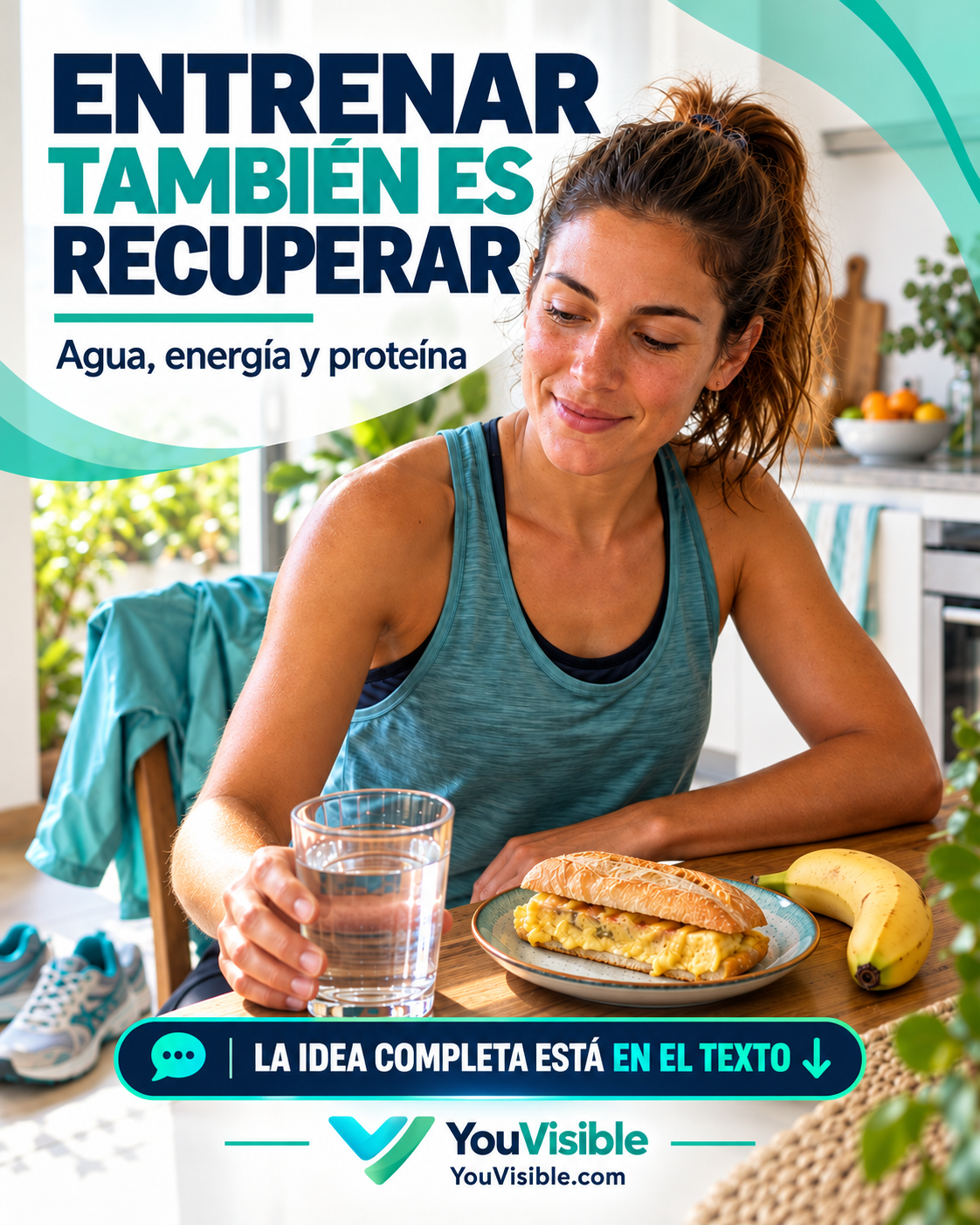
Training does not end when you stop the clock. What you eat and drink after a session can help replace some of the energy used, provide protein within your daily diet, replenish fluids and help you reach your next meals and training sessions in better condition.
One meal cannot guarantee complete recovery or improved performance. Needs change with the effort, circumstances and individual. This article uses an egg omelette sandwich, fruit and water as a practical example based on general recovery-nutrition principles. It is neither the only correct choice nor a recipe published by the Australian Institute of Sport (AIS).
An option made with everyday foods
The combination is easy to recognise: bread filled with an egg omelette, a piece of fruit and water. It is simple to prepare, portable and adaptable. A shake or sports product is not compulsory after every session; ordinary foods may suit the occasion when they match your appetite, tolerance and the rest of your diet.
Our article on the three Rs of sports recovery covers the broader framework of rehydrating, refuelling and repairing. Here the focus is one familiar meal and the ways it can change without assigning universal portions.
What each element contributes
| Food | Main contribution | How it can be adapted | What to consider |
|---|---|---|---|
| Bread | Carbohydrate and energy | Change the size, format or type | Training volume, appetite and digestive tolerance |
| Omelette | Protein and other nutrients from eggs | Adjust its size, preparation and ingredients | Number of eggs, cooking oil and whether it contains potato |
| Fruit | Carbohydrate, water and a range of vitamins and minerals | Choose by season, availability and preference | Ripeness, amount and individual tolerance |
| Water | Fluid replacement | Drink progressively according to thirst and context | Heat, duration, sweating and time before the next session |
Bread: adaptable energy
Bread provides carbohydrate and energy. The portion may be larger after a long or demanding session and smaller after a brief effort or when another meal is close, but body size, goals and the rest of the day's food also matter.
No bread is always superior. Wholemeal bread may provide more fibre, while white bread may be easier for some people to tolerate when the gut is sensitive or food is eaten close to exercise. Context, preference and digestive comfort guide the choice.
Omelette: protein within a meal
Eggs provide protein and other nutrients. Yet “omelette” is not a fixed composition: its size, number of eggs, cooking oil and the inclusion of potato all change the final meal. A plain egg omelette and a Spanish potato omelette are not nutritionally identical.
There is therefore no universal number of eggs. The serving needs to be considered alongside daily food intake, the training performed, appetite and individual requirements.
Fruit: a flexible choice
Fruit provides carbohydrate, water and a variety of vitamins and minerals within a balanced diet. Choose it according to season, availability, preference and tolerance. A banana, apple, orange, pear or another fruit does not need to be marketed as uniquely “recovery enhancing”: no single fruit acts as a medicine.
Water: enough in many situations, but not all
Water can be a reasonable rehydration option after many routine sessions. Following prolonged exercise, high heat, heavy sweating or when another session is due soon, fluid and electrolyte needs may differ and call for an individual strategy. That does not make sports drinks an automatic recommendation.
When might this meal fit?
It can be practical when a demanding session is part of a normal day, there is time before the next full meal, a portable and simple option is needed, the foods are well tolerated, and the choice fits the person's preferences, goals and overall diet.
Not every session requires the same recovery. A gentle walk, a short strength session and prolonged training create different demands. Sometimes this meal may be enough; at other times it may need expanding, splitting, or replacing with the next usual meal.
Ways to adapt it
- Change the sandwich size according to the effort, appetite and what you will eat later.
- Use a plain egg omelette or a Spanish potato omelette, recognising their different composition.
- Add tomato or another vegetable if you enjoy and tolerate it.
- Swap the fruit for a seasonal or more portable choice.
- Add another carbohydrate source after an especially long session.
- Choose an alternative to egg for dietary preferences, allergies or intolerances.
- Use gluten-free bread only when needed or preferred, without assuming general benefits.
- Split the meal if appetite is low immediately after training.
These are examples for making decisions, not fixed diets or universal quantities.
Everyday food or sports products
The AIS explains that mixed macronutrient supplements can supply carbohydrate and protein in a compact form. They may help when food is unavailable, cannot be stored or prepared, or appetite is suppressed. They are a practical alternative in particular settings, not something required after every workout.
Everyday foods are generally less expensive and offer greater nutritional variety, making recovery part of normal eating. A sports product can solve a logistical problem, but its label does not automatically give it priority. The sandwich, fruit and water described here are our example of a regular meal, not an AIS recipe.
Recovery depends on context
Consider the sport, duration and intensity; temperature and humidity; sweat losses; time until the next session; body size and sporting goals; appetite and digestive tolerance; allergies, intolerances, illness or clinical needs; and all the other meals in the day.
The joint position by Thomas, Erdman and Burke likewise explains that food, fluid and supplement strategies should fit different training and competition scenarios, with qualified professionals providing personalised plans. The ACSM fluid guidance also highlights substantial individual variation in sweat rate and electrolyte losses.
Mistakes to avoid
- Thinking only about protein.
- Copying another athlete's quantities.
- Taking supplements out of habit when food is available.
- Treating every session like a prolonged competition.
- Ignoring thirst, appetite or digestive discomfort.
- “Compensating” for exercise by eating without considering the context.
- Obsessing over consuming the meal at an exact minute.
- Treating general guidance as a personalised diet.
Today's YouVisible challenge
After your next session, record its type and duration, how you felt at the finish, hunger and thirst, the meal chosen, how you tolerated it, your energy over the following hours and how you felt in the next session.
An activity is not only kilometres, time or repetitions. It is also feelings, decisions, lessons and progress. YouVisible lets you record training and wellbeing to observe your own patterns over time; it does not diagnose nutritional or medical problems.
What is your favourite meal after training?
Find YouVisible on Android, iPhone and the web.
Sources
- Australian Institute of Sport — Mixed macronutrient supplement.
- Thomas, Erdman and Burke — Nutrition and Athletic Performance.
- American College of Sports Medicine — Exercise and Fluid Replacement.
Notice: This content provides general educational information and does not replace an individual assessment by a registered dietitian, nutrition professional or healthcare professional. Needs may change with allergies, intolerances, illness, specific goals or high training loads.
Save your sporting story. Share it. Make it visible.